
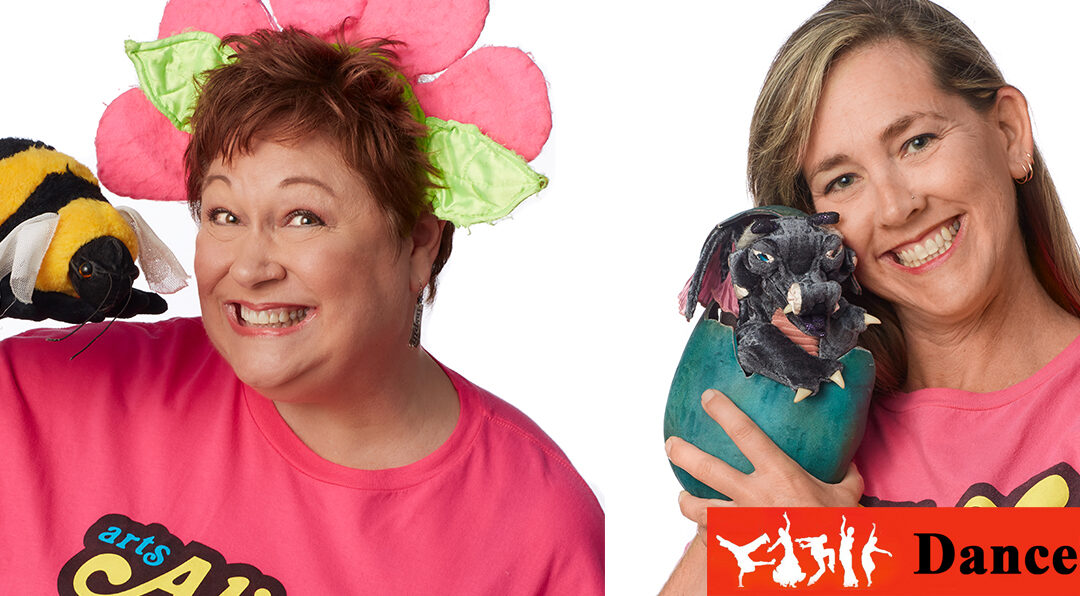
Arts Alive! provides inter-disciplinary arts education and specializes in early childhood development. Learn positive and inclusive teaching philosophies from Founder Tina Sabuco and Executive Director Anissa Dwiggins. Online at www.artsaliveinc.com and Arts Alive TV at https://artsaliveinc.com/arts-alive-tv/. Follow them at https://www.youtube.com/channel/UCpXHemagk4lPUPMD0AJRdug, https://open.spotify.com/user/o7jwnfcgzeys9kr1jmfhiaoxj?si=B9TF3Z3T4iZ7tQGUEU-ZQ, https://www.facebook.com/artsaliveinc, and join their community of educators at https://www.facebook.com/groups/47861236917193. This site – Thinkific – hosts their Professional Development: https://artsalive.thinkific.com/
DanceTalks with Tina Sabuco and Anissa Dwiggins: Full Transcript
Hosted by Andrea Cody, Director of Dance Houston. Originally released November 9, 2020. This transcript was generated automatically and may contain small errors.
Episode summary (SEO)
On this episode of DanceTalks from Dance Houston, host Andrea Cody talks with Tina Sabuco, founder and artistic director of the Houston expressive-arts company Arts Alive, and Anissa Dwiggins, its executive director. Tina grew up dancing in Escanaba, Michigan, studied creative drama in graduate school, and started Arts Alive in Houston in 1994 to teach young children through creative movement, music, drama and the arts. Anissa joined in 1998 as a teacher and went on to create the Arts Alive yoga curriculum. They explain their play-based, story-driven lesson plans for infants through second grade, why they let children move instead of sitting in lines and circles, how they reach the “problem” child, their work with seniors living with Alzheimer’s and dementia, their professional development for teachers, Arts Alive TV, and how a for-profit company can keep the heart of a nonprofit. Recorded November 6, 2020.
Key takeaways
- Learning happens through imagination. Every Arts Alive class is a participatory story set to music, with props and instruments, so children learn movement, communication and social skills while they play.
- Go with the flow and keep the flow going. When a child brings in something unexpected, like firefighter boots on space day, follow it and then bring the class back to the lesson.
- Let children self-regulate. A child who stands, watches or does laps around a mat is often doing what their body needs. Praising the good behavior works better than wagging a finger.
- Tell, show, then involve. Don’t quiz children on material you haven’t taught yet; give them the information and then get them moving with it.
- Start small at home. Put music on while you cook or when the kids come home, grab a prop like sunglasses or a dish towel, and dance like nobody’s watching.
Transcript
This transcript has been lightly edited for readability: filler words and repeats were removed, and a few short passages that could not be heard clearly were left out.
[0:00] Introduction and early years
Andrea: Hello and welcome to DanceTalks. I’m your host, Andrea Cody. Today is November 6, 2020, and my guests are Tina Sabuco and Anissa Dwiggins. Tina is the founder and artistic director of Arts Alive, and Anissa Dwiggins is the executive director of Arts Alive. Tina and Anissa, welcome to DanceTalks.
Tina Sabuco: Hi. Thanks for having us.
Anissa Dwiggins: Thanks for having us.
Andrea: Thanks for being here. Let’s start from the beginning. How did you learn to dance and develop your skills?
Tina Sabuco: This is Tina. When I was three years old, my mom put me in dance in Escanaba, in Upper Michigan, and I have been dancing ever since. I took ballet, tap and jazz, and when I was a freshman in high school, 15 years old, I started teaching. So I have been teaching for a very long time, and that’s how I got started. I loved it. Dance was my life. I also got into theater in middle school, and I’ve been doing that all my life too.
Andrea: Cool. How about you, Anissa?
Anissa Dwiggins: My experience has been as an adult. I met Tina in 1998 in a creative movement Arts Alive class, and I’ve been there ever since. I’ve had really no professional dance classes or anything like that. It’s all been through Arts Alive, with Tina as my guide and mentor.
Andrea: Awesome. How did you two meet? How did you end up in that class?
Anissa Dwiggins: Funny story. I graduated from U of H in 1998 and went to teach in HISD, and I was just not happy at all teaching an art class. A friend of mine had come across this company called Arts Alive, and she said, “It’s not for me, but I think it might be a good fit for you.” So I called Tina and went to see a class at Becker Early Childhood Learning Center. That was in the morning; we interviewed that night, she hired me, and I’ve been with the company ever since. I went from teacher to coordinator to executive director, and now I’m part owner. I wouldn’t trade it for the world.
Andrea: Wow, 22 years?
Anissa Dwiggins: Crazy, yes. Half my lifetime, practically.
Andrea: Congratulations. That’s awesome.
[2:10] How Arts Alive began
Andrea: Please tell us about what you do, what Arts Alive does.
Tina Sabuco: Well, it’s evolved over the years. When I first moved to Houston, I was still working on my thesis at UT, which was basically about using creative drama to teach dance to preschoolers. Here in Houston, I saw that people could really use a lot more movement, even in preschool. Kids were still sitting in circles a lot, and I really thought what I was developing would be great for this area.
So I started teaching a class at the Children’s Museum, and somebody found me and said, “Hey, we’ve been looking for somebody like you at Becker,” the school Anissa was talking about. I also contacted the Montrose Library, which was doing its summer reading program. I told them I’d done summer reading programs in Austin, and they said, “Come on, do your thing.” And the third thing was that I went to HAAEYC, the Houston Area Association for the Education of Young Children, and presented at their conference. Dr. Ann Weiss, who was the director of the School for Young Children, came up to me and said, “I’ve been looking for you for a long time.” I said, “I just moved to town.” And she said, “No, somebody like you.”
So I started Arts Alive. At first it was just an idea: I think I can make this work. I wasn’t working anywhere else, so I was hoping I could create this program using creative movement, music, creative drama and arts concepts to teach what I called integrated arts. I was also substitute teaching at a school, St. Mark’s in the Heights, and I asked if I could try my program there, and they let me. In the fall, when I wasn’t substituting anymore, that was really the first time I thought, okay, Arts Alive is a real thing. That was our very first class. All of those schools were my first clients. I say “our,” but at the time it was just me.
Andrea: Awesome.
Tina Sabuco: And they are all still with us.
Anissa Dwiggins: Yes, that’s what’s really incredible. Most of the clients we have have been with us since the beginning. Usually once we get a client, they’re part of our family.
[5:26] Education through imagination
Anissa Dwiggins: I’d love to chime in a little bit about what Arts Alive is. When I first met Tina, it was a half-hour class of maybe three- and four-year-olds, and I thought, how do you get anything done in a half hour? I didn’t have a lot of experience with dance or movement, or even with teaching little ones, and it was just magical. Arts Alive takes children on what we called imagination exploration, which has become “education through imagination.” The theme that day was Dancing Through Disneyland, which we’ve since renamed Amusement Park Adventures. We tell a story and set it to music, and it’s full of movement and dance concepts as well as communication and social concepts. The kids play along with us while we tell the story. The songs change, we hand out different props or instruments, and as the story develops they dance and play along. It’s truly magical for them, and the joy it brings is so fulfilling for us and for them. It’s lots of fun.
Tina Sabuco: A lot of times when we start to describe what we do, people say, “Oh, so you’re putting on a show.” No, it’s very process-oriented. The children are involved 100 percent. We’re not standing up there performing for them.
Andrea: Putting on a show, right.
Tina Sabuco: Right. We’re not putting on a show. It’s completely participatory.
Andrea: You mentioned Amusement Park Adventures. How many themes do you have?
Anissa Dwiggins: We have about 50 core lessons that we rotate on a biweekly basis. Over the past five years we’ve also developed a music curriculum and a yoga curriculum. The original Arts Alive is now our creative movement curriculum, so we have Arts Alive Creative Movement, Arts Alive Music and Arts Alive Yoga. Between the creative movement, yoga and music themes, I’d say we’re close to a hundred different themes and lesson plans.
[8:32] Music and yoga curriculums
Andrea: Wow. And with your music and yoga, do the children still go through that narrative?
Anissa Dwiggins: A hundred percent. Our staff developed both of those curriculums through years of doing Arts Alive. Music was a natural progression. Stacey Hall, one of our other staff members, helped develop it, and she and Tina worked on it for a while. It’s the same idea: there’s a story, there’s a playlist, we have props and instruments, and the kids learn the concept of the lesson through the music, the movement and the imagination. Then came the yoga curriculum, which I developed. It was such an easy transition to take the stories we already had and turn them into a flow of yoga poses that tells a story. I love it so much.
Tina Sabuco: One of the wonderful things Stacey Hall did with our music curriculum is that she kept the idea of building a story around a theme, but instead of themes like our creative movement ones, such as Fun on the Farm, Mermaid Mania and Zany Zoo, she made music concepts the themes. So there’s Love in Louisiana, which is zydeco music, Fun at the Folk Festival, a country music theme, woodwinds, percussion, and the story revolves around the music instead of the other way around. I love teaching the music curriculum. We also tweak it so we can use some of it to teach creative movement, because there’s always movement involved. Jenny, one of our teachers, just took the Love in Louisiana lesson plan, which we created as a music lesson, and adapted it into a creative movement one.
Andrea: Fun.
Tina Sabuco: It is fun.
[10:35] Infants to seniors
Andrea: What age range do you teach?
Anissa Dwiggins: Infants through lower elementary, usually second grade, for our core curriculum. We teach babies from six weeks and up, each with an adult, of course, and once they can sit up and walk on their own, they can fully enjoy all of our curriculum. Around second grade, about eight years old, is when kids start to feel a little too cool to dance and play around, so we developed Arts Alive Advanced, where we turn the Arts Alive concepts into age-appropriate movement and drama games. Yoga extends a little further, to fifth grade, because yoga is more physically challenging, and we start our yoga program at about three and a half years old. For creative movement, I’d say the majority of the children we teach are two to five.
Andrea: The preschool years.
Tina Sabuco: Right. The other thing I wanted to mention is that I work with seniors with Alzheimer’s and dementia. We haven’t been doing that as much right now. Sue Shefman is our expert in that area, and she was teaching at Seven Acres. We’ve been at Seven Acres forever, and it’s one of the highlights of her week. I love doing it too; neither of us has been able to do it much lately.
Andrea: In a typical year, how many schools do you visit, and about how many children do you get to teach?
Tina Sabuco: I’ll give that one to Anissa.
Anissa Dwiggins: We have about 40 schools per semester with about 10 teachers. That fluctuates a little with the season, because summer is different. It’s crazy to say, but it’s thousands of kids per semester. Some schools have a half-hour class with six students enrolled. At others, and Becker is a perfect example, we’re part of their curriculum, so they bring all of their kids to us. Every week we have 12 classes rotating through every single student on campus, and we have a lot of schools like that. When we look back over 25 years and try to count how many kids we’ve taught, we came up with well over 10,000, maybe 20,000 or more. It’s mind-boggling. We’ll do a summer program with a hundred kids in a room, in normal times at least.
[13:45] Working with schools and teachers
Andrea: When you’re there, the teachers who usually teach those kids often observe you. When you go to a school, what footprint do you leave there?
Anissa Dwiggins: It’s really interesting. At some schools, the teachers stay and participate with their class. For other teachers, that’s their break time: Arts Alive comes, we take their dozen kids, and one teacher takes a break while one stays with us. At schools where parents enroll their children, we collect the kids from a classroom and take them with us, so the teachers aren’t in the room. As for the footprint we leave, part of the Arts Alive philosophy is that we’re part of their family and they’re part of ours, so we work with every school on whatever it needs. We’ve even developed programs where Arts Alive provides professional development hours. If teachers stay and participate with us, we give them tips on using our techniques in their own classrooms, and they get credit hours for that semester.
Tina Sabuco: We also do a lot of in-services and professional development. We present at conferences, where one of our goals is to share our philosophies and methodologies. It’s not just a lecture: we take teachers through everything we do with the children, and then we talk about the whys. That is one of my favorite things to do. I love sharing what we do with teachers so they can go out and do similar things. We make it very clear we’re not trying to teach them how to teach an Arts Alive class. Some of them are movement teachers or music teachers, but most are preschool or early elementary classroom teachers who want ideas for making their classroom time more dynamic. We call that program Igniting Joy Through Movement, and that’s what our whole philosophy is based on: bringing a little joy, or a lot, into your classroom through movement and music.
We’ve been doing it so long that whenever hands go up, “How am I supposed to do that in my science class or my math class?”, we have an answer, because we’ve encountered so many scenarios with so many topics. We do have some naysayers who say, “This is never going to work with Stevie,” or, “This is never going to work with Jan.” Often their glass is half empty, and they’ve already decided it won’t work because of how that child is. We come from a whole other philosophy, that it’s magical and fun, and I can honestly say I rarely have a child who isn’t into the way we teach. They love it because it’s through their imagination. Our philosophy is never say no: yes, elephants fly; yes, trees are purple. Who wouldn’t want to do that? So we give those teachers examples of particular children we’ve had, and show them it will work. It does work.
[19:00] Reaching the “problem” child
Andrea: Awesome.
Anissa Dwiggins: Can I chime in on that? One of our philosophies is creating success for every student. When we do professional development with large groups of teachers, our experience is a little different from theirs: we have these kids once a week, while a lot of teachers are with their students all day long. Getting the message across to really look at every single student and do what’s best for them is sometimes a challenge, but our goal is to share that philosophy of connecting with the one student who might not be joining in with the others. We hope we reach the teachers who are having a hard time with particular students, because those children are the ones who need it most.
Tina Sabuco: Often a teacher will hand a class to us and say, “You need to watch out for this one.” We put on blinders and earplugs and think, okay, they didn’t say that. I go in thinking these kids are all just people I’m teaching, and often those kids end up being our favorites. We love them.
Andrea: Can you give us a hint about how you bring them into the fold and shepherd them? You’re both raising your hands. Go ahead, Anissa.
Anissa Dwiggins: Arts Alive is all about joy, and it’s usually the quote-unquote problem children in a regular classroom who need to move their bodies. As you know, Andrea, as dancers and movers, we’re in the business of knowing that humans need to move. So when we get that one kid in our classroom, they can shine, because we’re not saying, “Go sit down.” It’s okay if a child stands up instead of sitting while I’m showing my book, because that’s what his body needs. We really try to find what will make that child successful. If he wants to sit on the edge of the carpet and observe instead of participating, that’s okay; it’s not hurting anyone and it’s not disruptive. Meanwhile another girl might be doing laps around the entire area while I’m showing my book, and another child is raising a hand to say, “I had chicken nuggets for dinner!” All of that goes on at the same time, and it’s okay in an Arts Alive class.
Like Tina said, it’s rare for a child not to enjoy our class. If a child doesn’t want to participate, it’s usually because they’re an observer, or the music and movement might be a little overwhelming. We give children the opportunity to self-regulate. In a regular classroom, often everybody has to do the same thing, sit the same way and keep quiet, and we just don’t do that in Arts Alive. I can listen to five children, tie a shoe, play the music and pass out props at the same time. We’re very good multitaskers.
[22:04] Meeting children where they are
Tina Sabuco: I have an example from just yesterday about a way to involve children. I’m teaching on Zoom right now at the School for Young Children, a school for children with language learning differences. Some are on the spectrum, some are slow learners, some are dyslexic, and they’re a little older than our usual children, ages six to 12. In their classroom I teach 12 children at a time, but on Zoom I teach three to six at a time, and the last couple of times, because of the disconnection of Zoom, a couple of children didn’t seem to want to be as involved. Yesterday I really wanted to have success. My theme was Thanksgiving, so when I was lesson planning, I decided they would invite guests to our Thanksgiving feast. When they arrived in the Zoom room, I said, “Go find two stuffed animals as guests, because we’re going to take them to our feast today.” They looked at me in disbelief, like, okay, yes! They ran to get them, and we went to the farm and danced with the animals, and when we got to the feast, we made food for them. It was fantastic. I taught six classes yesterday and all of them were so successful, and I think it was because I went to where they are.
I talk a lot about that, not only with our children but with people with Alzheimer’s and dementia: go into their world. These children are at home, so I went into their world and let them choose their stuffed animals. With people with Alzheimer’s and dementia, instead of saying, “Now we’re going to do some exercise and stretch,” we’re children again, picking apples from a tree and reaching our arms up. I’ve had caregivers tell me, “I have not seen her reach above her shoulder in so long, and you had her extending her arm.” Those are the things that make me so happy, when somebody does something they’ve never done or had stopped doing.
Anissa Dwiggins: That goes back to what we said about professional development and our methodologies. What Tina just explained applies across the board: with every teacher we bring in, we talk extensively about knowing your audience. Tina is on Zoom with the School for Young Children, so she’s trying to reach that audience. We go to about 40 schools, every school does things differently, every classroom is different, some have teachers in the room, and we teach all different ages. The key thing to remember is that when you’re in front of your students, it’s really about them. We have our lesson plan, say our Wonderful World of Water lesson plan, but we can take it from infants up through seniors by training our teachers to engage and take it to where those kids are. We develop it as we go, trying to make it successful for whoever we’re in front of.
[27:12] Why play matters
Andrea: I’ve heard you describe it as play-based. What’s the importance of play, and at what point do kids need to just get in line, put their heads down, sit in their seats and do their work?
Tina Sabuco: Never!
Andrea: So what’s so big about play?
Tina Sabuco: You go, Anissa. You have it first.
Anissa Dwiggins: It’s so interesting. I came into Arts Alive in ’98, and Tina started it in ’94, so she had all this background in developing a program from creative movement and drama. I really didn’t know anything except that I liked to have fun and play, so I felt like I’d found the perfect job, where I get to play with children and they’re actually learning. Over the years we’ve seen all the science behind what play-based education does for kids. We knew it, but in the beginning the science was on the outskirts, and people would say, “Ah, you’re just playing around with the kids.” You don’t understand: we’re incorporating fine and gross motor skills and all of these things. Using the imagination gives kids a way to express themselves and find creative solutions in their own minds for how to move their bodies, how to communicate what they need and how to self-regulate. It also gives us the opportunity to teach skills they need, like fine and gross motor and cross-lateral development. Play opens up so many possibilities, and it’s interesting to see that since Arts Alive started, there’s become a huge movement behind play-based education.
Tina Sabuco: When I began Arts Alive, I didn’t set out with all this research. I had done research for my thesis, but it wasn’t about play-based learning. I just thought, this is what I love to do. I love dancing with children, I love dancing, I love teaching, I love the theater and creative drama, so I’m going to put it all together. I just did what I loved, and pretty soon people were talking about play-based learning, like you said, Andrea. Anissa and I say we’ve been doing this for so long that we are experts in it, and we try to share what we’ve learned with the world, like we are today.
Anissa Dwiggins: And to answer your question, Andrea, about when kids need to fall in line and quote-unquote get with the program: what we share with educators is, do they really need to fall in line? Can a group of kids walk down the hallway safely and quietly, following instructions, without an authoritarian, disciplinarian structure? What if we were butterflies floating quietly down the hallway? There are ways to navigate around the old-school rules of keep your mouth shut, sit in a circle, hands behind your back. Is it really safe to walk with your hands behind your back? What if you trip and fall? Some teachers say, “I can’t have all the kids talking at the same time.” But through play-based learning you can develop a child’s ability to pretend, even when they have to walk quietly down the hallway. It’s thinking outside the box and bringing some joy into the classroom. I remember growing up thinking some of my teachers were always angry, wagging their fingers and yelling. Play-based learning opens the door to other ways to “discipline” a classroom, or other classroom management styles.
Tina Sabuco: I think children are capable of so much more than many people give them credit for. Like Anissa said, people put them in lines and circles, in a box, without letting them be free to learn from that. I wish I could be a regular classroom teacher for a while, to give a whole classroom that freedom all day long and help them become wonderful, happy human beings. I know naysayers say, “We have to do this because this is how it’s going to be when they get older.” Well, they can see that people stand in line when they need to, and they can do it when they have to. Like Anissa was saying, why not just walk down the hall talking quietly instead of “bubbles and tails,” where they have to blow up their cheeks and put their hands behind their backs as tails? We see that so much, and it’s so stifling to children.
Anissa Dwiggins: Tina, you taught me this when I first came in. Teachers want the kids to sit in a certain place, and everybody has to be right here. But what about the child who wants to stand in the back, or can’t see? In real life, people have to navigate the world. There’s not always a line to stand in or a rule to follow. So we teach kids to self-regulate and navigate their own space. If a child tells me, “I can’t see,” I say, “Put your body where you can.” They’re like, what? I can move out of my square? Give them the freedom to problem-solve. If you’re going to learn to drive, you have to know how to move in different ways. There’s not always going to be a box to sit in.
Tina Sabuco: I was also going to say that a lot of teachers put children in a circle for story time, but if you think about it, the children on your right and your left can’t really see. Why not just tell everyone to sit where they’re comfortable and safe, and then show what you’re showing? I know some games are played in a circle, but children are put into circles and lines a lot more than they need to be. We’re getting on our soapbox about that.
[35:45] Taking risks in the classroom
Andrea: I’m still curious to dive in deeper. Why is this the norm, keeping everything cut and dry and getting straight to the point? Because it’s easy, right?
Tina Sabuco: One, it’s easy, and it’s the way teachers were taught, so that’s what they do. Second, they don’t want to take a risk. They’re afraid. Not to equate a child with a dog, but one analogy I always use is that if you keep a dog on a leash all the time and then take it off the leash at a park, of course it’s going to go crazy, because it’s never learned anything else. But if you train it little by little how to be off the leash, then when you take it off, it’s fine. It’s the same with children. If you give them instruction and a little bit of leeway, little by little, they understand that we’re not going to go crazy.
It’s night and day when we go into a classroom of children we’ve been teaching for a long time. If we blow bubbles, they don’t go crazy, because they know the bubbles aren’t going away and that bubbles are fun for lots of things, not just popping. In a classroom where we’ve never been, if we just started blowing bubbles without instruction, which we never would, they’d scream and go crazy because they don’t know anything else. And a teacher who doesn’t want to take risks will shut down and say, “I’m never going to do that again.” Instead, we have a list of 13 points for making your teaching successful. If a teacher says, “Well, it just didn’t work,” we ask: Did you start small? Did you use creative movement and creative drama? Did you lesson plan? Did you think about what music you were going to use? That whole list helps teachers be successful.
Anissa Dwiggins: Like you were saying, Tina, a big part of it is that that’s how teachers learned to teach. The play-based, innovative way of teaching is so fresh and new that a lot of teachers still have a hard time with it. I came up getting my certification, where this is the way you do things, and it’s a lot about controlling your classroom so you can teach. The teacher has an agenda and a checklist, and a lot of schools have to prepare for the TEKS or the STAAR test, whatever list they have to check off. Our philosophy is to get outside your comfort zone, take that risk, let go of your control over the children and let them take control. Like Tina said, there’s an assumption that everybody’s going to go crazy, instead of teaching self-regulation so kids can be how they naturally need to be: moving their bodies, talking and being joyful, instead of kept in a little box. I think opening that up could help kids learn the math, or whatever they need for the STAAR test or their TEKS, even better. It’s really breaking the norm.
Tina Sabuco: It also has to do with the higher-ups: the director, principal or administrator having a philosophy that lets teachers try this. It doesn’t necessarily start with the teacher. I understand when teachers say, “This sounds great, but I can’t do that because of our school’s rules.” Then it might be a good idea to have somebody like us come in and talk to the administrators first, so it trickles down to the kids.
[41:01] Professional development and resources online
Andrea: Jumping ahead, I imagine you’re offering this kind of training and in-service online now, so anybody in the world could tap into it. How can people connect with you and learn more?
Anissa Dwiggins: We’re still developing professional development for an online audience. Over the past few years we’ve had a Facebook page dedicated to creative educators, and we were on the circuit of live presentations. When the pandemic hit and everything shut down, we really had to focus on our classes, so all of our energy has gone into the virtual model for children’s classes. But because we started our professional development so many years ago, we have a lot of content already online from our Facebook Live classes. The way to reach us is our website, artsaliveinc.com, and we’re on Facebook, Instagram, all of those. When we work with a particular school, we like to really be part of their family and ask what their needs are and what ages they have, so we tailor everything. But we do have some content available for free online.
Andrea: Thank you. I’ll put links to those in the show notes too. I’ve seen them and they’re awesome. They give you a great window into what you’re doing.
[42:05] Integrating the core curriculum
Andrea: Could you give us an example of how you would teach something? When we say TEKS, we’re talking about the Texas Essential Knowledge and Skills, the standardized outline of things that need to be taught. Say I’m a teacher and I have to teach my science class how plants grow, or the ABCs, or addition and subtraction in first grade. There’s no choice about it. Can you give us a hint about how you integrate the core curriculum into your lesson plans?
Anissa Dwiggins: It’s two-sided. Our own lesson plans are for really little ones, the preschool audience, so it’s not as much about teaching the core curriculum. When it’s flipped and we’re the teachers to the educators, what we share with the math teacher or the science teacher is the philosophy behind teaching that subject while still being joyful and really knowing who your students are. If you have a group of kindergartners, you’re not going to treat them like eighth graders. We’ve been doing this so long that we have a checklist of things you can do with a particular age and subject to put joy in your classroom through movement and music. Every school and every classroom is different. Even at the same age, one class might need a lot of help with discipline while in another you can implement things much more easily, so we try to tailor our help to whatever each teacher needs.
Tina Sabuco: One of our philosophies is: tell me and I forget, show me and I remember, involve me and I understand. In everything we do, we make sure the children are involved. Yes, we tell them and yes, we show them, but we go that third step. Sometimes educators don’t take that third step, often because they’re teaching to the test. They’re thinking, I have to get the kids to understand all this because it’s going to be on the standardized test, and they never get to the part where they involve them. Andrea, you mentioned learning how seeds grow. We have a whole lesson plan called The Growing Garden, and I was doing part of it yesterday. We grew pumpkins and potatoes and talked about the difference: you plant a seed to grow a pumpkin, but a potato doesn’t grow from a seed, though they both have vines. We were the vines, we planted the seeds, we were the rain and we were the sun. You’re not going to do that with an eighth grader; there’s a different way to involve them. But with early childhood, it’s so much more fun than just showing a book. We do that too; we have a book that says this is the seed and this is what it’s going to look like. The telling and the showing are very important, but so is getting to the involving. And I did not make that quote up, by the way. It’s used in many places, but it’s one of my favorites.
Anissa Dwiggins: One of our biggest philosophies with educators is teaching out of the box. We have a whole lesson on it: involving the kids is getting out of the box and finding different ways to reach that particular group of kids.
[47:18] Creating lesson plans
Andrea: Awesome. Tell me how you start a lesson plan. What’s your creative process? Do you start with a theme, a song or a prop? How do you come up with this stuff?
Anissa Dwiggins: All of the above. I don’t remember exactly how many lesson plans there were when I came in, but we’ve developed lots more since. Tina and I were doing a cat lesson plan, and I said, “Why don’t we have a dog one?” So we developed a dog one. I love dragons, so I developed a dragon lesson plan. Sometimes it’s just the idea: could we have a whole bird lesson plan? Sure, why not? We don’t actually have a bird one, but we do have an egg one.
Tina Sabuco: Andrea, that’s such a great question. In the beginning, the first lesson plans were the ones I had used for my thesis. I used to work for a company in Austin called Dance Associates, where I taught ballet, tap, jazz and tumbling, as I mentioned. I was in grad school for creative drama and children’s theater, so I was using my creative drama skills to teach the dance. At the end of each year we had a recital with a theme, so we had a cat one, a garden one, a water one, and I started teaching with those themes. So the very first themes came from ideas at a different company. After that, developing new themes was basically about what our kids were interested in: dinosaurs, yes; going to the farm and farm animals, yes; going to the zoo, yes; the jungle, yes. It just developed into more and more themes.
One of the last themes I created was very different, because, like you said, it was based on a song. Pharrell Williams’s “Happy” came out right around the 20th anniversary of Arts Alive, and I hadn’t created a new lesson plan for a while. I thought, I’m going to do one, because I love this song. Were you there?
Andrea: I was there with my son.
Tina Sabuco: We did a happy anniversary celebration at the church downtown. So it was all based on that song, because I love it. It’s called House Full of Happiness, and all the songs either have the word “happy” in them or are about joy, like “Joy to the World.”
Andrea: Cool.
Anissa Dwiggins: The yoga curriculum is our newest, and it seemed very easy for me to develop after being in Arts Alive for so many years. It’s funny thinking about what you’re talking about, because I did it a couple of different ways. Sometimes I’d take an Arts Alive theme and turn it into a yoga theme, so Wonderful World of Water became Depths of the Ocean. Then I started thinking about particular poses I love. Cat-cow seems so easy, but it’s really a challenge for three- and four-year-olds, so I developed Revitalizing Rainforest just so we could be jaguars. So I’ve developed yoga lessons based on an Arts Alive theme, and others based on a particular pose, like the sun salutation. I thought, I need to put the sun salutation with our sun and sky, so I developed a whole Sun and Sky lesson plan for yoga.
Andrea: What’s the one about the heart of the hero?
Anissa Dwiggins: Heart of the Hero came from superheroes, which is so funny because the kids get so jazzed. It’s interesting and challenging to keep the mindset of doing yoga. It doesn’t have to be calm, but you want them to stay on their mats, and when you’re superheroes, can’t we fly around the room? It was a learning process, because I was using all these really high-energy superhero songs, so I had to change the music and the concept a little. We became superheroes, and it was the heart of the hero, using our heart power with our strength and our love. That was a really fun one, but they get super excited.
[52:32] Arts Alive at home
Andrea: I’m excited just hearing about these. I want to do all of them. That’s so much fun.
Tina Sabuco: You can come and play anytime.
Andrea: Oh, thank you. I’ve actually been playing a lot at home, especially these past six, seven, eight months. I’m so grateful to have had the opportunity to work for Arts Alive and train with Tina 20 years ago. It was the best experience. My kids have both had Arts Alive, and just two nights ago they burst out singing “Yellow Submarine.” Was it from Wonderful World of Water?
Tina Sabuco: It’s actually in three of them: Wonderful World of Water, Anchors Away, and we used to use it in Pirates, but then we changed Pirates a little.
Andrea: They were singing it, even with the “hey” in it, and having a ball. I was just looking at them, and it was a dream come true to see how much they’ve picked up. It was really awesome.
Tina Sabuco: It’s so wonderful to hear that your kids are doing Arts Alive things at home. Did you know we have Arts Alive TV? It’s a page on our website with prerecorded videos that anybody can watch.
Andrea: Oh, that’s awesome. No, I didn’t know. Thank you for telling me; I’ll definitely tap into that, and I’d encourage other parents to do the same. Can you talk a little about how this has impacted you as parents and your relationships with your children, or what you’ve heard from other parents? This isn’t just for teachers and kids, but for the whole family.
Tina Sabuco: Before we go on, I want to say that with Arts Alive TV, you don’t have to commit to a half hour or an hour. There are little snippets, some only three minutes, and some longer ones; I think the longest is about a half hour.
Anissa Dwiggins: The Arts Alive TV page is designed for kids to go in and click on anything. It scrolls through music, creative movement and yoga, and each one is two or three songs, five minutes tops. If you want something longer, click the icon at the top of the page for our YouTube channel, where we have a full-length yoga class. And to answer your question about parents: there’s a whole segment of development in my brain for Arts Alive advice just for parents. When we started developing our professional development, we realized that lots of teachers are also parents, and parents are also educators, so what to do in a classroom translates easily into what you can do at home. And lo and behold, here’s this pandemic, where every parent has been thrown into being a full-time educator. Our messaging for teachers translates easily to parents, and we’re developing more parent-centered content.
We encourage parents to participate with their kids during Arts Alive, because it’s just fun to play. On Arts Alive TV and YouTube, we talk to the kids directly. So my advice to parents is to let the kids guide you. I always tell parents they’re welcome to come to my yoga class, but I’m not going to teach them; their kids will, because I’m teaching the kids. The kids show the parents how to be the jaguar on the branch doing cat-cow. There’s so much for parents to learn from the Arts Alive philosophy and what we try to communicate to teachers, and now that every home is a classroom, it’s even more relevant.
Andrea: Awesome. I’m looking forward to it. We’re going to have a ton of fun.
Tina Sabuco: How old are your children now?
Andrea: Five and seven.
Tina Sabuco: Oh, wow. Perfect Arts Alive age.
Andrea: They are, and they’re very young at heart. Dancing, playing and playing pretend are a family tradition, and your training definitely instilled in me an appreciation for going with their imaginations, giving them my full attention and time, and saying yes. You always said, “Go with the flow and keep the flow going.”
[57:42] Go with the flow and keep the flow going
Tina Sabuco: Exactly. I have a great example of something that really happened to me and convinced me this works. We keep talking about Becker, and it’s funny that I remember it, because it was 18 or 20 years ago. I was all excited because it was the space lesson plan, and a little boy, probably four years old, came to class wearing firefighter boots. He was so excited that was all he could concentrate on, and the other kids were interested in his boots too, while I was trying to get them to listen to me so we could go into the spacecraft. So I said, “Oh, wait a minute, this isn’t the ladder to our spaceship. We are firefighters, and we’re climbing up the ladder to put the fire out.” We all climbed up the ladder and put out the fire, and once it was out, I said, “Oh, through the magic of Arts Alive, here we are in our spaceship!” I went to where he was, got everyone satisfied with the firefighter story and the boots, and then they came to where I was. That’s the perfect example of going with the flow and keeping the flow going, instead of fighting against it and beating your head against the wall.
Anissa Dwiggins: Teaching out of the box.
Tina Sabuco: Teaching out of the box, and taking a risk. I didn’t know what was going to happen; it wasn’t in my lesson plan, and it worked. That was one of those moments when I thought, okay, this really does work. It won’t work 100 percent of the time, but I think it’s an important philosophy. Instead of, “I have these bullet points on my lesson plan and I’m going to get them done,” it’s okay if a magical bullet point appears and you take a detour and then, hopefully, get back to where you wanted to be. And if you don’t that day, do it the next day.
[59:48] Defining success
Andrea: Awesome. I was going to ask how you define success, and what you just described fits. You’ve been talking about the process; it’s not about checking things off, it’s about the relationship. But I’d like to hear it in your own words.
Tina Sabuco: I define success in my teaching as the children being happy and joyful, happy with themselves and who they are, and working with other children in large groups, small groups and individually, so that it all becomes very natural to them. I feel successful when everybody’s happy, really.
Anissa Dwiggins: Absolutely. For a lot of classroom teachers, feeling successful might be a different challenge. We’re very fortunate at Arts Alive to be able to go in and play with these kids. For me, success is the joy I see in the kids. I know I’ve achieved success if the quote-unquote problem kid, the one the teacher warned me about, “You’d better be careful with so-and-so today,” finds joy. Can you tell we get that said to us a lot?
Andrea: Yeah. I’m afraid I have one of those kids from time to time. I hear that from the teacher.
Anissa Dwiggins: It doesn’t break my heart; I live for it. I did a demonstration class not long ago at a school, and one little boy was literally doing laps around his mat. All I said to him was, “Stay on your mat, stay on your mat,” and I never got angry at him. I walked out of that demonstration class and told the director, “Whatever happens, that child needs to be in my class. Give me his mom’s number.” Now he’s in my class. He talks the entire time and he still does laps around his mat, but I see him, and he loves what we’re doing because he’s successful. I’m not wagging my finger at him or telling him he’s doing it wrong. When he sits on his mat, I acknowledge it: “Oh, I see you, you’re ready, I’m so excited!” That one child finding joy and being successful makes everything I do worth it.
Andrea: Let me play devil’s advocate for someone who’d say, “Well, Anissa, what about the other kids? Is he disrupting them? Are they getting the quality of class they should?”
Anissa Dwiggins: Great question. A lot of times that does happen and it needs to be addressed. In this case, I have four children in a yoga class, and because of the way things are right now, my class is small and socially distanced, so him doing laps around his mat is okay for now. He’s not disrupting anybody or being loud. A few times I’ve said, “If you need my help, I can help you,” and he says, “Nope,” and he makes that decision on his own because I’ve given him the opportunity. There was one time he was acting really silly to get the other kids’ attention, and I didn’t address it with him; I addressed it with them: “I see what he’s doing, and I see that you’re paying attention to him. I need you to look at me.” Ignore the bad behavior and praise the good behavior. Because Arts Alive is constantly teaching self-regulation, I think it’s easier for that kind of child to realize in the moment that the behavior isn’t doing anybody any good, and that if he does that one little thing I want, I’ll see him right away and give him the praise and attention he’s looking for. He’s only tried it once.
[65:10] The “mini me” and asking versus telling
Tina Sabuco: Listening to you, Anissa, made me think of another of our big things in Arts Alive. When I have a new teacher, and you might remember this, Andrea, from a long time ago, I talk about having a little mini-me on your shoulder, observing how you teach. I still do this to this very day. If I’m talking to the kids and I think they’re being bothered by another child, or by teachers talking on the side, my mini-me says, “Hey, Tina, they’re not bothering the children; they’re bothering you. The kids are fine,” so I don’t need to address it then. Or the mini-me might say, “You just asked the kids a question, but did you really mean to ask them, or did you mean to give them some information?”
That’s one we talk about a lot. If you say to children, “Are you ready for class?” why did you ask them? You are ready for class, and it’s time for class to begin. What if the kids say no? Where are you going to go with that? We see it so much, with children, with parents and with people talking to each other. I’ll watch somebody give a lecture and keep saying, “Right?” and I think, why are you asking me? Just tell me. I think it’s a habit; people in Canada and where I’m from in Michigan tend to end sentences that way and make them a question. Or a teacher will say, “Are you ready to go get a scarf from the table?” or “Who knows what 10 plus 9 is?” before teaching the material.
Anissa Dwiggins: Andrea, you asked a little while ago… Oh, sorry, Tina.
Tina Sabuco: I was just piggybacking on that. Why are you asking them? You’re setting up half the class to fail instead of everybody to succeed. Whatever you’re teaching, say, “This is a feather. A feather comes from a bird,” and talk about the feather, instead of saying, “Who knows why birds have feathers?” Who cares who knows? It’s such an antiquated way of teaching and of talking to people to get information. Why do you want them to give you the information? You are the teacher, the educator, so give the information instead of asking. That’s the little person on my shoulder. I still do it sometimes too, especially if I’m not as prepared as I should be or I’m nervous for some reason. I’ll find myself slipping into those bad habits, and luckily my mini-me says, “Why did you just ask them that? Just tell them. Why didn’t you show them or involve them instead of just telling them?” Anissa, go ahead.
Anissa Dwiggins: Andrea, you asked what it’s like being a parent doing this, and about our communication with parents. Personally, it’s so interesting to see how my kids have grown up in the world of Arts Alive. My daughter, Marlee, is 15 now. When she was in early elementary, she wanted to share everything with her brother, Stephen, who’s three years younger, so I started teaching her the idea at that age. Say she brought her math homework home and was learning her multiplication tables, and she’d ask Stephen, “Stephen, what’s two plus five?” I’d say, “Marlee, you’re asking him that question, but have you taught it to him yet? You don’t ask the question until after you’ve taught the material.” She learned that early, and now she comes home and says, “You would not believe these teachers. They get up there and say, ‘Who knows about Western civilization?’ and list all these questions, and everybody’s sitting there like, I don’t know, you haven’t taught it to us yet.” I love that my kids are coming up with this new way of thinking. Why question everybody when you’ve just opened the book to the chapter and nobody’s learned anything yet, and make them feel like they don’t know anything? It may not be that the teacher wants them to feel that way; it’s just how they learned to teach.
Tina Sabuco: That goes right back to your question about how I feel successful: it’s when the children feel successful and have joy. You’re not setting them up to succeed if you keep asking them all these questions. But it is the way a lot of us were taught, so it’s just what we do.
[70:23] Running Arts Alive as a business
Andrea: You’ve been so successful in the arts, creativity and education, and also as businesspeople. Would you share any insight or advice about how your company operates and how you’ve trained so many people and worked so long with your staff?
Tina Sabuco: I want to go back to the beginning, like when we talked about how the lesson plans developed. I didn’t sit down and write a business plan. I just did what I loved. I’m not saying that’s the best way to do it, and I still don’t follow a true business plan the way a company would. I started by teaching from my heart, and little by little I’d see, oh, this is successful, this is working, let’s keep doing it. We kept doing extracurricular classes, where individual families pay for the classes, because that’s more lucrative for us than curriculum enrichment, where the school pays for the class. We still do those too. In the beginning we did birthday parties and practically gave them away for a song. My wife, who does a lot of business analysis, looked at what we were doing and said, “You’re doing 10 birthday parties a weekend, and you should be making money, but you’re not, because it’s not balanced. You need to either raise your birthday party prices or stop doing them.” So we started charging much more and did a lot fewer, and all the work that went into the parties on the back end made us realize that’s why we weren’t making money. Pretty soon we decided that’s not really part of our business model, or of what we want Arts Alive to represent, so we stopped. Anissa can talk a lot about where we’ve come from and where we’re going with our business plan.
Anissa Dwiggins: There’s a lot. One thing to know about Arts Alive is that we are not a nonprofit. That’s a common misconception, just because we’re arts and education. Like Tina said, when she started this, it was about how she could do what she loved, and she did it. Wendy Haardt is our director of operations; Wendy came in ’96 and I came in ’98, and together we form a beautiful triangle. I think part of why we’ve been able to keep doing this for so long is that we have three creative brains that complement each other, and we work from our hearts. Yes, we know we need to make money; we have teachers and salaries to pay. But when a school can’t afford us, we go to that school and say, “What can we do? How can we be here and work with you? We don’t want to lose you.” It’s being a for-profit business with the heart and mentality of a not-for-profit. Sometimes it’s a struggle and a juggling act, and we’re trying to figure out how to move into the future while keeping the heart of Arts Alive and the magic we bring to schools.
Right now, like for everybody, it’s unprecedented, and it has impacted our business. We’re figuring out how to navigate different platforms to reach children, since a lot of kids aren’t in schools. In the past we haven’t had a studio. We go out to schools, because that’s what Tina saw was different: kids go to gymnastics or dance classes at a studio, but what about parents who have a younger child or can’t manage after-school or after-work classes? Arts Alive goes to the schools, and now that’s totally different. So we’re navigating the waters. We already have a lot of YouTube content, and we’re developing more virtual choices for children, for the professional development side for teachers, and a parent avenue as well.
Andrea: Awesome. I wish you all the very best success, and I know any success for you will be a wonderful gift to the world. Thank you for sticking with it and figuring it out.
Tina Sabuco: Thank you.
[75:36] Finding joy at home
Andrea: Let’s close with this. Let’s pretend, as you love to do. What activity can we do now to tap into the joy of Arts Alive, and what are your words of encouragement for us?
Anissa Dwiggins: Oh, that is so fun. Something really simple anyone can do for a little joy: one of our keys to success is to start small, so just put some music on in your house. I think that’s the one thing anybody can do to get their body moving and feel a little joy. Find whatever streaming service or playlist you have and put music on while you’re cooking or cleaning, or have it playing when your kids come home from school, and just see where the flow takes you.
Tina Sabuco: We’re such a good team, Anissa, because I was thinking of props. A long time ago I realized that sunglasses are magical, because they make us feel like we’re somebody else. When you put that music on, put on some sunglasses and be somebody else for a little while. Dance like nobody’s watching; the sunglasses help with that. If you have something to swing around, like a dish towel or a tie, having props helps. A lot of our listeners may be dance people, for whom this comes naturally, but for people it doesn’t come naturally to, a prop or a costume, like a fun hat, helps. We’ve seen so many wonderful videos of everybody at home doing fun things, and it’s brought me so much joy to see families dancing together. Sometimes people have a hard time letting out the joy in their hearts because they think they’ll be judged. Believe me, nobody is paying any attention to you. Nobody cares. Just do it and have fun.
Anissa Dwiggins: My words of encouragement go back to this: go with the flow and keep the flow going. Whatever happens, it’s okay; just keep the flow going. It doesn’t have to be a checklist. If you have an agenda, that’s okay, but if it gets changed, go with the flow, and you can always bring it back.
[78:50] Closing
Andrea: My guests today are Tina Sabuco and Anissa Dwiggins. Their company is Arts Alive. Tina and Anissa, thank you so much for being a part of DanceTalks.
Tina Sabuco: Thank you so much for having us.
Anissa Dwiggins: Thank you, Andrea. Such a joy.
Andrea: Thanks for listening. Please subscribe and share our podcast, and reach out to us on social media if you’d like to talk. To support DanceTalks, donate to Dance Houston. Talk to you on Monday.