
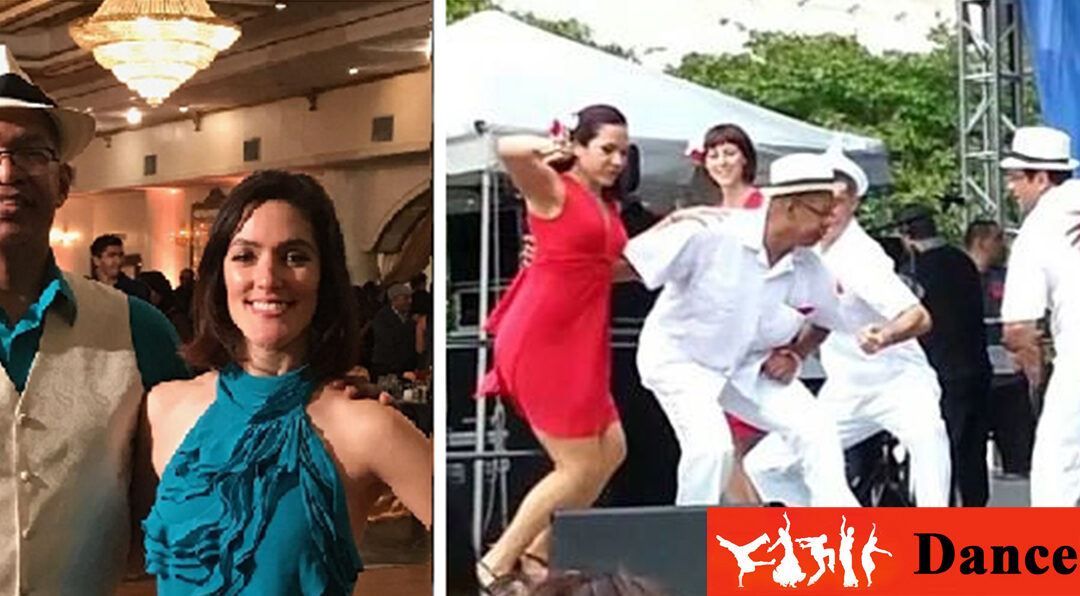
Michael talks about recovering from a health crisis through dance therapy. Follow him at https://www.facebook.com/mwhitmire and SALSA GRANDE at https://www.facebook.com/BiggerBetterSalsa.
DanceTalks with Michael Whitmire: Full Transcript
Hosted by Andrea Cody, Director of Dance Houston. Originally released March 15, 2021. This transcript was generated automatically and may contain small errors.
Episode summary (SEO)
Houston attorney, law professor and Salsa Grande founder Michael Whitmire returns to DanceTalks from Dance Houston to talk with host Andrea about his recovery from a serious illness. After the pandemic stopped his Rueda workshops in March 2020, Michael went from dancing several hours a night to a sedentary routine, and in December 2020 he spent Christmas week in the hospital with diabetes and blood clotting. He explains how bringing back Latin music and daily salsa practice became part of his recovery, how his dance friendships carried him through, his careful plan for returning to teaching, and his advice to listen to your body and get checked out early. Recorded February 26, 2021.
Key takeaways
- Dance can be a health habit. Years of social salsa kept Michael active. When dancing stopped, the health problems it had kept at bay caught up with him.
- Music brings back the motivation. Turning salsa music back on, after avoiding it because it made him sad, brought back the joy that got him moving again.
- Start small and build. He went from barely getting through one song to more than 30 minutes of continuous dancing, plus stretches drawn from his dance routine.
- Dance friends are real friends. About 60% of his social life was dance, and the friends he met through Rueda checked on him during his hospital stay and recovery.
- Don’t ignore warning signs. His main advice: pay attention to your body and see a doctor early, before it becomes an emergency.
Transcript
This transcript has been lightly edited for readability: filler words and repeats were removed.
[0:00] Welcome back and Salsa Grande
Andrea: Hello and welcome to DanceTalks. Today is February 26, 2021. I’m your host, Andrea, and my guest today is Michael Whitmire. Michael is returning to us after a first interview, so to learn a lot more about Michael, please look up his previous episode. Today he’s here to talk with us about his recovery and how dance has helped motivate and heal him from an illness. Michael is a lawyer, a law professor and a dancer. Michael, welcome to DanceTalks.
Michael Whitmire: Thank you for that introduction, Andrea. I’m definitely happy to be here, so thank you for having me and inviting me back.
Andrea: Sure thing. Catch us up real quick, for those who are just meeting you, about Salsa Grande, what that program is like and what it’s been doing for the past year.
Michael Whitmire: Salsa Grande is my dance program, where I teach Rueda workshops or private lessons in Latin dances like salsa, bachata, cha-cha-cha and merengue, with a focus on Cuban-style dancing. There’s a variation of Cuban dancing called Rueda. The simple way to describe it is the square-dancing version of salsa. We dance in groups, people switch partners, and it’s a lot of fun. I really enjoy teaching workshops in that.
Because of the pandemic, I’ve been one of the people on the ultra-cautious side. As of last March, I stopped teaching altogether, not the group workshops and not even private lessons. Rueda is a group style where you’re interchanging partners in close proximity. It could be two couples, five couples or 10 couples dancing together, so you’re going through 10 different partners in one song. With COVID-19, we have to be extra cautious, so this is the type of dance that definitely needed to take a step back during the pandemic.
I’m hoping to get back into it soon. I’ve had one dose of the Moderna vaccine and should get the second next week. That will let me think a little more about social situations I haven’t gotten into over the past year, while still following the recommendations of the CDC and wearing masks. At least there’s a light at the end of the tunnel.
I’ve been dancing socially for over 25 years. About 18 or 19 years ago, I started taking salsa lessons seriously, eventually got into performing and teaching, and started Salsa Grande about eight and a half years ago. It’s a good break from being a lawyer. I get to deal with people on a much more social, fun level: doctors, engineers, lawyers, teachers, nurses. Everybody gets to take their mind off that professional go-getter mode and just relax and have fun.
[3:30] A social life built on dance
Andrea: Before a year ago, was your social life pretty much dance? What percentage of your social life did dance account for?
Michael Whitmire: A lot. I’d say maybe about 60%, a majority. A good portion of the rest is that I have season tickets to the Astros and the Rockets. But even at sporting events, a lot of the people I’d invite were people I knew from dance. I like moving to the music, but it’s also the interaction with other people. Some of the people I met socially or in my classes became my personal friends. So dance might be 60% of my social life, but dance people might be 80%, because I’m going out to dinner or to a baseball game with dance friends, even when we’re not dancing.
Andrea: You mentioned that during the pandemic you’ve kept in touch with some of your dance friends. How has that been going, and have those relationships changed since dance is no longer the main thing you all do?
Michael Whitmire: I’ve definitely been keeping up with people. I wouldn’t say the relationships have changed. Every once in a while you send a text: “Hey, how are you doing?” It’s nice to keep up even though we can’t see each other in a dance space, which was our main way of connecting. Especially with the health issues I dealt with in the fall of 2020, around November and December, it was nice to have some of those people check on me, not just as “the guy I dance with,” but because we made real friendships and they care about how I’m doing.
Andrea: It’s good to see your dance friends are there for you in your time of need.
Michael Whitmire: Definitely. We say “dance friends” because we met through dance, but they’re real friends to me. I’m glad many of them were willing to check on me or help with whatever I needed.
[6:41] Diagnosis and a hospital stay
Andrea: I understand you were in the hospital for a little while. Without getting into details you don’t want to share, what can you tell us about what you’ve been through?
Michael Whitmire: I can talk generally. In December 2020, I was diagnosed with diabetes, and there was also some blood clotting. Things have gotten a lot better. I don’t have a medical degree, but from the numbers and the way the doctors talked, I may have been borderline on some of these before the pandemic, and keeping that healthy, active dance lifestyle probably pushed some of the potential problems off.
But after March 2020, when I stopped teaching, I pretty much stopped dancing. I checked in on some Zoom lessons for a little while, then stopped. From March through December I was pretty sedentary. I wasn’t dancing, wasn’t exercising regularly, and had gotten into some bad eating habits. I think it all caught up with me.
In November I started noticing some health issues, slight breathing problems. In December it got more serious and more consistent, and I decided I needed to check myself into an emergency room. The Sunday before Christmas, I went to the hospital, and they said, “You need to stay. We’re putting you in the ICU.” So I spent all of Christmas week in the hospital, including Christmas Day. I was in the ICU about four days, moved to a regular room on Christmas Eve, and was released a few days after Christmas, after all the blood tests, blood pressure checks, medications and monitoring.
I let myself get into a position where I wasn’t active enough, and your body tells you, “You can’t get away with this much longer.” In some ways I feel fortunate I went to the hospital when I did. The doctors noticed what they noticed, got me straightened out and put me on a better path: exercise, medication, diet and better habits.
[9:46] Recovery
Michael Whitmire: I just had a doctor’s visit a couple of days ago, and my blood pressure numbers were in the normal range. I saw the doctor who treats me for diabetes, and those numbers are normal too. In January I started off having to take insulin shots. I’m not a syringe person, so that was definitely not fun. Just a month later, I could switch to oral medication. Along with physical exercise and getting back into some dancing, all of that has put me back on a much more normal path.
My workshops would normally be 90 minutes, sometimes back to back, so I’d be on my feet for three hours. Last November I couldn’t do anything like that. I’d be tired after 10 minutes, and it was tough to dance through a song. Now I feel comfortable doing a 90-minute workshop, and I’m working toward the stamina for two back to back. I’m still not 100%, but I’m a lot closer to where I was before the pandemic, and I’m grateful for that.
Andrea: Thank you for sharing that. It’s a good story to remind us how wonderful dance is for our physical health. It served you for 25 years and kept you in tip-top shape, and when dancing like we’re used to was no longer an option, it was hard to adjust. I don’t know if you were like me, but I was just waiting, thinking any moment now we’d all get back together. It’s easy to think, “I’ll just wait,” and forget that dance provides some really basic life needs for our health, and we have to do something to supplement that.
Michael Whitmire: That’s why I was happy to share my story. When I shared it with friends who checked on me, some reached back and said they hadn’t felt the same during the pandemic, or had gained weight and gotten into bad eating habits too. So if I can be a cautionary tale, a warning sign, I want to say: don’t forget about it. It does matter.
[13:49] Bringing the music back
Michael Whitmire: Like you said, you’re just waiting, and you don’t know when it’ll be over. “Maybe next week will be better, or next month.” The thought of not dancing was depressing. I was sad about not seeing my friends or doing what I like to do, so I tried to put it out of my mind. Salsa music used to be playing in the background for me every day, in the morning or in the car. To get myself out of that mindset, I even stopped listening to it. It makes you feel good, but it also makes you feel disappointed that you can’t dance the way you want, and it brings in more negative thoughts. So I’d watch a movie or keep up with politics and all the crazy stuff happening in 2020, and that made it easier and easier to stay seated, not be active and not listen to music.
I’m glad that bringing music back these last few months has brought back some of the joy I used to feel, and some of that excitement and passion that I hope to keep when we get back to normal. Now that I consider it part of my recovery, part of my dance therapy, I’m going to make it a regular part of my life again, even if I’m just in my room by myself.
Andrea: Can you tell us about your routine or practice: getting in the mood, and what you do to get going and feel inspired to dance?
Michael Whitmire: Just starting the music. That’s all it really took for me before. The doctors recommended at least 30 minutes of exercise every day, or several times a week. You can jog or do other exercise, but dancing uses and stretches certain muscles you wouldn’t use otherwise, so I got back into the stretches I used to do for dancing. I’ve never been a big jogger, but I keep my body and legs moving, even if it’s just basic salsa steps. I turn on the music, start doing the salsa basic, and whatever the music inspires me to do, I keep doing.
That’s how I think of dance: an expression of what the music is saying, not just stepping through steps. Coming from a dance and choreography background, when I’m listening to music, even sitting in the car, I’m thinking about how my body would respond and what moves I could do. I’ve gotten back into that mindset.
When I started, I’d be happy if I could just get through one song. I’ve worked my way up to more than 30 minutes of consistent dancing: a few songs, getting my shoulders, head, feet and hips moving again. My friends knew me as the person who would dance two to four hours at a time when we went out, with little breaks, out there all night asking people to dance. That’s the point I want to get back to. I’ve made basic salsa and my stretching routine a part of my day, along with side bends, sit-ups and push-ups. That passion for music and dance sparked the exercise I need to get healthier.
[19:29] Favorite music
Andrea: Cool. Who are your favorite musicians or types of music to dance to?
Michael Whitmire: I focus on Cuban-style salsa. It’s not any one artist; it’s more the genres. Cuban and Puerto Rican salsa have something distinctive, and there are great Colombian musicians who play a lot of good salsa too. There’s also bachata, a slower Latin style. Many of those artists are from the Dominican Republic, and several are out of New York City, with its big Dominican population. Every once in a while I’ll throw in a cha-cha-cha. Partly it’s about getting back in shape, but it’s also remembering technique. Even before I was hospitalized, I’d joke with friends, “Be nice to me when we get back. It might take me a month just to remember all the dances.”
Andrea: Are you dancing with a ghost partner, or just doing footwork and body work?
Michael Whitmire: Every once in a while I’ll do a ghost partner, but a lot of it is basic technique with my feet, arms and shoulders, because good partnering comes from solid basic technique. Then I’ll go into that mental state of, “Okay, what would I be doing with somebody?”
[21:26] Plans for returning to dance
Andrea: What signs are you looking for to get back out there, whether going out dancing or taking on a private lesson? What’s your plan?
Michael Whitmire: First, I want both doses of the vaccine. Even after the vaccine, the guidelines say to keep masking, because we don’t know everything yet. The vaccine is supposed to prevent serious illness, but people might still be carriers. So the first steps would be: I’m vaccinated, students are masked, and we sanitize. I’d ask students, “Can you keep the mask on for the full hour?” I take it seriously, and if people can’t fully commit, we just won’t do it.
I’m lucky that salsa isn’t my main source of income. I do it because I want to and because I want to help people. I’d like to be compensated, but I don’t have to do it. I’ll keep paying attention to the news and the science about how COVID is spreading. The signs have been encouraging so far, with transmission going down. Social dancing is maybe a month or two away for me. Some venues have opened for salsa, and some friends have gone back, but I’m not comfortable with it yet.
Part of it is that my mother lives with me, she’s older, and I don’t want to be the one who brings COVID into the house. She just got her second vaccine this week, so I feel a little safer about our household. I’d personally feel guilty if I were a carrier to somebody. My salsa friends are friends, and I don’t want them to get COVID or face health issues either.
One upside of my diagnosis is that diabetes put me in a higher category for the vaccine, even though I’m not 65. So the little steps would be private lessons, one-on-one or with a couple. Then maybe dancing socially with a couple of friends, keeping away from other people in the venue and still social distancing. Over time, when the indicators are better and people under 65 can get vaccinated regularly, I’ll think about group workshops. I’m definitely not in that mode yet.
Andrea: I could also see doing something outside when you get back to teaching. Bring a portable speaker, and you get extra vitamin D, which is great for your immunity, and fresh air.
Michael Whitmire: That’s a good thought too. The other consideration is the Houston heat. We had all this cold weather just a week ago, and soon it’ll be in the 80s and 90s, which is tough when you’re moving around with salsa. Before the pandemic, some of my favorite activities were outdoor festivals, but I prefer late afternoon or early evening when the temperature goes down. Evening outdoor salsa would be great, and it minimizes the spread.
[28:31] Advice for staying healthy
Andrea: I’m so glad you’re doing better, taking good care of yourself, and finding dance to be a way to motivate you and help you get better and better. Can you leave us with some advice on how to keep our health up during these challenging times?
Michael Whitmire: Pay attention to what your body is doing. We all know when things feel normal or not quite normal, so don’t ignore the symptoms. For a while, people were cautious about going to a doctor’s office because they didn’t want to be where sick people had been. But nowadays physicians are much more careful about who’s allowed in and spacing out appointments, so don’t be afraid from that standpoint. Get help even at an early sign. If something feels unusual, don’t wait until it’s too late. Don’t wait until you have to be in the ICU for four days and in the hospital for a full week, like I was.
This has actually been a good time for me to recover. There’s no social pressure or temptation to be out with friends all the time, so I can take it at my own pace. It’s a good time to rest and recover, and a good time to get checked out, especially if something needs several weeks or months of attention. The positive side of social isolation is being able to take care of yourself, so do that. I know it’s easier said than done. As human beings, we often need something bad to happen before we pay enough attention. So don’t let it get to a catastrophic level. When something seems unusual, do something about it and at least get it checked out.
Andrea: My guest today is Michael Whitmire. Michael, thanks for coming back to DanceTalks.
Michael Whitmire: You’re welcome, and thank you for having me.
Andrea: Thanks for listening. Please subscribe and share our podcast, and reach out to us on social media if you’d like to talk. To support DanceTalks, donate to Dance Houston. Talk to you on Monday.