
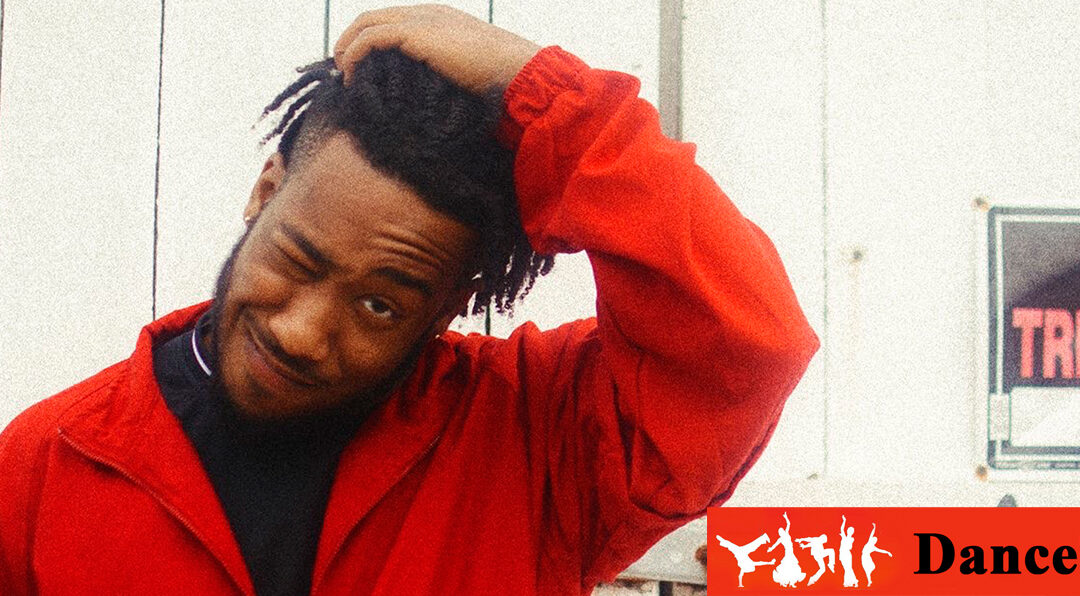
Sheldon Williams discusses the history and essence of hip hop dance. Follow Sheldon at https://www.instagram.com/tribedon/ and https://www.facebook.com/GhostCrew2010, and his crew iLL TRiBE Dance Crew at https://www.instagram.com/illtribe/. Sheldon references this Ghost Crew video: https://youtu.be/H5OiD13Ldk.
DanceTalks with Sheldon Williams: Full Transcript
Hosted by Andrea Cody, Director of Dance Houston. Originally released June 8, 2020. This transcript was generated automatically and may contain small errors.
Episode summary (SEO)
On this episode of DanceTalks from Dance Houston, host Andrea Cody talks with Sheldon “Le’Don” Williams, event coordinator for the Houston hip-hop dance crew iLL TRiBE and founder of the TRiBAL GROUNDS hip-hop dance festival. Sheldon first took the stage at four or five in his mother’s dance company, then trained at Shawn Welling’s Planet Funk Academy and became the youngest member of Pat Garrett’s Ghost Crew, nicknamed “Casper,” dancing in Dance Houston, at the Showtime at the Apollo auditions and alongside the crew’s run on America’s Best Dance Crew. After high school he found his freestyle side in the cyphers at the University of Houston-Downtown and Youth Advocates, started the Sunday School Squad with fellow hip-hop dancers, and co-founded iLL TRiBE, which built a two-year relationship with Red Bull after a performance at Red Bull BC One. He explains the roots of popping, krump and hip-hop dance, Buddha Stretch’s influence, musicality and “the pocket,” how crews build choreography from freestyle, what mentors Ericka “Babygirl” De Leon and Mechelle Phillips taught him about planning events, and why community is what dancers miss most during the COVID-19 shutdown. Recorded May 31, 2020.
Key takeaways
- Let the music move you. Sheldon doesn’t try to move to the music; he waits until the beat moves him, and he trains by freestyling to new albums he has never heard.
- Know the pockets. Musicality is choosing which count to ride (four counts, two counts, one counts, half counts) and switching between them at the right moment in the music.
- Knowledge is part of the dance. Hip-hop dance comes from Black culture and history, and its pioneers are still sharing that knowledge, often for free.
- Plan, take notes and ask for help. Write down what worked and what didn’t at every event, keep detailed documents and contacts, and find mentors who will give you the game.
- A crew is a family. Unity and hours of dancing together are what let iLL TRiBE rebuild a 10-minute Red Bull show overnight.
Transcript
This transcript has been lightly edited for readability: filler words and repeats were removed, and several passages that could not be heard clearly in the recording were left out.
[0:00] Introduction and first memories
Andrea: Hello and welcome to DanceTalks. Today is May 31, 2020, and my guest is Sheldon Williams. Sheldon is the event coordinator for iLL TRiBE. Sheldon, thank you for being a part of DanceTalks.
Sheldon Williams: Absolutely, thank you for having me.
Andrea: Take us back to the beginning of your journey as a dancer. What were your first memories, and how did it all begin?
Sheldon Williams: My first dance experience was really dancing with my mother. My mom used to own her own studio and her own company, and they would do shows pretty often. She had me at the studio with her all the time, with all of her friends and all of her company, and when she saw that I had an interest in dance, she gave me an opportunity to do a part of a show with them. I was only four or five years old, and we still have the VHS tapes. It was really funny, because I was doing a Michael Jackson piece, I want to say to “Remember the Time,” and everybody thought it was so cute. Everybody started laughing and chuckling while I was on stage, and on the video you just see me poke my arms out and pout at everybody, like, hey, stop laughing. So that was one of my first dancing experiences.
Andrea: I love that story. Do you remember any of the moves you had in the “Remember the Time” dance?
Sheldon Williams: Definitely the spin. That was one of my signature moves at that time. When I was younger I got to the point where I was doing three spins, and that was a huge deal for me.
Andrea: I feel like that’s a boy thing too. Boys go straight into spinning and just knock it out when they’re really young, and girls build up to it. So you learned mostly from your mom and her staff?
[2:20] His mother’s company
Sheldon Williams: Yes. At that time my main influence was my mom and all of her friends. My mom did jazz, a hip-hop version of jazz as well, and they also did African dance. So those were the things that really influenced my movement, but for that piece they definitely gave me some coaching.
Andrea: Oh, cool. What’s your mom’s name, and what was the studio’s name?
Sheldon Williams: Her name is Rosslyn Williams, and the studio was called Media Dance Company. They were in the building in Midtown, right across from the HCC building, the one with all the art on the outside. It’s called the Midtown Art Center.
Andrea: Yes, I’ve been to some shows there. She was there? How cool.
Sheldon Williams: Yes, she was there for years and years.
Andrea: Awesome. So how long were you there, from four or five years old?
Sheldon Williams: I was four or five when the actual show happened. Then my parents saw how much I loved being on stage, so they actually put me into drama classes, acting and theater, which gave me a lot more stage presence. I did that for about 11 years.
[3:54] Planet Funk Academy
Andrea: Wow. And then what was your next step with dance training?
Sheldon Williams: The real first dance training I had was in seventh grade, I want to say, when I started dancing at Planet Funk Academy. It’s kind of funny: my dad had a friend who told him that her daughter was going there and really liked it, so my dad started bringing me. The first class I took there was with a guy named Pat Garrett. Pat saw that I really wanted to dance; it was my first time ever really doing choreography. And he was like, hey, I want you to come join my team, because at that time he was over the junior team at Planet Funk. So I auditioned, made it, and it was onward from there. I was with Planet Funk for three to four years, and that was a really great experience for me.
Andrea: How old were you when you were with them?
Sheldon Williams: I was 11 or 12 when I first started with Planet Funk, and I stopped dancing with Planet Funk when I was around 13 or 14.
Andrea: What kind of performance opportunities did you get with them?
[5:16] A surprise entrance
Sheldon Williams: Oh, we had a lot. One of my favorites was a fashion show; I can’t remember what it was called. The reason I really liked it was the theatrics behind it and the entrance we made. Everybody was sitting at their tables, and they didn’t even know there was about to be a performance, until we started crawling out through the tables. Some of us were already under the tables once the event started. They were round tables, so people’s feet weren’t touching us or anything like that. When we came out they were like, whoa, what’s going on? And we all made our way to the stage. It was such a fun experience; it was one of my favorite shows for sure.
Andrea: Oh, that’s great. Good audience interaction.
Sheldon Williams: Yes, for sure. It was a big surprise.
Andrea: I love that. My favorite Planet Funk show was The Grinch. Shawn Welling, the director of Planet Funk, created it for a Dance Houston winter show. He told the story with dance as the theme: all the kids in Whoville lost their dance shoes to the Grinch, who stole them in an attempt to ruin their Christmas. But the moral of the story the kids learn is that you don’t need shoes to dance. All you need is heart.
Sheldon Williams: Right. That was a really good show, and a lot of fun too, putting it together and having all the ideas come together. If you know Shawn, you know he is all about the theatrics, all about the overall picture. So when you say that the whole stage turned into Whoville, it really did. He transformed everything.
Andrea: It really did. The hair, the costumes, it was incredible. He always had so many theatrics going on. And now he’s doing film.
[7:25] The movie premiere
Sheldon Williams: Yes. When he premiered his movie, it was at the AMC 30. This was a while ago; I was probably 13 or 14. He told all of us from all three teams to be there. At that time I was on the senior team. We did a performance outside, and then we went inside and watched the whole movie. It was a really good experience, because it wasn’t everything strictly about dance. It was really about bringing everybody together to see this project he’d been working on and was so proud of. Once again, another great experience. I still have pictures from that that I look at.
Andrea: I think I was there. I’ve been to a few of his movies, for sure. So what happened after Planet Funk?
[8:15] Ghost Crew
Sheldon Williams: As I mentioned, Pat Garrett was one of my first teachers. Pat actually broke off and created his own crew, which was Ghost Crew, and when he first started it he invited me in, because he said he wanted me to be his protégé. So he asked me to follow him there. For a while I was dancing with Ghost Crew and Planet Funk, and during that time it was a lot of dance for a kid who was 13 or 14. But I really enjoyed it. I got some experiences outside of the studio, experiences actually building something from the ground up, and that really gave me a blueprint for what I wanted to do in the future.
Andrea: Oh, for sure. How would you describe the difference in style from Planet Funk to Ghost Crew?
Sheldon Williams: When I came to Ghost Crew, it was a lot more free, because at a certain point it was just the five of us. We were all able to put in our input on different shows: do you like this song, do you like this move here? It was more of a group effort. It wasn’t 30 people in a room with somebody who already had the whole idea planned out. Everybody was putting into these shows and contributing in different ways, and that was a lot of fun. That’s actually how I learned how to build a show.
Andrea: Nice. Where all did you dance together with Ghost Crew?
[10:13] Dance Houston and “The Beginning of Your End”
Sheldon Williams: We danced a lot of different places, because we did quite a few parties and appearances. But one of the things that really stuck out to me was, of course, the first time we did Dance Houston. I want to say that was the first big show we did as Ghost Crew, and that was an amazing experience. That was the first time we all had to buckle down and perfect everything we were doing, because we were like, if we’re going to be dancing for Dance Houston, we’ve got to bring it. One of my old crew members, Jesse, and I were the same age, the two youngest on the whole team, and we were just talking about how good of an experience it was and how much fun we had.
Andrea: For sure. What was the name of the piece?
Sheldon Williams: It was called “The Beginning of Your End.”
Andrea: I loved that one. I’m going to put a link to that video in the notes.
Sheldon Williams: Yes, for sure. It was a great show. You’ll see me; I was very young.
Andrea: So then where did you go? I know y’all went far. Tell me about it.
[11:37] Showtime at the Apollo
Sheldon Williams: After that, we definitely wanted to venture outside of Houston. Another thing we did that was really big and a lot of fun was the Showtime at the Apollo audition. We got the show together in under a week or something like that, and we got to the George R. Brown Convention Center to do the audition. There were tons and tons of people there.
Andrea: And that’s the main place for conventions in Houston, downtown.
Sheldon Williams: Exactly. We were waiting in line, and we got up to the front of the line. I know I was nervous, but once we got in there, we did the piece and they absolutely loved it. They gave us a standing ovation, seriously. Even the next few groups who could still see into the room were all peering in, like, oh my gosh, this is next level. That was a really good experience, and eventually part of the crew went on to win seven different weeks at Showtime at the Apollo. That was really big. But they told us we had to choose: either our members who were above 18 or our members who were below 18. Of course, the heads of the crew were above 18, so they went on to do that. Jesse and I were both about 14 or 15 at that time, so we had to stay on the back burner and support from afar. But once again, that experience prepared me for a lot.
Andrea: That’s awesome. And a major confidence boost, I’m sure.
Sheldon Williams: Yes, absolutely. Once again, it was just five of us in there, and we had to go hard or go home. So we did our thing, they loved it, and that gave us so many more opportunities to build and do other things.
[13:58] America’s Best Dance Crew
Sheldon Williams: At that time I was pretty young, but Pat had the opportunity to go out to LA and do the Carnival show; that’s a huge dance show. A lot of things built off of that. Another thing that came from it was going to audition for America’s Best Dance Crew. Once again, it was an over-18 thing, but Pat and the other original members went up there and auditioned, and they absolutely loved them. They went on to do the first show, but because of some controversy that happened, they got eliminated on the first show. But even still, just the ability to go on that show and show out for Houston and show our art, it was a great experience, for sure.
Andrea: I remember Pat coming back and saying that the show had more to do with his backstory, and that he wasn’t really comfortable talking about his backstory over and over again. Maybe he didn’t want them exploiting his story. He wanted the dance to speak for itself.
Sheldon Williams: Yes, and that was Pat. He didn’t like to talk too much if it wasn’t necessary; he would rather just dance. And he’s still that same person to this day. I still keep in touch with him. That’s my big brother; I’ve called him my brother for over a decade. When I was out in LA a couple of years ago, we actually met up for a little bit, because he’s living out there now, dancing and living his best dance life. And I love to see it.
Andrea: Oh, that’s cool. It’s funny, because his dance does tell you his backstory.
Sheldon Williams: Absolutely. If you have an eye for dance, you know exactly where he’s coming from. There’s really no room for interpretation there. And that’s what he always wanted to do, and what we always wanted to do as a crew as well: to actually tell a story and represent where we’re from. If you see our dance, you will always see a little Dougie in there or something like that, just to make sure you know that we’re from Texas, from Houston. Don’t ever misconstrue it. We know where we’re from, and we always represent it.
[16:40] “Casper”
Andrea: And how’d you get your nickname?
Sheldon Williams: I was the youngest in Ghost Crew, so because of that they called me Casper, which actually followed me all through high school and parts of college. Casper was my name, just being the youngest ghost.
Andrea: It’s cute.
Sheldon Williams: Yes. That was what they gave me, and I embraced it to the fullest, because I loved being the youngest one but could still stand my ground with all of them. And that’s how they trained me. I had a few different trainers at that time, Pat Garrett, Tesia Truitt, Liz Ann; it was a lot of people who put into the style that I dance with. So it was a great experience all together.
Andrea: Cool. So this brings us up to high school. Where did you go to high school, and what did you do there?
[17:41] High school and coming back to dance
Sheldon Williams: At my actual high school, I did not dance much. I went to St. Thomas High School, a really tough high school, honestly. So I wasn’t able to dance as much as I wanted to, but of course I was still dancing when I could. If I went to a party, I was going to dance. If I went anywhere with music, I was going to dance, for sure. But I wasn’t doing anything professionally at that time. I stopped dancing with Planet Funk in ninth grade, and with Ghost Crew I think I stopped in 10th grade. After that I was really focused on school, and I played two different sports, so that was definitely keeping me busy. But once you love something, there’s no way you can stay away from it. So literally right after I graduated high school and went to college, within three or four months I was back dancing every single day, finding new people to dance with. That kept my love strong for it, and that’s when I really started embracing my freestyle side much more.
[19:00] The Halloween party cypher
Sheldon Williams: Just to jump into that story, because I like telling it: I went to the University of Houston-Downtown, and there were parties going on there. I really didn’t have a crowd that I fit in with at that time. I had my classmates, but when it came to people I’d just go hang out with all the time, I didn’t really have that. So there was a Halloween party on a Friday, I want to say, at UHD, and I was like, I’m going to go, because I want to dance. I want to hear the music, see who’s here. I got there and saw a few people breaking, and I was like, okay, this is different; I wasn’t expecting that. Then I saw some people freestyling, and I freestyle, so I was going to go out there and do my thing as well, jump in the cypher. We exchanged battles, and we linked up right after: hey, who are you? Let’s talk. Let’s figure out how we can stick together.
[20:08] Youth Advocates and Arc of Nine
Sheldon Williams: And it was funny: they asked me if I had ever been to something called YA, Youth Advocates. I was like, that’s still a thing? Because I went in seventh grade, maybe a couple of months, but of course I didn’t have a car, so I didn’t have control over that. I had been a few times, and I thought it was just something happening at that time. I didn’t realize it was ongoing, or that it had such a history back to the ’90s. So as they’re asking me this, I’m like, no, I didn’t know, but I would definitely love to go back and see what it is now. And I went back, and the community there was way bigger than I expected. It was huge. I was like, wow, this really could be my home. This is where I could live through my dance and have those experiences with other dancers.
And actually that was my first crew outside of Ghost Crew, in college. After we met at that party, we started going to YA together, and we’d be up at school every single day, even if we didn’t have class that day, just to dance. People would come by, stop and watch; it was entertainment for them, but it was just fun for us. Eventually, because we were doing that so consistently, we became a crew. That crew was called Arc of Nine. It wasn’t very organized or anything like that. It was a genuine crew of really good friends who just wanted to associate with each other. And honestly, a lot of us are still very, very close. We still talk to each other almost every day; we have group chats, and we still see each other all the time, well, less because of the COVID situation, but we still talk all the time.
Andrea: And who’s in that crew?
Sheldon Williams: People like Jeffrey, Kenny, his brother Pierre, Manny…
Andrea: Jo-El?
Sheldon Williams: Jo-El, yes, Jo-El was in there too. So it was a lot of us, and like I said, we all stick together.
[22:50] Engineering
Andrea: Cool. What did you major in?
Sheldon Williams: I majored in Structural Analysis and Design Engineering. I know that’s kind of left from the whole art side, but that’s what I wanted to do. I’ve always wanted to do engineering, and that’s what I had a great interest in. Math and science were my strongest points, and I really loved them and wanted to put them into actual practice. So, civil engineering, pretty much.
Andrea: Engineering is not that far from dance.
Sheldon Williams: Exactly. If you know how to think about it and you see it that way, you definitely realize it’s really not that far from it.
[23:51] The Sunday School Squad
Andrea: So what were your first steps after college into your career?
Sheldon Williams: For my dance career, once again, I was dancing at YA pretty much every single week. As I said, Jeffrey and Kenny and all of them do breaking; they’re b-boys. I’m not a b-boy; I do hip-hop. There are three different generations under that umbrella; the third generation is called Lite Feet. Even though they’re all under the umbrella of hip-hop, they’re all different styles. So what I wanted to do was start dancing with people who did hip-hop just like I did. In that crew from college, there was one other person, his name is Darius, and we both do hip-hop, so of course we always gravitated toward each other. Darius was my main guy; he’s one of my greatest friends in dance to this day. We were always practicing together.
At YA we started noticing more people coming in and doing hip-hop freestyle. In Houston it wasn’t a big thing; it was only a couple of us who were actually doing it with the true foundation. So when we noticed other people doing it too, we were like, hey, the b-boys get together and practice all the time; let’s do the same thing with hip-hop. So we got a group together that I called the Sunday School Squad, and we started practicing and working with each other every single Sunday. My apartment at the time had a studio, so we’d go there and practice for hours and hours, and we’d train by battling against each other.
[25:37] Starting iLL TRiBE
Sheldon Williams: And we received some opportunities to go do some different shows together, because people needed dancers, and they were like, hey, we really like y’all’s style. Do you have other people who dance like you do? And I was like, yes, the Sunday School Squad; come on, let’s go. We started doing things together like that, and eventually we were like, hey, let’s actually make a professional name for ourselves and take this by storm. That’s when we created iLL TRiBE. And honestly, that was one of the greatest experiences. I’m so glad we took that step, because so much has grown from it, and it was really important for all of our dance careers. It’s pushed us to new heights, for sure.
Andrea: Awesome. So tell us about iLL TRiBE. What do you guys do together?
Sheldon Williams: First of all, we’re not just a regular crew. We’re a very close family. I like to say that’s one of the main components you need for a successful crew: you have to have unity, and you have to have that love for each other. If you don’t have that, that’s when you see crews get together, stay together for a little while, and then break up and go do other things. So iLL TRiBE isn’t just something we do. We hang out together, we party together, we do everything together. But when it comes to the professional side, we definitely put on some great performances.
[27:45] Red Bull BC One
Sheldon Williams: One of the experiences I really like to talk about: in our second year of being iLL TRiBE, we had the opportunity to dance at Red Bull BC One. They specifically invited us to come and perform, and it would be broadcast internationally, so this was huge for us. Red Bull had talked to HaviKoro, because they knew HaviKoro is top tier in Houston, in Texas, honestly in America, and asked them who they thought was really good and could hold their own. At first we had two days to come up with a five-minute piece, and we were like, okay, it’s going to be tough, but we can do it. But then we found out we would have to do 10 minutes. So it was the day before our performance, and we had to do 10 minutes of performance with five of us.
Andrea: Wow.
Sheldon Williams: Yes, for sure. The day before, we had created a whole five-minute piece, and we were like, cool, we’re ready to go. But then we found out we had to use original Red Bull music, so we had to completely change our show. It was extremely hard, but we literally stayed up all hours of the night and got it together, because we were like, this is a huge, huge opportunity. We love Red Bull, and we know what they can do for us, so let’s do it. Let’s not complain about anything; let’s make the best of this experience. And honestly, I am so glad we did, because it was one of the best experiences ever. If you know dancers, you know things like this happen all the time, and you have to be a professional about it. You have to be able to pull yourself back up and do what’s required, especially if you really want that opportunity. So we got it together and did that performance the next day. Red Bull absolutely loved it. That was a great show, and one of the biggest morale boosts for us. That’s when we said, yes, we really are going to take this crew to the next level.
Andrea: And you did the 10-minute piece.
Sheldon Williams: Yes, we did it. No problem.
Andrea: Well, good job. You’ve got to do what you’ve got to do. I’m sure you were pulling out every move you’d ever thought of in all your Sunday School sessions.
[31:06] Signatures and secret language
Sheldon Williams: For sure. We were definitely recycling a few things, but honestly, those things were signatures for us at that point. That was definitely the biggest show we had done up to that point, but we have signatures we love to do, and that’s what we did. We showed them everything we love about ourselves and what we wanted them to see, and we had more than enough material to come out with 10 minutes. Did it take us hours and hours? Yes. Were we up until about 6 o’clock in the morning getting it together? Yes. But it was definitely worth it, 100%.
Andrea: And it also sounds like you spent about two years every Sunday developing.
Sheldon Williams: Yes, that’s a lot of time. You pick up stuff. You might just be dancing together, and everybody starts doing the same move, and we’re like, hey, this is something we could definitely use.
Andrea: I guess between Sundays and YA, y’all probably put in three or four hundred hours at least. Not preparing for that moment, but you got ready for that final push the night before the big day. Y’all were ready and trained. That’s awesome.
Sheldon Williams: And I think that’s one of the things about being a crew and not just a group of people: we had that type of relationship with each other where it’s like, we can build this. We have so much stuff together already; let’s build on it. Like you said, tons and tons of hours dancing together, knowing how each other moves and interprets movement, made it so much easier. I don’t think that if we didn’t have that unity and that type of relationship with each other, we would have been able to do it.
Andrea: Right. We all develop our secret language of body language as friends, too, so you guys had that going for you.
Sheldon Williams: For sure. Even to this day we still come up with random little things, and it’s like, oh, one day we can use that. So we just keep a few in the clip.
[33:22] Working with Red Bull
Andrea: So did that spark a relationship with Red Bull?
Sheldon Williams: Absolutely.
Andrea: I know you’ve done some workshops with them. Where did it go from there?
Sheldon Williams: We did a few different things with them. One of the first things I did was ask, since I was speaking with the Red Bull representatives, could we also receive your support on a few different things? And they were like, yes, for sure, because they really want to reach out to the community in Houston and communities all over the country and help them out. That’s one thing I really love about Red Bull: they are really for the culture, extremely for the culture, and they are super happy to help. So they helped us do our first event. We did an event at Midtown Park, and it was a huge event. A lot of people came out and battled; it was a whole event, and one of the first big events I put together. Having them with us, behind us and supporting us, took a huge weight off our shoulders. And literally since then they have been supporting us; about two weeks ago it was two years. That relationship has been really strong since.
Andrea: What’s that like, working with them? Are you pitching them projects? Can you tell us a little about the deal, or the day-to-day?
Sheldon Williams: I won’t say there’s much of a day-to-day; it’s more on a project basis. They’re always doing projects, and we’re always doing projects. If they need something, they reach out to us; if we need something, we reach out to them, and they’re extremely receptive. They get back to us as soon as possible, and if they can help us, they will, and a lot of times they do. That relationship is huge for us, because I really feel like they pushed us to the next level we wanted to get to, in more ways than one.
Andrea: Awesome. And what are your requirements in working with them, like logos or media?
Sheldon Williams: Actually, it’s not very extensive. They really let us be ourselves. Of course, during Red Bull events they want us to represent, which is completely understandable; that’s normal. But besides that, they don’t require much from us at all. They just really want us to be ourselves; they help us be ourselves as much as we can. So, huge shout-out to them.
Andrea: Awesome. Thank you, Red Bull.
[36:27] TRiBAL GROUNDS and community
Andrea: I know you guys did TRiBAL GROUNDS. I loved that. I went with my kids, and they jumped in the first round, and I was a very proud mom. I was really grateful that they got to get out there and do their thing. They were really little, and everybody just lifted them up and cheered them on. It was amazing.
Sheldon Williams: That’s literally what it’s about to me. It’s not just about the dance; it’s about the community and the relationship building. I remember when you told me y’all wanted to come by, and I was like, yes, please, definitely come by. I was so happy to see y’all out there, and when the kids jumped in, everybody was cheering them on and got hyped for them. You can see the smile on my face; those are the things that really make me happy about what I do in the community. I really want to support the community as much as I can. If anything comes back to me from it, cool, but I’m not looking for that. I really love to support the community because of how it has supported me, especially when I was going through hard times. The community has uplifted me, and anybody who wants to dance can join this community. It’s not hard to join. So it’s great; it’s really great.
Andrea: Yes, very welcoming. I like it when events start in daylight hours. They’re free, they’re open to the public, and it’s a place where you don’t have to pay for parking, which is even better. Just to be able to be out there in the sunshine, with the kids wide awake and ready to have fun, listening to music and seeing all the culture and all the people getting along, is really awesome. So thank you for including us. I’m still wearing the t-shirt, and I’ll be wearing it for a long time.
Sheldon Williams: Cool, I’m glad. And actually the designer of that shirt was Darius, who I’ve been with for the longest. He’s one of my good friends, and he’s great at what he does, so if you get a chance to check him out, please do.
[38:56] His style: hip-hop, popping and krump
Andrea: For our listeners who haven’t seen you dance, can you tell us about your personal style and your creative process?
Sheldon Williams: For sure. My dance, I feel, is very hip-hop based, the foundational hip-hop. There are two different avenues of hip-hop: what they call the LA style, and the New York style, which is the style Buddha Stretch created in the late ’70s and early ’80s, I want to say. So my style is based in hip-hop, but I also have a history of popping and krump. You’ll see me doing my hip-hop, you’ll see a lot of hard hits, speed control and things like that, and I like to do a lot of waving, so you’ll see all those styles mesh into each other. I also really like to focus on the music. A lot of people like to dance and then let the music find them. I like to go into the dance with the music already moving through me; that’s something I really focus on.
Andrea: Can you tell us a little bit about the history of those styles?
Sheldon Williams: The history of popping is very, very debated, because popping at this point incorporates tons and tons of styles, all put under the umbrella of popping: strutting, boogaloo, robotting, animation, all those kinds of things. There are all different histories from all over the place, because things come up together and then mesh when it comes to the dance world. I’m not very sure about the history of that one, but it’s a style I really enjoy. It was probably one of the first styles I started getting into, because it just felt natural to me. I love the way it felt.
When it comes to krump, krump was started in LA, or I would say California; I’m not sure exactly where. It came from a movement called clowning, which had a lot of shaking, pops and club-type dances, and then krump came in because they were like, okay, we don’t want to just pop our backs; we want to hit hard. So they started putting more structure to it. Krump has gone through plenty of transformations, and it’s still an ever-growing style; it’s probably one of the newer styles in street dance that’s popping right now. I want to say it started in the early 2000s. If you haven’t seen the movie Rize, R-I-Z-E, that’s the movie that goes through its history. Most of the creators are in that movie, such as Tight Eyez, Lil C, Dragon and Miss Prissy. If you’re listening, you should definitely look them up, and you can get all of the history from those people. It’s a really informative movie.
[42:41] Hip-hop dance and Buddha Stretch
Sheldon Williams: With hip-hop, people were tired of breaking at the club. You can’t go to the club and break, and you can’t break with a girl or anything like that. So it was like, okay, we need something that’s more social, and that’s where you see the birth of a lot of different dance styles. Hip-hop was one of those: dancing to that music standing up, doing a lot of the social dances, because that’s what people wanted to do. It was created by Buddha Stretch and the Mop Top family, Elite Force. They created it, cultivated it, and spread it across the whole world. It grew almost uncontrollably; as you can see, it’s taken over pretty much the whole world, and it went right along with the hip-hop music. As that was growing, so was the dance. And if you go back and look through most of the videos from hip-hop’s beginnings, you’ll see Buddha Stretch in the back dancing. He was actually one of the main choreographers for “Remember the Time,” the song I danced to when I was a kid.
Andrea: Oh, wow.
Sheldon Williams: Exactly. So when you go look at that video and see that amazing choreography, think of Buddha Stretch. You can look at plenty of different artists and see Buddha Stretch and his influence on everybody. He’s one of my big homies. Before the whole COVID thing, we were about to have our second TRiBAL GROUNDS, and we actually had him coming. That was so huge for me. Once again, it wasn’t able to happen, but it’s okay, because we’re going to bring it back next year. What I love about it is that it gave me a closer relationship with a lot of these people, just networking and trying to build this event. So I’m still completely happy about the outcome of whatever happened, because it gave me new relationships with people I idolized.
Andrea: Yes, and I’m sure they love connecting with the next generation.
Sheldon Williams: Yes, for sure. And Buddha Stretch started off as a breaker, from what I know. He was a breaker, he was a popper, and then once he started creating hip-hop, that’s when things really took over. He went from breaking to hip-hop freestyle, and now he’s a huge proponent of Lite Feet. He stays up to date with everything that’s going on; he’s been in each generation. That’s the thing about hip-hop: you’ve got to be able to keep it going and keep moving with the times. Of course, you never forget everything that came before, ever, because the history is what’s most important. If you talk to any OG, they’ll tell you that knowledge is one of the most important things you can have in this dance life. You have to have the knowledge. You have to understand Black culture and Black struggle, because that’s a major part of where the dance came from, where the fashion came from, all of it.
[46:32] From soul to hip-hop
Andrea: When I dig back decade by decade and get to the early ’80s, I’ve got to get from hip-hop back to soul, and back to jazz. What do you feel is the dividing line between the beginning of hip-hop and, let’s say, the end of soul? Not that soul’s over; soul’s doing well and will never die. One of the big things that stands out to me is the DJ. And I know it was on Soul Train for all to see, and then it seems like something else was happening, and somehow it made its way back to Hollywood. Do you know much about that transition and the culture at that time?
Sheldon Williams: I won’t say I know all of it, but what I will say, from what I was told and what I’ve learned, is that New York was pushing out tons and tons of music. Once again, that’s the birthplace of hip-hop. As that music gained popularity, so did the dance. You see things like Soul Train, how it was at first and then where it went, and it’s because that music was getting more popular. And with it getting more popular, they also wanted to bring the dance with it, because you can’t have one without the other. So that’s where it started transforming in all the places you see hip-hop grow. The music came first, and the dance followed right along with it. People wanted to learn that style: why do you bounce, why do you rock, why do you skate, all the different fundamentals of what actual hip-hop is. So I want to say that’s where it all came from.
Andrea: Yes, because the music changed.
Sheldon Williams: Yes, exactly. Once the music changes, the dance changes, and that’s one of the mottos of Buddha Stretch, actually.
Andrea: Really? Okay, good to know. Thank you.
[48:46] Freestyle and the DJ
Andrea: So with your relationship with the music, how do you feel about the DJ? Do you know the music you’re dancing to when you’re out there freestyling? And I guess, to what extent are you really freestyling if you know the music? What’s that relationship like, improvising to pre-recorded music? How well do you know what the DJ is going to do with it?
Sheldon Williams: For freestyle, if you go into a battle, it’s completely pure freestyle. Sometimes you might know the song, and that’s honestly just an advantage; if you do know it, great. But you don’t bank on that, because you don’t know who the DJ is or what kind of music they listen to and play. You have to be ready for anything to come on, because a lot of times you’ll get tracks you’ve never heard before. That’s where a term people like to use comes in: musicality. Musicality is how you find the beat and how you interpret it.
[50:17] The pockets
Sheldon Williams: Something I actually learned recently is that musicality is built upon what people also call the pocket. People say you’re dancing in the pocket. What most people don’t know is that there are actually four or more pockets, but there are four that are really understood and taught, and that’s really just how the beat is moving you at that time. The first pocket is just one, two, three, four, one, two, three, four. Then it goes to the two count, then the one count, then the half count. How you use all of those together to interpret the beat and find yourself in the music is what we call musicality. If you can use those interchangeably at the right time in the music, and you know how to time yourself with the music, that’s how you find your musicality. That’s the simplest way I can explain it without showing it.
Andrea: So it’s kind of which beat you’re going to pick up on, and at what time.
Sheldon Williams: Right, and knowing when to use the different breakdowns, or knowing when the beat is going to switch at a point where it’d be better to have a half count instead of a one count or a two count. That’s pretty much what musicality boils down to.
Andrea: In the jazz era, like with Count Basie, the pocket is where the beat lies on, let’s say, the metronome. If you’re going to hit the one, the pocket is late in the one. It’s always in the end of the beat, and that’s what differentiates jazz music from a march. A march is going to hit dead on every time, and in jazz, the two and the four in the phrase are going to come a little late, and it’s going to swing. When you get that lag between the one and the two, when you’re expecting it to just hit, the lag makes you move, and that’s where I think the march turned into a dance. So the bands would say to get in the pocket, to swing it.
Sheldon Williams: That’s beautiful. I love the way you just explained that. I haven’t heard it explained like that before; that’s really cool.
Andrea: And they could play with that beat. They could drive it by making it come early, and that’s another type of manipulation that makes you want to move. You can’t help it. Your heartbeat is not a steady metronome, and we just connect with that. So there are things like grooving, where it’s in the pocket, it’s back there, and dragging, like the blues, where it’s way back there.
[53:50] The groove in the record
Sheldon Williams: Absolutely. Something I enjoyed was watching a Buddha Stretch interview where he was talking about groove and flow. He said the groove, which is also in the pocket, is a way you can use the pocket. Like I said, those are just four pockets you can think of, but there are so many more that I could never explain all of them; that’s something you have to find within yourself. The way he explained the groove is that it’s the space between the metronome and the beat. That little in-between space is right where the groove is. And if you look at an actual vinyl record, that’s where the grooves are in the record.
Andrea: Oh, yes. And the same thing, you can pull it up on editing software and see it.
Sheldon Williams: Yes, you can see it plain as day. When he explained it like that, I was like, wow, that’s mind-blowing. It’s the perfect example of what we’re trying to get across.
Andrea: And I feel like when I’m dancing to live music, I’m more in the pocket, because I’m not relying on the band to have the beat produced steady. I know the beat’s not on a loop, so I have to breathe with it. I don’t care, I’m just having fun, but I feel like I’m more with it than if I’m in class doing choreo and we’re listening to the same recording again and again; you’re just going to end up hitting it right on the beat, even if the song’s in the pocket. Whereas if it’s live, I’m going to lag just enough that I make sure it moves me. Like you were saying, having the music flow through you.
[56:05] Letting the music move him
Sheldon Williams: Yes, that’s my personal explanation of it: letting the beat move me, more than trying to move to the music. I don’t try to move to the music; I really do let the music move me. And honestly, there have been a few times where I’m not connecting with the music, so it’s hard for me to let it flow through me. I can see it; I’m not sure other people can, but I can. So I really like to have the music touch me first, and then I’ll go move to it. That’s just how I dance, and that’s how I love to express myself.
Andrea: That’s awesome. I think it takes a lot of confidence, and familiarity with your body, and maybe the vocabulary too, because you’re out there in front of other people. You don’t want to spaz out. But here comes the music, it’s about to sweep you over, and you just have to flow with it. I love watching it; I’m always so impressed.
Sheldon Williams: Honestly, I’m the exact same way, because sometimes I’m like, how did you interpret it that well? How did you know you were going to hit that move so perfectly? How did you string all these moves together so well? We’ve all had moments where you’re just dancing and for some reason the music is telling you, I want to do this right here, and right when you do it, it’s like, whoa, that was the perfect moment, because the music changed right where my movement was. It’s really cool. And that’s why I like dancing to music I don’t even know yet. That’s something I actually train. I really enjoy getting a new album and digesting it by dancing to it; I do it all the time. It’s one of my favorite things to do, and it also keeps my mind sharp, because as I’m dancing I’m listening, interpreting, finding the pockets and the grooves, and it’s all extremely genuine. It’s just like going out to a battle when I don’t know the song: I have to do that same process of letting the music build inside of myself and then doing the movement that comes with it.
Andrea: Beautiful.
[58:50] Building choreography from freestyle
Andrea: How does that translate to what you do when you perform? When you come up with choreography, do you use that as a part of the process to create the choreography, and then just memorize it?
Sheldon Williams: Coming up with choreography with my crew is one of the best experiences, honestly. Everybody’s just moving, and then somebody will do a step and we’re like, whoa, we’re going there with that. We’re doing this next, and this next, and it all just strings together. It’s such a beautiful process. But sometimes you do hit that wall where you’re like, okay, where do we go from here? And then you stop, start freestyling again, and wait for something to come.
Andrea: Awesome. I love it; that’s so fun. I figured you’d say that. I didn’t mean to put words in your mouth, but from what you were describing before, I wondered if that’s what you do, which is so different from being in a company and having a choreographer who has it all figured out.
Sheldon Williams: Right. It’s very, very different. Coming up with your own choreography or building on something is a lot different from going in and learning from somebody. You can learn a lot from learning somebody else’s choreography, because it can teach you how to move and show you new moves you haven’t thought of yet. And as you go through it, you’re practicing it over and over, so it starts becoming natural movement for you. At least that’s how it works for me, because I freestyle as well; whenever I take a class, I open my mind up as if I’m trying to freestyle. That’s the good thing about taking classes from other people. But once you’re building your own choreography, yes, it’s a lot more difficult, but you do have more vocabulary to build upon. You might take the last movement of the choreography you were taught and use it as your first movement, and build on top of that: hey, I like this move; I feel like it’d be really cool if I did this right after, and this right after. And then you start building your own choreography. That’s how it worked for me.
[61:29] Memory, processing speed and The Pulse
Andrea: I think that really speaks to some of the intellectual strengths of dancers and the range we have to have. To go into the studio, pick up all those moves and remember them takes incredibly high memory capabilities, like working memory and short-term memory. And what you’re talking about with interpreting the music takes really exceptional processing speed.
Sheldon Williams: Yes, it does. And it’s something you learn; it’s not something you’re going to have inherently. My first classes, I was not picking up choreography very fast, honestly. I think about it sometimes, like, how did Pat think I was going to be so great? When I first went to his class, he was like, no, you, I want you. And I’m like, okay, I didn’t pick this up so quickly, but all right. But after training and doing it for a while, taking classes from different people, and going to things like The Pulse, where Laurieann Gibson, Brian Friedman and Shane Sparks were teaching, so many people, they would teach for an hour and a half, and you had that hour and a half to catch it. If you’re trained and your body is ready for those types of movements, it comes naturally to you. You’ll just naturally flow into the next thing, because your body has that muscle memory.
[63:04] Social media
Andrea: How do you think dancing has changed due to social media?
Sheldon Williams: There’s good and bad. There’s a lot of influence all over the place now, a lot of different people doing different things, and it’s a lot easier to get ideas. But it also increases the possibility of people taking things, like your signature moves. Nobody likes that; if you have a signature move, you want to keep it to yourself. But like I said, there are pros and cons, and one of the big pros is being able to touch different people in different places at any time of the day. I have dance videos online, and at random times I’ll get a comment on a video from a year ago, and it’s like, wow, somebody went back, saw my movements and was inspired. That’s one of the really good sides of it. There are negatives too, but we always want to look at the positives more, so I feel like it’s a good thing.
What I will say about social media, though, is that it did create a lot of carbon copies. Not everybody is original. A lot of people will see something from somebody and say, okay, I want to do that, and they’ll take that person’s whole style, their whole movement. That’s just not something you ever want to do. If it’s choreography, that’s choreography, but if it’s freestyle, you want to come up with your own original movement, because you want to be genuine to yourself.
Andrea: Right. You can’t copy it, because it’s coming out of that moment and that spirit, and it’s not the end result.
Sheldon Williams: Exactly. One thing I really pride myself on, and that my OGs, Buddha Stretch, Super Dave, people like that, told me I need to keep doing, is just being myself. I really don’t care to look like anybody else. I just like how I dance, and I appreciate myself and how I move. Do I try to sharpen it up sometimes? Of course; you can always practice and get better. But you want to look like yourself and have your own movements and your own original style. It’s pretty easy to have a style within a style if you’re being genuine to yourself as you learn.
[66:08] Eleven weeks at home
Andrea: So what have you been doing the last 11 weeks since we’ve been home?
Sheldon Williams: I have been watching a lot of Netflix, a lot of movies I’d been wanting to watch for a long time. I’ve really just been letting my brain relax, because I’m the type of person who’s always, always on the go. I always say I have three different things in my phone that are going to be happening at any time. So this really gave me a chance to slow down and focus on myself, to mentally gather and prepare myself in different ways. It hasn’t been a bad experience for me. Of course there are things that come with it that aren’t the greatest, but for the most part, I think this has been more positive than negative.
Andrea: Cool. Have you been dancing at home?
Sheldon Williams: Yes, for sure. Like I said, any time I hear a new album, I have to go dance to it. I feel like that’s how I digest music. Even music people might not consider dance music, I’ll do it, because that’s just what I like to do. I let the music move me, even if I’m not full-out dancing. I don’t think there’s ever a day where I don’t dance, even if I’m not standing there saying, okay, I’m going to dance right now. That’s just how I am naturally.
[67:53] What he’s listening to, and DJing
Andrea: What music have you been listening to lately?
Sheldon Williams: Recently I’ve been going back and listening to a lot of late ’90s and early 2000s music, because I’m feeling nostalgic, so I’ve been dancing to a lot of what people would call old school nowadays. But I also have a few albums I’ve been listening to, like Westside Gunn. He has a really good album called Pray for Paris. I love that album. The first time I heard it, I listened to it straight through twice and danced to the whole album both times. It was a really good feeling. I like to keep up with new things that are coming out, and there’s another new album I really like dancing to, with a lot of good songs on it; there are a few I want to shoot videos to. I also have friends who make music, and they’ll send me stuff at random times and say, hey, check this out, let me know what you think. And when they say that, what I think in my head is, okay, let me go dance to it and see how I really feel about it. If I can dance to it, I’m like, yes, this is it right here; keep going in this direction.
One of my good friends is pretty much our crew DJ, not officially, but pretty much. He’s a producer as well. His name is DJ Bruce Wayne. He sends me music, and it’s always fun to take it and dance to it and see how I feel. Sometimes we’ll sit down at his house when he’s working on things, and he’ll ask me, hey, what do you think about this right here? He’s getting my advice on it, because that music should work. And he’s also my DJ instructor, because I’m learning how to DJ as well. So it’s a really cool relationship between us.
Andrea: Awesome. How’s DJing going?
Sheldon Williams: It’s good. I’m still learning, for sure. There are a lot of basics you have to learn, just like with dance: you learn the basics and build on that foundation, and then you start branching out and learning how you like to do things. I feel like that’s how it is with everything, whether you’re learning a language or learning to code on a computer. You learn the basics, digest them for yourself, and then you bring a product that’s unique to you. That’s how I’ve been trying to build it. It hasn’t been an everyday thing; I practice maybe once or twice a week to keep myself fresh, because I like to do different things on different days. If you’re sitting at home doing the same thing every day, you’re going to get tired of it. So I might do DJ practice on a Monday, then go ride my bike on a Tuesday. I like to keep it fresh. It’s been a good process, though, for sure.
[71:19] Mentors in event planning
Andrea: Well, tell us more about putting on live events. What’s your secret for such great events?
Sheldon Williams: Really, planning is really big. One of my mentors in event planning is Ericka, Babygirl. She has done this for years and years. She puts on about eight dance events per year, and that’s not even including the Hip Hop Flea Market, which is once a month. On top of that she puts on one huge dance event called B-Girl City. When I first got started, she gave me all of the game. We sat down for about four hours one day, just talking about how you do these things and how you make sure you plan a successful event. She helped me get my feet off the ground with that, and I really appreciate her for it.
One of the main things she taught me is that you have to plan, and you have to take notes as well. So one thing I started doing after my first TRiBAL GROUNDS event was taking notes during the process of planning everything, and afterwards too. I can close those notes for now, and once I’m ready to start planning my next event, I open them back up and ask: what did I do here, and what can I do better? What can I improve? What was a pro, and what was a con? That way I can build on top of what I’ve already done, and if you keep doing that year by year, event by event, each event will get better. Honestly, there are going to be a lot of hiccups. Event planning is not easy at all. But if you plan around the bad things that happened and make sure they don’t happen the next time, and you keep all the good things, there’s no way you can go down. You’re always going to go up. That’s something I was taught by her and also by another one of my mentors, Mechelle Phillips.
[73:50] His go-to documents
Sheldon Williams: She works over at Midtown Park, and she gave me that game as well. She helped me actually put it down on paper. She said, hey, look at this document; now create your own document, plan out your stuff the way you’d like to plan it, and write your notes the way you’d like to write them. So I’ve had some great mentors. That’s really what it is for me.
Andrea: Awesome. What are your go-to documents?
Sheldon Williams: I have different run-of-show documents that I like to schedule with, and then I have one with notes on it, so as I’m going through the event I can write down the things that might have been good or bad. I also have expense reports, and you literally piece it out detail by detail. If you don’t have all the details, you might as well not even do it. It is tedious work, but it will help you, because there’s no way you’re going to remember all of this stuff off the top of your head. Another thing I keep is my Rolodex. Well, it’s not an actual Rolodex…
Andrea: I hope not.
Sheldon Williams: What people used to call a Rolodex. It’s where I keep all of my team, my contacts, people who help me, and people I feel could help me next time. Every event is different, so you really have to see what works for you and what types of documents you’ll need to keep track of.
[76:08] Ask for help, and how to connect
Sheldon Williams: And reach out to somebody. Don’t try to do it on your own. I guarantee there is somebody out there who is willing to help you, who won’t take any money or anything like that, and who will give you all the game you need. Like I said, Babygirl is that person for me, and Mechelle was that person for me, and they look out for me to this day. I can call Babygirl or Mechelle; I was actually on the phone with Mechelle earlier. So you definitely have to have that support system.
Andrea: How can people connect with you?
Sheldon Williams: You can connect with me, especially on Instagram; I’m able to reach out a lot easier there. My Instagram is tribedon, T-R-I-B-E-D-O-N, and you can reach out to me on Facebook too. Our crew page on Instagram is _illtribe, I-L-L-T-R-I-B-E. You can always reach out to me, and I’ll be glad to help, and if I can’t help, I guarantee I know somebody who can. So feel free to reach out at any time.
Andrea: Wonderful. I really feel like the advice you’re giving, with those documents and your outlook and the eyes you’ve had on so many events, seeing participant interaction, feedback, audio and participation, means you have a lot to offer.
[77:43] The first TRiBAL GROUNDS
Andrea: So what do you love most about your memories of your first event? I’m sure you were really excited at the time.
Sheldon Williams: I was, I really was. My favorite part was really the fact that my crew and I came together to do it. I was the main person, but we all worked on it together; it was a complete group project. Everybody had pieces they had to take care of, and if anybody didn’t take care of their piece, the whole thing would fall apart. So it was really something we all had to put into, or else it just wasn’t going to be there, and I was really glad about that. After the event was over, we were all like, wow, y’all, we really just did that. We really just put on our first event. It was a monumental moment for us. I feel like it was probably more me who really wanted to do it, but because of how we all support each other, if somebody really wants to do something, we’re all going to get behind you. That’s what a family is supposed to be. That’s what a crew is supposed to be. So they stepped up to the plate and pushed me, I pushed them, we all pushed each other, and we made it a great event. And then just seeing different parts of the community come together: we had food trucks out there, two different DJs, and people walking through the park who just stopped. It was a really cool experience, for sure. And it was my first event, so it’s always going to be special to me.
[79:47] Dance Houston’s first show
Andrea: Right. I remember when I did my first Dance Houston show in 2003. We started things off with a tech rehearsal at the theater. I showed everybody backstage and what the space could do, gave everybody a tour and a rundown of the schedule of the day, and then I said, are there any questions? Nobody had any questions, but Shawn Welling raised his hand. He was sitting there with Tesia Truitt. I said yes, and he stood up and said, hey, I’m Shawn Welling from Planet Funk, and we’re just so excited about this event; we can’t wait. Oh my gosh, I had the biggest sigh of relief, just to have that positive energy coming at me and know I’m not the only one really excited about this. And sure enough, at the end of the show, he was the one who walked up to me and said, this was awesome; when are we going to do it again? And I just blurted out, next year, and it’s been going on ever since.
Sheldon Williams: That’s how things get started.
Andrea: I really appreciate Planet Funk and Shawn Welling for always bringing that positive energy everywhere they go. I didn’t really have a team, but I was searching for those types of people who could be a part of Dance Houston and do their part. So it was wonderful to start making those connections from the beginning.
Sheldon Williams: I just want to say this: from where I saw Dance Houston in 2006, I did not think you had started in 2003. I would have thought you started at least a good five years before that, because when I got to Dance Houston in 2006, it seemed like everything ran without an issue at all. It was one of the biggest productions I had seen, and I was really blown away by it. When I went to that first Dance Houston, I was like, I have to be here every single year. So I want to say I appreciate you for everything you did.
[82:28] An all-styles show
Andrea: Well, there was just so much disconnected talent in this city. For the first show, I just called everybody in the phone book under “dance” and asked if they wanted to be in a show. That grew from trying again the next year, going to the internet to see who else was out there, and having people like Pat Garrett and others who had been in one of the companies want to start their own company, developing out of that community with community support. I also think the idea of an all-styles show was new for the community and for the audience, because the TV shows hadn’t started yet. And once they did start, a lot of our talent had already bubbled up, so we were ready to jump onto those platforms and then come back home for the welcome home party, which of course we were ready to have. It was a really fun time to see the community here develop, band together and lift each other up. And now, with groups like yours, there’s always something to do; there are so many collectives and community events. It’s beautiful. Back when we were growing up, everybody just had their own studio.
Sheldon Williams: For sure, absolutely.
Andrea: So now we know each other, and hey, the more the merrier. It’s good to have a lot of friends.
Sheldon Williams: Absolutely. Like I said, I really appreciate what you’ve done for the Houston community, because that made such a huge difference in my life. That was the first time I had really been on a big stage and seen that many people in the crowd. We trained for that show for at least three months; I’ll never forget that process. I appreciate it so much, because I feel like it prepared me to be on big stages and dance in front of a lot of people. I had done theater arts in big auditoriums, but I hadn’t put myself out there like that. I was always playing a character, but being vulnerable, being myself, I hadn’t done it like that. I think my second Dance Houston was the first time I actually freestyled on stage by myself, for the company, in front of everybody. It was like, whoo, okay, all right, let’s go for it. So I just want to say I appreciate you for that.
Andrea: That was awesome. Shout-out to John Schmitz’s Dance Chicago, my inspiration. They had it going on there for at least 10 or 12 years before. Everybody has their influences.
Sheldon Williams: That’s super cool.
[85:17] Is staying home changing dance?
Andrea: So tell me about being at home and staying at home, and how you feel this may be changing dance. Do you think this is making dance more obsolete, or do you think we need it now more than ever?
Sheldon Williams: Right now, I feel like a lot of dancers have hit that point where they’re like, okay, I like dancing at home and practicing, but a lot of people are missing their friends, even myself. I’ll give an example: one of my friends was saying that yes, he loves to train, yes, he loves to dance, he loves all of it, but he hasn’t been feeling motivated, because what he loves more than the dance is the community. Being around your friends, you’re pushing them, they’re pushing you, y’all are dancing together and exchanging that energy. It’s such a different feeling from dancing at home by yourself, and it’s hard to keep the same motivation and the same energy when you don’t have that around you, especially when you’ve grown so used to it. If I had always danced at home by myself and never really done it with a community, it probably wouldn’t be as hard as it is for me, because I’ve grown to love the community more than the dance itself. Those are the people who keep me wanting to do more, keep me wanting to learn a new move and create a new move. It’s hard to do that sometimes without the motivation of the people you’re used to having around.
But I cannot wait until things get back up and going, because I know everybody is going to be out there doing as much as they can to not take the dance for granted. I can’t wait for that resurgence, because that’s going to be something for the history books. This has definitely changed the way dance is right now.
[87:43] Free knowledge from the pioneers
Sheldon Williams: And one thing that’s been positive out of this, just to switch up the tone real quick: a lot of the OGs, the pioneers and innovators of all these styles, have been taking time out to do Instagram interviews and internet discussion panels. For instance, yesterday there was a discussion panel with Chrybaby Cozie and Mr. YouTube, two of the creators of Lite Feet, and literally a couple of hours later they had Buddha Stretch and Super Dave. Buddha Stretch is a creator of hip-hop, and Super Dave is one of the biggest innovators of the West Coast. They both happen to be my big homies. Just being able to listen to them talk, they’re giving us so much free game and so much free knowledge. These are free discussion panels for the most part, and free interviews on IG Live that you can just tune into, and we’re all gaining so much knowledge. That’s been keeping me going, because I’ve been listening to everything to gain that knowledge, and now I’m able to give it back to everybody as well.
[88:58] Advice for the shutdown
Andrea: Awesome. Do you have any advice for us to get through the rest of this time, however long it may be?
Sheldon Williams: Reach out to people, and do video calls so you can actually see their faces and feel like you’re talking to somebody. Don’t just text people; people need that type of interaction. And once things start getting better, make sure you get out there. Don’t sit at home and do nothing. Go out for a run with one of your friends or something like that. Keep your social distance and do what you have to do, but still definitely go out and enjoy the time you have, because this is really important for all of us. Make sure you’re feeding that side of yourself. You can’t just ignore it; you have to feed into it, because that’s who you are, your root, and you have to take care of that.
Andrea: My guest today is Sheldon Williams. Sheldon, thank you for being a part of DanceTalks.