
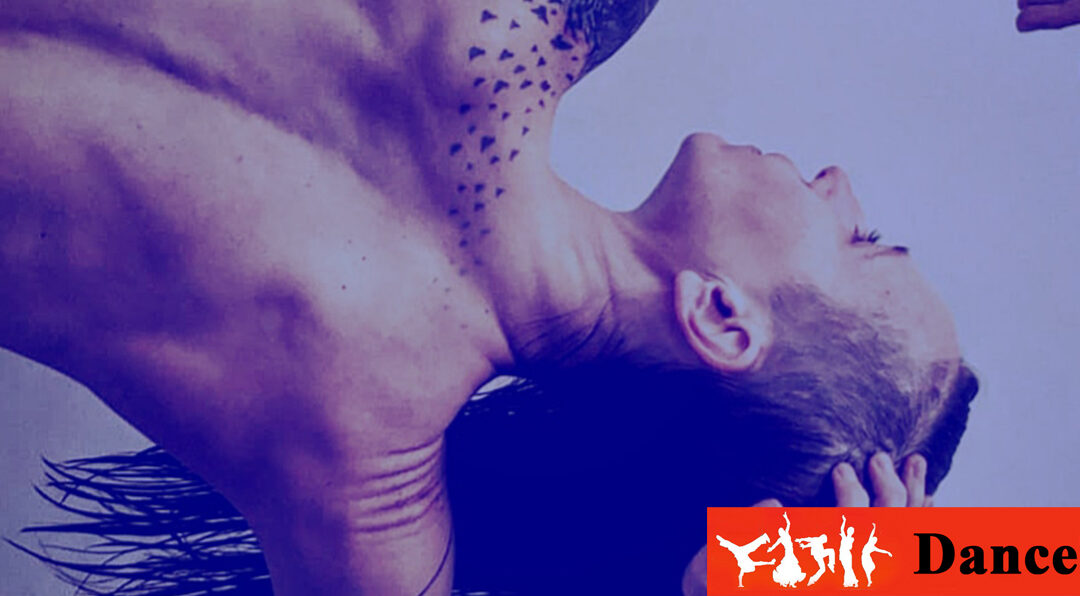
Rivkah French discusses her creative process as a modern dance choreographer, how the pandemic is helping focus on her true purpose, and how Patreon supports her work. She also advocates for the LGBTQ community in dance. Follow her at https://www.patreon.com/Rivkahfrench, https://www.instagram.com/rivkahfrenchchoreography/, and https://www.facebook.com/RivkahFrenchChoreography/. Check out her piece Concrete Flow at https://www.youtube.com/watch?v=u8MdQ-8Kdd0.
DanceTalks with Rivkah French: Full Transcript
Hosted by Andrea Cody, Director of Dance Houston. Originally released September 14, 2020. This transcript was generated automatically and may contain small errors.
Episode summary (SEO)
On this episode of DanceTalks from Dance Houston, host Andrea Cody talks with Rivkah French, a Houston independent choreographer and the director of Rivkah French Choreography. Rivkah describes taking a college ballet elective at 20, falling in love with modern dance, and leaving an English degree behind to dance with Richie Hubscher’s avant-garde Easy Credit company at Notsuoh, train at Houston Metropolitan Dance Center, and co-found FrenetiCore, Frenetic Theater and the Houston Fringe Festival with collaborator Robert Thoth. Rivkah talks openly about coming out in 2012, a spiritual journey through therapy and meditation, and stepping away from running a nonprofit in 2016 to make only the work Rivkah is excited about. The conversation covers Rivkah’s dance film Concrete Flow, the butoh-influenced Bodies of Light at Nestor Topchy’s Glass Crescent, performing in front of Andres Serrano’s Torture exhibit at the Station Museum of Contemporary Art, curating a night of queer choreographers for Stonewall’s 50th anniversary at the Contemporary Arts Museum Houston, building support through Patreon, queer dance workshops and an LGBTQ adult camp, a creative process fed by music and notebooks, and Rivkah’s section of Dance Houston’s The Garden of Earthly Delights. The episode closes with simple advice: start with your breath. Recorded August 28, 2020.
Key takeaways
- Follow what excites you. Rivkah changed course at 20 after a ballet elective, starting over in beginner classes with 12-year-olds to learn to choreograph.
- Being whole changes the work. Coming out in 2012 lifted a weight and made Rivkah’s choreography less angry and more open, and now Rivkah is making the queer dance that rarely gets seen on stage.
- Don’t put all your eggs in one basket. Patreon, grants, a fiscal sponsor, individual donors and museum commissions together let an independent artist keep creating.
- Ideas come from everywhere. Music, a notebook at every concert, kids, pets, games like a move for every letter of the alphabet, and two hours alone in the studio all feed the process.
- Start with your breath. Air, water, food, shelter, connection and self-expression are the checklist for a healthy life; if you’re unhappy, one of them is out of whack.
Transcript
This transcript has been lightly edited for readability: filler words and repeats were removed, and several passages that could not be heard clearly in the recording were left out or condensed.
[0:00] Introduction
Andrea: Hello and welcome to DanceTalks. I’m your host, Andrea Cody. Today is August 28, 2020, and my guest is Rivkah French. She is an independent choreographer and the director of Rivkah French Choreography. Rivkah, welcome to DanceTalks.
Rivkah French: Hey Andrea, thanks so much for inviting me. It’s really a pleasure.
Andrea: Mine too. So tell us how you started dancing.
[0:23] A college ballet elective
Rivkah French: When I started dancing. Oh my goodness. I didn’t start any sort of formal training, or any sort of physical anything, until college. Before that I was kind of a bookworm and a theater and academic type. I was required to take an elective in college, and I thought ballet would be the most random, silly thing I could do. I took the class, hated it, loved it, hated it, loved it some more, and then found modern, and that really opened everything up for me. I changed my whole life path, basically at the age of 20, and decided I was going to commit myself to learning to dance, really with choreographing in mind, because creating dance was the thing that excited me. When I look back, I see that I loved dancing socially in high school and with friends, and I loved the idea of arranging bodies, but I had no vocabulary. So I had to start at the beginning and go to a lot of beginner dance classes with 12-year-olds and be the worst one in the class.
Andrea: Oh wow. And where did you go?
Rivkah French: Mainly the Houston Met. I was in college and part of the dance program there, but something felt missing about the program at that time for me.
[2:08] Easy Credit and Notsuoh
Rivkah French: So I basically joined a dance company and dropped out of college in my fourth year. I had been an English major, and I was like, “No, that’s not it.” I joined Easy Credit, which was this really avant-garde, funky performance dance company based at Notsuoh, which is Houston spelled backwards. We would do these amazing 2 a.m. performances in body paint. The director was a former Houston Ballet dancer, Richie Hubscher, who had some pretty dark, interesting visions, and it really worked with my interests and aesthetic at the time. So everything from performing nude at the Rice Hotel when it first reopened, to doing an entire Tom Waits ballet called Bone Machine, and another show called Y2K, all about the end of the world. That was around the year 2000, when I was dancing with him.
[3:20] Training at the Met and building Frenetic Theater
Rivkah French: I realized I was getting some training from him, but you can’t just have one teacher, and I wanted to get it all. So I went to the Met and got a very well-rounded education, I felt. Michelle Smith at the time allowed me to take unlimited classes on scholarship for a really generous rate. In the meantime, I started teaching kids. And I met my collaborator, Robert Thoth, who said, “I’m a musician and I want to learn how to do film. What if we got together and did original dance pieces?” Then, when you get a grant, you spend all the money on renting the theater, and he said, “Why don’t we just build our own theater? That’ll be fun.” So a few years into starting a nonprofit with him, doing original shows, performing around town and getting grants and commissions, we decided to go ahead and build Frenetic Theater in the East End.
That black box theater was a wonderful part of my life: to build it, to start a kids’ program there, to have a visual art exhibit hall, to start the Houston Fringe Festival and have weekly classes. And I also got to live there. You can see my cat has decided she’s going to start reading. That’s maybe Martha Graham’s autobiography.
Andrea: Oh, Martha.
[5:10] Stepping away to become independent
Rivkah French: So we did that, and that took me to finally realizing, “Oh, I don’t really want to run a theater anymore, and a festival, and a studio, and a dance company, and all of these other things.” So I finally stepped away in 2016 to become an independent choreographer, which is what I’m doing now: following my passion and only doing performances and shows that I’m excited to do. So in a nutshell, that’s been my dance journey.
Andrea: Awesome. I’ve seen most of it, and I’ve loved it. I loved going to Frenetic Theater. It was a blast. I loved the shows you did there and how open you were to supporting the community and letting people come in and have events.
Rivkah French: That was what it was all about. Of course we wanted a place to perform and a festival that would put us in it, but we also wanted everybody else who wanted to, to get a chance to express themselves. When you produce events where you’ve got dozens or even hundreds of different groups and ideas and modes of expression being represented, you create a real opportunity for people to shine their light in the world, and that’s such a huge gift to give.
Andrea: Kudos to you for keeping that up for how many years?
Rivkah French: Seventeen.
[6:45] Coming out
Andrea: So your personal life has changed, from juggling all of those gigantic responsibilities to just focusing on your art. What a leap of faith you made.
Rivkah French: I didn’t really have a choice. It’s interesting how life does that. I would say I was pretty ambitious, juggling a lot, and part of the reason was that I was a lesbian in the closet. When you have a secret, or something you’re not admitting to yourself or to the rest of the world, I at least used what I was hiding to fuel and create in other ways, which was good; at least I had a positive outlet. But I was living a double life in a lot of ways, and I wasn’t happy deep down. So I finally admitted to myself, “Okay, I’m gay, I’ve been hiding this for so long, and I want to be a whole person and have all the parts of myself expressed in the world.” Once I did that, in 2012, it was like a huge weight came off. I was able to explore that part of myself and enter into really satisfying relationships from then on, but it also opened something up in my work. My choreography and the kind of art I was making got a lot less angry, because I had been in this internal struggle.
I think that happens with age anyway. You’re still really passionate about everything you care about, but you learn to lighten up and realize, “This too shall pass.” So coming out and being a whole, integrated person, I just had to be me and let the chips fall where they may. Maybe my board of directors won’t like it. Maybe my family won’t like it. Maybe I’ll lose some friends. I don’t know. But a lot of things really improved.
[9:40] Making the dance I want to see
Rivkah French: Now I’m at a point where not only am I an activist and a leader in the LGBT community, and I get to empower my community, be a resource for people who are struggling with some of those issues, and be a stand for their healing, empowerment and expression, but as a choreographer and artist I want to make more dance that represents my community, things I want to see on stage that I don’t get to see enough of. So my next dance film will be a romantic duet between two women, exploring gender identity and orientation and the idea of touch, which is so interesting to me right now, because we’re not really allowed to touch each other at this time. I value touch and intimacy on a physical level.
So integrating all the parts of myself has been really important for me, and I just didn’t have a choice; I was too unhappy to keep going the way I was going. There’s a point where, if something’s wrong and you just ignore it, it’ll get worse. You have to actually be yourself, your true self, and follow your heart. I’ve also been on a really wonderful spiritual journey in the past year and a half. I don’t know if it’s affecting my choreography necessarily, but it’s making me a much more integrated person and helping me with my perspective on things.
[11:58] A spiritual journey
Andrea: What’s been the spiritual journey?
Rivkah French: Well, I started with therapy. I was so anti-religion and anti-spirituality in general for a long time, so it took a long time to get there. I was anti-church because of the anti-gay thing, which really rubbed me the wrong way, obviously, and all the problems associated with organized religion and what people do with what started out as a pretty great message. And on the other side of that, I had a dad who was bipolar and who claimed to follow Eastern philosophy, like a Buddhist, but he took those teachings and manipulated them in a way that was very unhealthy. So my whole life I thought that stuff was wacky and BS and not for me at all. I was an atheist for a long time, and I was very angry at a God I didn’t believe existed.
Andrea: Wow.
Rivkah French: So I started with therapy, and that took me to following certain thought leaders who were espousing meditation. Then going into meditation, I thought, “This is too woo-woo for me, I don’t like it,” and then realized, “Oh wow, actually I’m connecting to something I’ve always connected to,” in all of the beautiful moments of my life. Every time I choreograph, I’m channeling something through me; I’m a vessel for something bigger. I’ve always found that connection to a higher intelligence, pure positive energy, God, source, whatever you want to call it. I always knew it was there, but I was really angry at it for being represented by religion and by the things I didn’t like about my father’s portrayal of Eastern religions and philosophies. It took me getting into my 40s before I was even open to spirituality, and it took meditation to get me there.
Through that I’ve become aware of a bigger energy that I’m part of and that I came from. That whole idea of original sin, that you were born unworthy and have to spend your life proving your worth to some God who’s really angry and judging you and is going to send you somewhere really bad if you don’t check all these boxes, that’s not it for me. I was born worthy. God doesn’t make mistakes. I’ll go back to God when I die. I’m here to be an expression of God’s love and to expand on God. It takes a lot of the pressure off when you realize you’re not being judged by an angry God all the time. To some that would be blasphemous, and they’d say, “Hey, you’re going to hell.” But if you don’t believe in hell, then it’s all good. I think hell is something people created to control other people and to punish themselves. There are people living in hell on earth right now, and there are people living in heaven on earth, and I choose heaven on earth.
[16:06] Rivkah’s style
Andrea: Awesome. Well, tell us about your work, your style, for those who haven’t seen it, and where we can see it. Give us an idea of what you do.
Rivkah French: I haven’t been doing enough lately, that’s for sure. I loved and connected with modern dance for a long time, traditional Western modern dance, but I always wanted the influence of other styles. Being open to bringing other things into my work has been important to me, not only multimedia aspects, like bringing dance film into live performance, having projections on dancers or film as part of the story, or doing live-feed stuff and all kinds of technology, which has always been a really fun part of it, but also telling stories through dance while having some of it be abstract. So basically, I’ve done it all. I love big theatrical shows on a large concert stage. I love small, site-specific, immersive, interactive work. I love making dance for film and integrating all sorts of technology into live performance.
That’s the logistics. Aesthetically and stylistically, I started with the Western modern dance foundation and then got really interested in Asian styles in the last eight years or so, when I first saw Shen Wei Dance Arts touring to Houston in 2012. The butoh, tai chi and Chinese opera influences in his work have really impacted me. And the same with African dance, African hip-hop and jazz; all of those styles have influenced me in the past year or two, drawing from those Asian and African styles, traditions and beautiful aesthetics. That’s really what I’m digging into.
[18:45] Concrete Flow and Bodies of Light
Rivkah French: My last film, Concrete Flow, is on YouTube. It’s a five-minute dance piece where four dancers are in front of five different murals in Houston, doing hip-hop-influenced movement, but it also has a lot of the Asian style; it’s a contemporary short piece to some poppy music. The second song is a lot harder, and the first one is more smooth. I think it’s a fun bringing-together of really cool mural art in Houston and lots of different dance styles, with very different dancers who come from different backgrounds but who can all do interesting things.
My last big show was called Bodies of Light, and that was much more Asian in style. You would look at it and think of butoh right away, because the dancers were in all-white body paint and basically nude, just in a thong and nipple covers. The movement was very surreal. There were lots of big, dancey, athletic parts, but some of it was very slow and meditative. It was a full-length show at a beautiful site called the Glass Crescent. My friend Nestor Topchy and his wife, Mariana, who owns and runs AvantGarden, are this incredible power couple, and he made his studio available to me. It’s called the Glass Crescent because it’s in the shape of a crescent, and the whole half of it is beautiful glass windows. He’s a Buddhist and a painter, among many other things, and when the light comes in through the windows every day, he paints a mandala in the shadows while drinking his tea. It’s super spiritual, so it was such a serene and picturesque environment.
The show was a genderqueer exploration of bodies. It’s reminiscent of what statues coming to life would look like, or aliens exploring what it’s like to be in a human body. It ended with a sort of gay marriage: Amy Phillips and I were dancing at the top of what looked like a wedding cake, the dancers were under this giant white skirt, and they all emerged from it. I described it as like a Sense8 orgy, from the show Sense8, but the G-rated dance version: super sensual and beautiful and very gay. So that was really fun.
Andrea: We’ll put a link to Concrete Flow in the notes to the show. What about Bodies of Light?
Rivkah French: I have excerpts of it public. The full version is on Patreon, so you have to become at least a $2 patron to see the full-length documented version.
[21:55] Patreon
Andrea: Awesome. So tell us about your Patreon.
Rivkah French: Oh man, what a great idea, right? It goes back to the whole concept of Mozart and Beethoven and lots of painters back in the day, who had a few rich people supporting them and were able to spend all their time making whatever they wanted. I know it’s not that easy, but the concept that people who like your work pay you a monthly fee, and then you’re free to pick whatever projects you want, is what drew me to Patreon. I believe I have 22 subscribers right now, from $2 a month and up, and they get different perks. I post something new every week, whether it’s an instructional dance video of me breaking down a short phrase, or a full-length class. They also have access to in-person classes with me at my little home studio, which I just opened, with nice big mirrors and an open living room space to dance in. You just can’t jump on one side of the room, but other than that, jumps are great; the floor is springy. And I share personal writings and videos of me talking about life, more of the personal side.
So it’s a good blend. If you want to dance with me, that’s included. If you want to see all my past work, longer documentation and photos other people haven’t seen, that’s included. And if you want to find out what’s going on in my personal life, that’s included too. Some of it is put out on Instagram, Facebook and YouTube for everyone, because as a content producer you always want to provide the public something free, and then for the people who really resonate with it, you give them an option to have more. When someone supports me at the top monthly level, they get to be a producer and name my next dance film, but if they can only do $2, $5 or $10 a month, they still get the instructional dance videos. So I feel it’s a really fun and fair way to engage with the public, for anyone who has some people in their life who would support them and resonate with their work. And the goal is to grow nationally, with people from around the country, and then internationally.
Andrea: Awesome. How long have you kept it up?
Rivkah French: I think I started it just before the pandemic.
Andrea: Pre-pandemic, post-pandemic; that’s how we look at things right now.
Rivkah French: It’s not hard to set up. Give it a few hours, start adding your stuff, and then send a message to everyone: an email, an Instagram message, a text message. That’s really where the time goes, letting people know about it. But I think it’s worth it. I read about someone named Amanda Palmer, and I want to say she has 19,000 Patreon subscribers. She has a video about all the incredible projects she’s made since she built up that base: amazing collaborations with her heroes, starting initiatives for kids, traveling the world doing tours she wouldn’t have been able to do otherwise. Obviously that’s a really lofty goal, but seeing that it’s possible is what got me in the game. She has so much artistic freedom and so much ability to impact people and do cool stuff.
Andrea: That’s great. I love that it encourages people to donate to you regularly, without any overhead or fiscal sponsorship fees.
Rivkah French: There’s no typical process like you get into in the arts a lot, with Fractured Atlas or a fiscal sponsor. You know that running a nonprofit is no joke; it’s a full-time job. It’s great to be able to tell people, “Donate to my nonprofit and you’ll get a tax-deductible donation,” and people like hearing that. But for someone like me, who just wants to pick all my projects and not answer to a board or manage a staff, it’s super ideal. Patreon takes its little cut, but they handle everything else, and people who want a tax-deductible donation can go through my fiscal sponsor, which is waiting in the wings, ready to do that. I think we’re all learning, if we didn’t already know, that you’ve got to be flexible as an artist, and as a person, during these times. Don’t put all your eggs in one basket. Try to get those grants, have that fiscal sponsor, get those individual donations, and then ask your parents for money if all of that fails.
[29:25] Funding life as an independent artist
Andrea: Can you give us a little perspective on your financial situation, from running a nonprofit, with the responsibility of having to deliver and make such a big presence to garner attention and merit for winning grants, which you did so much, to now? Are you still able to do the work you want to do?
Rivkah French: Yes, absolutely. It’s not as stable or as guaranteed. As a nonprofit, you can say, “We know we’re going to get operational funding from Houston Arts Alliance, and if all goes well, this one from the Brown Foundation and this one from the Texas Commission on the Arts.” You don’t have those assurances as an individual artist at all, not even a little. But you don’t have the overhead either. Literally, if I want to, I can make a dance project for very little and perform it for free, if I just want to dance and perform.
What I started out doing was looking around at individual artist grants and applying to Houston Arts Alliance for those, of course. They didn’t have a lot of dance representation on the panels at the time, so no dance was getting funded for a few years. As an individual artist who wasn’t running a nonprofit and didn’t have to be scared of Houston Arts Alliance and its staff, I was able to raise a huge stink about it and go to the CEO and say, “This is not working. You only funded one dance thing last year. What’s going on?” And he was able to change the structure of the panels to be more representative of dance. But that took a long time, and there just weren’t a lot of city opportunities for individual choreographers while they sorted it out.
[31:39] Dancing in museums
Rivkah French: So I started looking to galleries. I like dancing and seeing dance in places where there’s great visual art or great videos being shown in conjunction with exhibits. I got commissioned by the Station Museum of Contemporary Art, and they’re just amazing. Whoever’s listening, if you haven’t been there, go; they’re always doing really political, wonderful artistic exhibits and supporting the community in a lot of ways. After the 2016 election, my friend Ayokunle, who’s a poet from Nigeria, and I were like, “We’re so angry. Let’s make a show that’s really political.” So he brought in all these poems, and I choreographed dance in front of the Torture exhibit by Andres Serrano, who is one of my heroes. That really came together nicely.
Then Houston Center for Photography, HCP, commissioned me to do Bodies of Light excerpts in conjunction with a really great exhibition they had with an Asian artist, so it fit aesthetically with his style, about alienation and belonging to two cultures but not feeling like he belongs to either one. And then the Contemporary Arts Museum Houston, for the 50th anniversary of Stonewall, which set off the modern-day gay rights movement. I got to curate a night of dance, and instead of choreographing the whole thing and having it be the Rivkah French show, I said, “No, this topic is way too big for me to take on alone.” I curated seven of the best queer choreographers in Houston. We recreated a nightclub setting, because Stonewall was a nightclub where the seediest of the gay community hung out, alongside the visual exhibition that was going on, and they showed their work. Instead of choreographing it all, I made a ten-minute history video of 50 years of gay rights, and that was really intense. I learned a lot and I cried a lot, because there’s been a lot of tragedy, like with any minority group’s rights, whether it’s a hundred years of women’s rights or African American or Latinx rights. But it was a beautiful experience. Museums have been a great resource for me as an individual artist, and I continue that.
[34:52] Making new connections
Rivkah French: But it was a lot of cold calling and emailing: “Hi, I used to run a nonprofit and had this identity and credibility, but now I’m just floating out here in the ether, and I want to perform.” You really have to make new connections, but also use your available resources, like my friend Nestor, whom I’ve known for 20 years. He had this great art studio, and that’s where I ended up doing the show after the Rice Skyspace canceled. I had worked really hard to get commissioned there and had the contract signed and everything, and they said, “Never mind, just kidding, you can’t do it here.” So relying on who you know, and being willing to step out and make new connections, is really important any time you venture on a new journey.
Andrea: Cool. You had a body of your work to share to get you going, I’m sure.
Rivkah French: I was lucky that my main collaborator for 13 years was a videographer, so maybe 60 percent of it was documented. A lot of it wasn’t, which is always heartbreaking.
Andrea: Oh yeah. No one will ever see that again.
Rivkah French: Totally. Although if anybody slipped, at least that won’t be seen again either.
[36:30] The creative process
Andrea: Give us an idea of your creative process.
Rivkah French: Oh my gosh. I think it sounds boring, but I just daydream. I love ideas. I listen to all kinds of music all the time; like most choreographers, I’m obsessed with music. When I hear a song that’s amazing, that sometimes gives me an idea for a dance, or it’s a concept, like “I’d really like to explore this theme,” and then ideas start dropping in, visuals. Every time I go to a dance concert, I bring a notebook and write down ideas I get inspired by. I haven’t seen a lot of live dance in a while, of course, but even watching videos I’ll do it.
Andrea: I do that too. I did it going to see Love, the Cirque du Soleil show about the Beatles in Las Vegas, and the usher told me I wasn’t allowed to take notes. I was like, “You guys have this really locked down.”
Rivkah French: Did you have a phone flashlight on or something?
Andrea: No, I just had a little notepad. No one had ever said that to me before. Obviously no cameras, but a notepad? And I can’t even read my handwriting sometimes. I pulled the notes out later and I had written lines over and over on top of each other on the same sheet. So what do you write down?
Rivkah French: Whatever inspires me. If I see somebody move in a really interesting way, I’ll write that down: “Whoa, the deepest plié ever,” or “How did they turn that way?” Or if I see something cool that makes me think of another thing, like “I liked the way they were connecting with each other; it would be interesting to see dancers super in love and then…” Sometimes it’s a chain reaction: I like seeing that, but it makes me want to see this. Other times it’s, “Oh my God, I have to steal that move entirely. That turn was insane. If I could even do it halfway…” But you always manipulate it, because stealing somebody else’s choreography is the worst. I would never do that.
So it comes from everywhere: playing with kids, watching your pets move around, or just locking myself in the studio for two hours. That’s where the best stuff happens, when you let yourself play and move. Sometimes having a deadline is good, and other times it’s being free. I’m definitely going to make a new solo, but I don’t have a deadline or a need for it; I just really want to explore the idea of gesture and big travel together. That’s what’s interesting me right now.
[40:12] An alphabet solo
Rivkah French: For my last solo, which I did in a cemetery because of COVID, I used a game for myself: what if I made a movement idea for every letter of the alphabet? So it was, “A” is anterior, and then breath, and then crest. It was a while ago, but it just became this natural thing that started to travel, with a movement for every letter of the alphabet, and it was super fun to do. Having that mental game to play helped, because there’s nobody to dance with, no rehearsal to show up for, no deadline, no show. What do I do with myself? And Patreon gives me kind of an anchor: people are paying me to create content, so I’m going to create this phrase, post how to do it, and teach a class with that choreography.
[41:45] What we can’t live without
Rivkah French: I think we’ve all gotten so connected during this pandemic to what we can’t live without. We’ve let go of a lot of things we didn’t actually need: things we spent money on, time wasted spinning wheels, going into the office, errands that were unnecessary. But on the flip side, I literally cannot live without dance. That’s my truth and my reality. That’s why I’m here on this earth: to be a dancer, a choreographer, a creator, an empowerer of other people’s expression, a connector. So I don’t care if I’m getting paid. I don’t care if I have a show coming up. I’m going to dance; I’m going to find a way. That’s been a really great realization: whatever the restrictions are, I’m going to find a way to have dance in my life. And if I don’t, I don’t really want to be here, to be honest. That’s what I’m here for. Getting really clear on that is important for people, to understand what their true purpose is and then live in it and embrace it.
Andrea: Can’t stop, won’t stop, right? So what would you do if you had to do solos on YouTube forever? Is that okay?
Rivkah French: Yeah, but that’s not going to happen. Knock on wood. Already there are projects starting to come together. I have a photo shoot next week with Ashkan, who does a lot of work with Houston Ballet dancers, and man, he’s got great ideas. There are always people who want to collaborate and create in whatever way is acceptable for the current conditions. I’m pretty sure I’m going to find my duet partner, and I want to do a big group piece; it would be so fun to get a group of people together again. I was just in a music video for my friend Angie, who’s a really great mover as well. So lots of projects are happening, and it’s going to get better and better, with more and more opportunities to create.
I’ll probably go back to writing some grants for bigger projects in the future, but I spent a whole season writing grants last summer and fall, and I don’t really want to go back to sitting at a desk for that long again. So I’m kind of on the fence about whether I want to try to get the government money I relied on for so long, or not. I don’t know what I should do. I guess I’ll meditate on it.
Andrea: It makes sense that at this point, getting more Patreon subscribers is really your way to more freedom, and to save money for bigger productions. That’s a great avenue.
Rivkah French: Yeah. And I don’t know what’s going to happen with unemployment, but I’ve been blessed to have that assistance since this started, and that’s been a huge lifesaver. We always figure it out as we go; we always make it work. If you’re scared about the future, just stop, look around and say, “I’m here now. I made it this far. Obviously I’m doing something right.” Whatever happens, we’re going to make it, we’re going to get through this, and we’re going to keep being artists.
[47:00] Live performance isn’t going away
Andrea: I have a hard time imagining that people really want to be entertained just on their phones and TVs from their own homes forever. Having witnessed the performing art of dance firsthand my whole life, I know people love it. They love to come and see it, or be part of it, whether they’re on stage or in the audience or it’s just a gathering. It’s so integral to the enjoyment of our lives. It just takes my breath away that the entire industry has been completely wiped out.
Rivkah French: We’ve all had some time to garden, create a spiritual practice, connect more with our friends, read more books. You can see it as a stagnation, or you can see it as an opportunity to do all those things you weren’t doing when you were obsessing about getting audience members into seats, whatever part of the performing world you were focused on, whether you’re a performer, choreographer, event producer or arts administrator. It shows you what you were missing, but it also shows you what else is possible, the enjoyable things in life we were missing out on. But I know live performance is never going away. It’s always going to be part of our lives, because it’s an experience people don’t want to live without. Tomorrow night I’m going to watch a movie with people out at Pro Bar. It was going to be a drive-in, but I think we’re all going to be in lawn chairs instead, mask or no mask, together in person. That’s starting to come back more and more. People can’t really live without each other and that sense of shared experience. So bring it on.
[49:51] The Notsuoh days
Andrea: That reminds me of how you got started, in Notsuoh performances at 2 a.m. Those were not legal in the slightest.
Rivkah French: But drunk audiences are very forgiving.
Andrea: That’s true. I feel like the main thing that happened at that point was that the fire marshal kept shutting it down. What happened?
Rivkah French: It was a huge scene of underground arts, with people performing and artists getting together after their shows, and some of the most amazing intellectual conversations and experiences. I was in my early 20s, just taking it all in. I literally lived there, in a room that had been an old shoe storage room, because the building had been a shoe warehouse, kind of like a Macy’s, for years. I lived in this dark little room for two years and got some of my dance training and lots of performance experience there. Jim Pirtle, the owner, had a daughter, Martha, who was just a wee little toddler when I moved in, and people were always calling CPS because she would run around without shoes, but she was fine for the most part. What really caused the controversy was that someone fell out of a second-story window. I think she was high on some pretty serious drugs, and she got a serious injury but didn’t die. That’s what caused the whole thing to shut down momentarily. Then Jim reopened it as just the coffee shop downstairs for a sort of hiatus. Now it’s still a space, and it’s just as grungy as ever. I don’t know if it’s quite as interesting as it was then. That might have been the golden age, but we tend to look back with nostalgia. There’s always going to be a place for the weirdest artists to go and be weird.
That was a really cool gateway into dance for me, because I wasn’t someone with a lot of training.
[53:06] Everybody has something to offer
Andrea: Oh, that’s great. Richie told me a story about when you were rehearsing at Notsuoh: anybody who showed up to rehearsal would be in the show he was putting together. There was one guy who didn’t even know he was at a dance rehearsal; he was sweeping floors, and he ended up in the show.
Rivkah French: He was such an opportunist: anything he could use in a person, any skill, any performance quality. I really learned that from him, that everybody has something interesting and captivating to offer on stage. That’s an important message, and an important skill in life: everyone has something to offer. Now I’m at a point where the dancers I work with tend to be highly trained, because that’s what I want to see, but they also have to be willing to take on their own artistry and not just regurgitate what I’ve given them, because it falls flat when people do that. I’m finally at a point where I don’t have to teach anybody Modern 1 or explain the basic concepts of anything, and that’s an awesome gift. But beyond the training, they have to be true artists who are willing to take risks.
Andrea: That’s a good place to be.
[54:55] Advocacy for queer dancers
Andrea: I wanted to ask about your advocacy for the LGBT community: how you advocate, and why. Are you more of an LGBT advocate within the dance community, or more of a dance advocate within the LGBT community? What is it all about to you?
Rivkah French: Both, and all, I guess. I feel it’s really important for the dance community to acknowledge and celebrate its queer dancers, voices and choreographers, and that hasn’t always been the case. It’s been so ridiculous that a high percentage of male dancers have been forced for most of their careers to pretend to be straight on stage and always perform as a straight male, whether that’s embodying macho characteristics in their movement or doing strictly love duets with women. So there’s a side of themselves that’s not being expressed, and they’re being robbed of that. And many male choreographers are gay and don’t get to see their vision fulfilled, because they depend on funding from people who are threatened by seeing anything queer on stage.
That’s all changing, and I’m a part of that change. That includes writing queer dance theory essays that are published online, and queer dance movement workshops, which make these conversations available to dancers. We get together and say, “Okay, we’re dancers. We’ve been taught to move this way. We’ve been taught that girls have to be pretty and boys have to be strong. Let’s talk about masculine qualities in movement, feminine qualities, and what it is to be androgynous, and let’s disband all of it in a way that’s empowering.” We don’t have to get rid of all these ways of moving that are interesting and fun to express in our bodies, but we get the freedom to say, “I’m going to move in a masculine way or a feminine way, regardless of my gender or orientation,” and we have the freedom to do all of it or none of it. It’s all a construct, stuff that’s been handed down to us, and we get to take what we want and leave the rest behind.
I’ve already done this in ballet classes, where the teacher gives a jump combination and says, “This is for the men, and this is for the women,” and only the boys move the barres, only the women curtsy, all these ridiculous rules. I like to jump. I like to do certain kinds of turns that supposedly are just for men. And there are lots of men who want to be pretty and dainty and feminine when they move, and they’re not being allowed to do that in a lot of their dance classes and on stage. We should all be free to express ourselves wholly. So first we have to look at what’s broken and then put it back together in a way that empowers everyone. It’s the same with all these amazing conversations and causes that are changing the world right now, like dismantling white supremacy. All that’s got to go. The Me Too movement, too. All the old structures that were really hurting and oppressing people, and giving not just the oppressed but the oppressors really unhealthy, unhappy lives. We can let it all go, all be equal and fully expressed, and celebrate each other’s individuality. That’s the world I’m creating.
[59:55] Being visible, and a queer camp for grown-ups
Rivkah French: That includes working with younger people in those workshops, and dancers of any age, and creating choreography. I feel that just producing and making public content that’s very freely gay has an impact when somebody sees it. I remember, before I came out, seeing that a dancer in Houston who was a lesbian had it public on her Facebook page, and I thought, “I can’t believe she’s so brave that she lets people know she’s gay.” Now it’s literally a badge of honor that I wear with pride, but it took a long process to get there, so I want to be that for other people.
And in concrete ways, I’m working on a queer camp that will hopefully happen in spring 2021. I’m talking to Pride Houston about collaborating on it, because they’ve got the resources, the marketing and the tools to get a lot of people out there. It’s a group that will go out into the woods and recreate the camp experience, but for adults, 18 and up. If you’re LGBTQ, too many letters to mention, which is why I love saying queer, because it includes everyone, in any way, shape or form, you’re invited to go out to the woods and do fun artistic, arts-and-crafts kinds of stuff: everything from dance workshops to mindfulness meditation by the stream, hiking, kayaking, campfire songs, live entertainment at night, a talent show, a scavenger hunt, all the camp stuff, but for grown-ups. That’ll be more of the arts advocacy within the LGBTQ community that you mentioned. My focus until now has been more on advocating for queer issues inside the dance world.
It’s a joy and an honor to get to represent my community in different ways, and to let them tell me what they want. You know, as a leader of a nonprofit and as a person who makes opportunities possible for people, way more than I ever have: you start out with an idea of something cool that could happen, but then it’s all about the people you’re serving, the community, and the people you’re working with having a great experience. That’s where your joy comes from: “Wow, that summer camp really impacted a lot of lives. Wow, that show had so many artists expressing themselves, and so many people in the audience walked away forever changed.”
[63:59] The Dance Houston master classes
Rivkah French: I’m really excited about this podcast too, being able to highlight artists and reach people beyond barriers like transportation. I’m going to go listen to them all now.
Andrea: Have you heard one yet?
Rivkah French: I haven’t listened to any yet, but they’ll be there forever. And can I tell you, I have been going through every single one of those master classes, doing them in order. They’re incredible. What a brilliant resource for people, because the teachers you hired explain things so well and make it so easy. I didn’t know a hip-hop pas de bourrée was so fun compared to the other pas de bourrées I’ve been doing my whole life.
Andrea: For our listeners, Rivkah is referring to a master class series on the Dance Houston YouTube page, which she contributed to, with 11 other artists presenting different styles of dance. I encourage you to check that out. These classes are dope.
[65:18] The Garden of Earthly Delights
Andrea: I also wanted to ask if you wouldn’t mind briefly describing your involvement in The Garden of Earthly Delights. It was a show we did together in 2016, I believe. It was a commission, a full ballet based on the Hieronymus Bosch painting of the same name, and we had a handful, five choreographers, do different sections of the work. I wanted you to describe your section, how you did it, and what it was like being part of a show with a few contributing artists and seeing it come together.
Rivkah French: Oh wow, that was an incredible opportunity, because I had never heard of or seen that painting before. If you haven’t seen it, look it up; it’s wild. This guy was on all kinds of crazy levels when he painted it: levels of existence and history. There’s a lot of violence and a lot of nudity. So I remember being inspired by that when I came up with the choreography, feeling like it was sexual and grotesque and playful all at the same time. There were so many fun ideas to explore, so we did some fun partnering. Remind me who did the music for that?
Andrea: Leroy Osmon was the composer, and the University of Houston Wind Ensemble played it.
Rivkah French: That’s right, the wind ensemble. There were something like 47 instruments; it was just a huge sound and a complicated musical piece, so that was a challenge in and of itself. I remember everything about that project feeling big and exciting.
Andrea: I think one of the sections I gave you was a sweet trio for three women.
Rivkah French: Oh yeah, I had two pieces in it.
Andrea: That’s right. You did the three girls by the fountain.
Rivkah French: Yes. So I got to be sweet and playful in that one, and the other piece was more climactic, with giant running and throwing each other. It was super cool to get to play with those different dynamics, and your dancers were phenomenal.
Andrea: Oh, thank you. I’ll put out a little sample of that work too, so we can refresh our memories, because I think we probably haven’t seen it in a while. It’ll be really fun.
[68:20] Dream projects
Andrea: So let us know what your dream project is. If somebody really wanted to support you, or if you were going to write a big grant, do you already know what it would be for?
Rivkah French: I’m trying to choose between the ten that are going through my mind right now. The dream for queer camp is for it to get bigger every year, becoming a seven-day camp with people coming from all over. That’s a really cool vision. Choreographically, I want to collaborate with some of my heroes, everybody from Shen Wei, my favorite living choreographer, to Emma Portner. Why not? Look around at the people doing the most innovative, interesting work and dream about collaborating with them, because it could happen.
I still have to find my partner for this duet, so that’s the most immediate, and it’s going to be the highest-quality film production I can make, because my take on dance film now, which has sort of always been my take, is that the camera is the dancer, and I want to explore what’s possible in dance film that you can’t do in a live show. I was happy with Concrete Flow, but I wanted the camera to dance a little more, so I’ll take the lessons I learned into this one. And I want to tour Bodies of Light. That show only got to be performed a few times. It had eight incredible dancers, and people need to see this work. I feel so passionately about how beautiful, inspiring, gut-wrenching and life-changing that show was for the people who got to experience it, so I want to tour it all over the world.
I’m also really fascinated with body paint. I found out that Shen Wei did a project where he covered the stage in a canvas, and the dancers had body paint in their costumes, with some way to keep it replenished, like those cleaners where you fill up the tube and it keeps distributing. They painted the whole stage over the course of the show, and then he cut out a square of the canvas for audience members and sold them in the lobby for a hundred dollars apiece.
Andrea: And he had the money for the next show, right? Wow.
Rivkah French: Because a 1,200-square-foot canvas goes a long way. Pretty practical. So I’m just bursting with ideas about body paint and what’s possible with dancers’ bodies. To be continued. Anybody who wants to throw a thousand, ten thousand or a hundred thousand dollars my way, I will use it so wisely, I promise. You’re going to get a lot of bang for your buck.
Andrea: I stand behind that statement for sure.
[71:55] Advice: start with your breath
Andrea: I like to close the show with you giving us some advice, either as a dance teacher or as a friend and leader. If we were your students, how would you send us off, either to dance today or to get through the rest of the day the way you’d like to see us do it?
Rivkah French: Okay. Something I heard yesterday was revelatory to me: to be healthy, you have to breathe. Air is your top priority; you can’t survive more than a few minutes without it. Then of course you need water, and then you need food, which you can go a while without, and then you need shelter, and then you need connection and self-expression. If you’re not making sure you’re getting enough water, the right kinds of food, sleep and movement for your body, but also if you’re not expressing yourself artistically, you’re going to wither and die. It’s a slow death, but you’re still going to wither and die. So you have to feed yourself on all of those levels.
What really stood out for me was that I felt like I already knew all that stuff. I drink two gallons of water a day, I sleep super well, I’ve biohacked all of these things, I get my greens in, I drink celery juice, which tastes so bad but is so good for you. I have all of those things going on, except I had forgotten about the breathing part: the most important one, the first one, the one you can’t live without for very long. I realized I was breathing one count in, one count out. When you sit and breathe in for four and out for four, and just let yourself do that, that’s literally the foundation of your health. So if you go through that checklist, you might realize there’s one thing you were kind of skipping out on, and you can address it. Or maybe there are four things you’re not paying attention to that really need your attention. But literally, that checklist is all you need to be happy, and if you’re not happy, it’s because one or more of those things is out of whack.
Andrea: My guest today has been Rivkah French. Rivkah, thank you for being a part of DanceTalks.
Rivkah French: Thank you, Andrea. I love you, I love everything you’re doing, and I love everybody watching.
Andrea: Thanks for listening. Please subscribe and share our podcast. To support DanceTalks, donate to Dance Houston. Talk to you on Monday.