
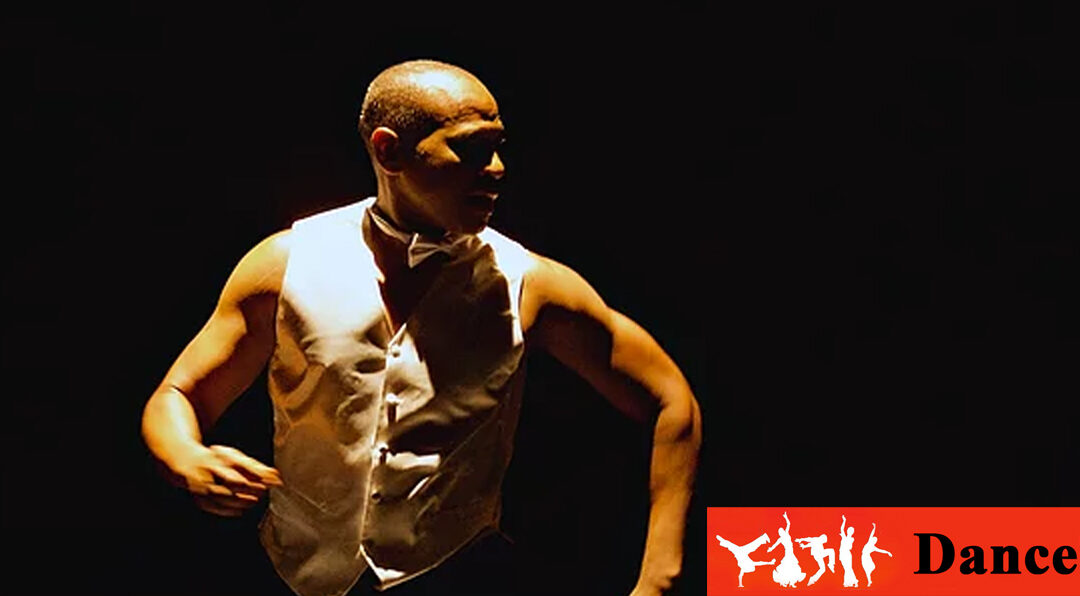
Raul Orlando Edwards explains the big difference between what people in Latin-American countries call dance and what ballroom dancers call Latin dance. He also settles the score about whether you should start on the 1 or the 2. Check him out at www.raulorlandoedwards.com. Follow him at https://www.facebook.com/raul.o.edwards and https://www.instagram.com/rauloedwards/ and his company Strictly Street Salsa at https://www.facebook.com/strictlystreetsalsa and https://www.instagram.com/strictlystreetsalsa/
DanceTalks with Raul Orlando Edwards: Full Transcript
Hosted by Andrea Cody, Director of Dance Houston. Originally released August 24, 2020. This transcript was generated automatically and may contain small errors.
Episode summary (SEO)
On this episode of DanceTalks from Dance Houston, host Andrea Cody talks with Raul Orlando Edwards, who grew up dancing in Panama and founded Strictly Street Salsa, Houston’s first salsa studio. Raul describes taking his first ballet class in his 20s, after a music professor said his posture was hurting his singing, then studying dance at Houston Community College and noticing that Houston’s Latin dance classes of the late 1990s were mechanical, ballroom-based and disconnected from the music and history he grew up with in Panama. He explains why he opened Strictly Street Salsa in 1998, why salsa is “a walk done to a beat,” why the music should tell you what to do, how a good lead indicates instead of forcing, and why every dancer should be able to dance alone. Raul traces how social dances like salsa, tango, samba and swing grew out of marginalized and largely Black communities, how the music and the name “salsa” evolved in New York, the on-one versus on-two divide, and his philosophy that dancing is about having fun. He also talks about the community programs that grew out of the studio, Salsa y Salud, the Afro Latin Festival and Latin Week Houston, his long partnership with Dance Houston, cooking during the COVID-19 shutdown, and presenting every culture’s art with respect: celebrating commonalities while respecting differences. Recorded August 12, 2020.
Key takeaways
- Let the music lead. Salsa is a walk done to a beat; if you feel the music instead of counting, your dancing changes when the music changes.
- Never reach your maximum. Natural movement keeps a little give in the body, unlike ballroom’s hyperextended lines.
- Lead with an invitation, not force. The frame should never be a power struggle, and the follower should always feel protected.
- Learn to dance by yourself. If you can only dance holding on to a partner, you don’t yet know how to dance.
- Celebrate commonalities, respect differences. Raul researches and consults before presenting any culture’s art, so people can feel an honest desire to honor it.
Transcript
This transcript has been lightly edited for readability: filler words and repeats were removed, and several passages that could not be heard clearly in the recording were left out or condensed.
[0:00] Introduction
Andrea: Hello and welcome to DanceTalks. I’m your host, Andrea Cody. Today is August 12, 2020, and my guest is Raul Orlando Edwards, founder of Strictly Street Salsa. Raul, take us back to the beginning of your journey as a dancer.
[0:20] A ballet class for better posture
Raul Orlando Edwards: At the age of 26, actually 27, I was studying music, and my music professor told me that my posture was the worst enemy of my singing. Around that time, I had a friend who was taking a dance class, and when we were talking, she told me, “I’m going to this class, but I’m 5’11” and I’m not like the skinny ballerinas.” And I said, “I’ll take the class and go with you.” It was more of a physical challenge at that point, but I became very addicted to the art, and that was the beginning: my first ballet lessons. Once I moved to Houston from Oklahoma, I decided I wanted to continue, because it was really cool. I started studying at HCC, Houston Community College, took classes, kept involved, and started getting into the dance scene. I was doing Egyptian dances and all sorts of dances.
[2:10] A void in Latin dance teaching
Raul Orlando Edwards: By 1997, I began to explore the dance community a little more, in particular Latin dancing, and I saw that there was a void in teaching Latin dances the way I had learned them back home in Panama, and in other countries I’ve seen. In that process, I became somewhat offended by how they were teaching, with no regard for the history. So I decided I should do something to remedy that.
I would go dancing at different places, and what ballet had done for me was give me this amazing posture and presence, which people attributed to my being an instructor, which I was not. In that process, a few people said, “If you ever start teaching, let us know,” and I kept their names and numbers. People kept asking me if I was an instructor, and I figured, “Well, I’d love to teach. Let’s just start this.” Literally just like that, I reached out to them and started the dance classes, without even knowing that it was the first official salsa studio in the history of the city of Houston.
Andrea: Oh wow.
Raul Orlando Edwards: That was in 1998, and from there I just kept moving, getting involved in community projects and initiatives, all to promote culture, diversity and of course the arts.
[4:05] Mechanical and ballroom-based
Andrea: Can you tell me a little about what you saw in Houston before 1998 that differed from what you felt was authentic cultural dance? Who was doing it, and what was technically different?
Raul Orlando Edwards: A lot of the main differences were in the expression. It was very mechanical, and it was a lot of ballroom at that point. Instructors were using ballroom technique, and when I asked them, “What dance was that?” one person told me samba, and I said, “That’s not samba.” Then they’d say, “This is salsa,” and I’d say, “That doesn’t look anything like it does in Latin American countries.” That was one of my motivations, because I felt that was dishonest, or unfortunate for the people taking those classes. I had one student who told me he had invested a few hundred dollars in classes to get ready for a trip to Latin America, and he said, “I got there, and no one danced the way I was taught. I felt so inadequate.” I asked him, “Well, show me what you know,” and I literally started laughing. I said, “I didn’t mean to laugh at you, but that’s really funny, the way you’re moving. We don’t move at all like that.” And that’s where the name came from, Strictly Street Salsa, for people to know with precision what we were going to do.
So when people ask what’s different about what we teach, it’s that we aim for you to dance so naturally that when people ask where you’re from, they assume you must be from a Latin country.
[6:45] A walk done to a beat
Raul Orlando Edwards: The way people move is less flashy, less big with the arms. And I tell people I have great respect for ballroom. I’m not saying anything negative about that style. The issue I have is that what they teach you is completely opposite to how we move, which is very natural. The way we explain salsa, for example, is that it’s a walk done to a beat, so it shouldn’t look any different from how you walk. In ballroom, they teach you to use the body in a different way, with hyperextensions, for example of the elbows. Ours is natural, the way you would move when you speak, so your elbows aren’t behind your body or hyperextended. One of the things we tell people is that your body should never reach its maximum extension. There should always be a little more you could go, and that helps the body work.
[8:48] The music tells you what to do
Raul Orlando Edwards: Another thing is the music. When I saw people teaching here, I asked, “How can you dance without the music?” And they said, “Oh, you just have to learn how to count.” That was an incredible shock to me, because no, you have to feel the music. I would see people teaching a waltz class with some kind of samba or tango playing in the background, and I thought, “How can you dance with this other music?” That’s a big difference between the way we dance and teach in our countries and the way I was told here: “You just need to learn how to count.”
What’s important to us is that you should be able to feel, and you feel by understanding and letting the music guide you. When I finally saw a movie where someone said, “The music will tell you what to do,” I thought, “That’s how I need to explain it,” because I had been trying to find words to tell people the music will guide you. When the music changes, as a dancer you should be able to express what the music is doing.
Andrea: As a lead, do you have to know what you’re about to do before you do it?
[11:28] Indicate, don’t force
Raul Orlando Edwards: Yes, you do. And another philosophy we teach is that it should not be forceful. You shouldn’t have to manhandle your partner. You just indicate what you’re asking your partner to do, and of course support your partner. That’s the connection. And as you said earlier about dancing with a partner, if the leader is more concerned with showing what steps he knows, the connection with the partner is lost. And vice versa, if the follower is more concerned with “How do I look? Is everybody seeing me?” Then the two go in different directions, because they’re not connected on the one thing they should be connected on, which is the music. It’s a connection with your partner and with the music for three or four minutes, depending on how long the song is, according to your partner’s skills and abilities.
[13:30] Street salsa
Andrea: And street salsa is how you grew up dancing?
Raul Orlando Edwards: That’s how I danced when I was 15, and as I got older. Without anything fancy. If there was dancing in the neighborhood, we danced on whatever floor was there, and it worked. We want people to understand that this is a way of life, how people dance, like people in Brazil dancing samba in the street. I had one student who went to a ballroom studio, and when he came back he had these special pants and special shoes. And I said, “No, no. Take the shoes off.”
[15:36] Dances from the margins
Andrea: How does that relate to the history of the dance?
Raul Orlando Edwards: That’s a very good question, Andrea, because a lot of the history of the dance is that people in marginalized areas got together to have fun. Maybe somebody was just out on the corner. These were mostly Black populations in Latin America. They would get together, whether they had a drum or made a drum, or used anything to create sound and rhythm, and it began to grow. Many dances, including tango, and many dances in Cuba, were looked down on by high society, because they weren’t considered worthy. But they evolved, and then high society realized, “Hey, we’re missing out.” There’s always that historical dynamic, where you see dances that were looked down on, like bachata, for example, become accepted. It was the same with swing; at first it was, “Let’s not do that.” But mostly it was marginalized communities, in most cases Black communities, doing these dances that the white community didn’t want to adopt, until eventually they did. And they had fun.
[17:55] “Are you sure this is rumba?”
Raul Orlando Edwards: At one point, the owner of a ballroom studio in Houston reached out to me and said, “I would like to hire you, because you have all this movement and all these hips,” and she was going to train me to teach Latin ballroom. At that point, I wasn’t really exposed to Latin ballroom. She said, “We’re going to start with rumba.” Rumba for us includes all of this movement in the hips and shoulders. So I did the class, and then I asked her, “Are you sure we’re doing rumba?” And she said, “Yes, this is rumba. That’s how we do it in Latin ballroom.” I figured something was wrong in my psyche, because it didn’t look like what I knew.
I think the difference is that in ballroom there are competitions and tournaments where people pay a lot of money to train with big dancers and celebrity-type teachers. We don’t do that in Latin America. As a matter of fact, I was doing a review of dances from Africa and other places that have influenced Latin American dancing. In Africa, for example, the words for music and dance are not independent. If you say music, it implies dancing, and dance implies music; one does not exist without the other. Obviously ballroom is a business, and you can make a lot of money with competitions. The structure is more of a financial structure, where the structure in other countries is cultural and heritage.
[22:13] What gets lost in translation
Raul Orlando Edwards: In importing the music and dance to United States audiences, they took out a lot of the authentic things, including the movement and the Afro elements. For example, what they do in ballroom is sort of a variation of the original dance; they just changed it, gave it a name, and sold it that way. With the music, they took out a lot of the very percussive sections. So sometimes people will say, “It’s the same.” But if you go to the actual country, it tastes a little different. It’s like food. Three of us once went to Mexico City, and when we ate the food, the Mexican food we had here was nothing compared to it. There’s the original and there’s how it was changed, and you don’t want to lose the first one, but you can enjoy both.
[24:30] Live music
Andrea: You talked about the union between music and dance. It reminds me how important live music is. When you go out Latin dancing, whether you’re doing cumbia or salsa, there’s often a band. I don’t really know if ballroom events still have an orchestra playing.
Raul Orlando Edwards: I think I have seen live bands at competitions, the ones I’ve seen on TV, and I’m not sure it makes a difference. I had one ballroom instructor who was a little cynical, but I liked that he educated me. He said, “If you turn off the sound on your TV, you would not know what they’re doing.” I thought, “That’s not true.” So, I think it was around Christmastime, there was a special on, and I turned off the volume, and I couldn’t tell what dance they were doing. I said, “Holy moly, he’s actually right. All the movement seems the same.”
That’s when I realized, and I tell people now, that in Latin dances a lot of the movements are transferable; you could do this movement here and that movement there. But what makes the difference, so that you can recognize the dance even without hearing the music, is the way they’re executed to the rhythm. In merengue, in salsa, you can tell what dance someone is doing even if the music is off.
[27:13] When the lights went out
Raul Orlando Edwards: I remember, many years ago, a band was playing here in Houston, and in the middle of a song, the power went out. It was an amazing experience. There were emergency lights for the exits, so we had a little bit of light, and the band just kept playing percussion, keeping different rhythms, and the singer began a soneo, which is when you improvise on the spot on a theme, about the lights going out. And we just kept dancing. When the lights came back on, the band just kept going, so the party never stopped. It was one of the best experiences I’ve had. I’m going to call the director of that band and remind him of that moment.
Andrea: With live music, there’s a different relationship. If it’s just from a CD, coming through speaker A and speaker B, it’s totally different from sound coming from somebody you can smile at and cheer for. That energy, that feedback loop, becomes really fun.
[30:30] “Don’t let me go”
Raul Orlando Edwards: You reminded me of one experience. I had a friend, a phenomenal Latin ballroom dancer; we were taking ballet class at the same time at Houston Community College. One time she told me, “I’d like to go out with you guys and do all the street stuff.” So we went to a party with a live band, and at one moment the band began to play all this percussive stuff, and I gently let go of her and started improvising. She walked up to me and said, “Don’t let me go.” It didn’t really register, so I turned her and then let her go again and started dancing around her. She came back: “Don’t let me go.” I did it again, and finally I heard her. In our context, if you can’t dance by yourself, you don’t know how to dance. That experience changed a lot in what we include in our classes, to make sure people know what to do if they’re by themselves. So our classes begin with people learning how to move their arms and their bodies on their own.
Andrea: I love a partner who gives me a strong lead, so I’m not going to screw it up and not do what he wants. But I also love that freedom when I get a free spin and he doesn’t hold his hand out, so I have time for my own moment, to dance for the music and look around a little and not feel like I have to be moved all the time. But I also love dancing with a partner who’s like the barre in ballet. You’re not supposed to hang on the barre, but it can help you balance. When I’ve done a turn and hold my hand out and I know I’m going to have that support, it gives me so much more confidence that I can count on my partner.
[35:41] Protect your partner
Raul Orlando Edwards: That includes, as you mentioned, being there with the arms, and not abusing the partner. I tell some leaders, “You just hurt my shoulder, and I’m a guy. I can imagine a lady a lot smaller than me, how her shoulder or body hurts after dancing with you.” The frame should not be a power struggle. It should feel comfortable, and your partner should feel secure that as a leader you’re going to protect her.
I had a student, Heidi, and I’ll never forget it. I said, “I haven’t seen you forever. Where have you been?” She said, “Didn’t I tell you I had plastic surgery? They had to reconstruct my nose.” I said, “What happened?” She said, “I was at Tropicana, and this guy was trying to do one of these complicated moves, and he broke my nose.” So I have seen that, where the guy doesn’t handle timing and body position, and the person who suffers is the woman. We tell followers, you don’t owe anybody a dance. And if you get hurt dancing with me, you can complain to me, because I can fix it.
I also went to Tropicana one time, many years ago, and there was an amazing dancer who had just danced with another guy; she was absolutely fantastic. I wanted to ask her to dance, and then another guy asked her. I remember he was wearing white pants and a white shirt, and he made her look like she had no idea what she was doing. She walked away. Sometimes the women become martyrs, but they don’t need to. If he’s making you look bad, there’s no need to stay.
[38:45] A conversation, not a command
Raul Orlando Edwards: It should be a magical moment. There’s this misconception that the man leads and the woman follows. Well, no. It’s a conversation. If I lead you into a turn, you respond with a turn. If I lead you across, I have to follow you as you go. At that point, I follow you. So we try to ingrain that in the men: you can’t stand there like a statue; you have to go with the follower. Then everything becomes smooth and gentle.
[39:50] Where the name “salsa” came from
Andrea: So what does salsa mean? Which came first, the food or the dance?
Raul Orlando Edwards: Well, in the 1960s and ’70s, with the Cuban embargo, a lot of Cubans were not able to come to the United States, and that created a vacuum, especially in the New York music scene. Musicians there, mostly Puerto Ricans in New York, began to explore the music they were hearing, and almost all of it was Cuban. In that process, they began to create new things, combining different styles, and they didn’t know what to call it. When people asked, “What is this new music?” they said it sounds like a little bit of everything, and that’s how the name came about. It’s like the story of the cha-cha-cha: in Cuba, Enrique Jorrín created a new rhythm with an extra beat, and when a reporter asked the name of this new music, it was named for the sound of the dancers’ feet on the floor: cha-cha-cha. With salsa, it’s the same thing: a combination of different styles that came before became known by that name. But even in the 1930s there was a song with “salsa” in it, so the word had been used for decades.
[42:58] On one or on two
Andrea: Is the rhythm always the same in salsa?
Raul Orlando Edwards: Mostly the same: one, two, three, five, six, seven. The structure remains the same. But some people start moving on the first beat, which people call dancing on one, and some dance on two, or on the clave, which means you start moving or displacing your body on the second beat. Those are the big distinctions. At some point it created a divide that I don’t understand, where people will say the people who dance on two are a little snobbish and think they’re better. Our philosophy in Latin America is just have fun. Whether you dance on one, two or three, just be consistent and make it happen. I find that divide humorous. It shouldn’t be a psychological thing, or an attitude of “I’m better than you.”
[44:24] “They’re all having fun”
Raul Orlando Edwards: I’ll never forget one day at a place in downtown Houston called Valentino’s. There was a lady who was coming to a workout class I was teaching, and she had never met my students from the Strictly Street Salsa classes. She came to me and said, “I can tell which ones are your students.” I said, “Really?” and she began to point them out. I asked, “How did you figure that out?” And she said, “They’re all having fun.” That made me reflect on my experiences at home and when I traveled in different parts of Latin America, where it was all about having fun. Maybe the place is small and there’s no dance floor, so people will stack furniture and do anything to create a space for dancing. It was not about what kind of floor it is or what kind of shoes you have; it was all about having fun. I had that ingrained in my system, and I was transmitting it without being conscious of it until that day in December 1999.
When people hear the music, they just pour shots, they’re so happy, they feel that beat and get up. It’s just a good time. That’s part of the essence and philosophy of the culture. And I have seen some ballroom couples where it looked like they were angry at each other, and I thought, “Are you really having fun when you do this?”
Andrea: There’s a theatricality, a more artistic approach, where they disconnect the body from the head.
Raul Orlando Edwards: And people say, “I’m afraid people are watching me.” Let me break this to you: I’m an instructor, and yes, people are watching me, because people will watch you to see if they want to take classes. But I don’t care. I’m there to have fun, not to work. So after 20-some years, I’m still having fun when I go out, and I don’t think that’s going to change.
[49:38] Salsa y Salud, the Afro Latin Festival and Latin Week Houston
Raul Orlando Edwards: The first program we did that became an annual event was Salsa y Salud. At the time Houston was being named one of the fattest cities in the country, according to Men’s Health, and the city was looking for different programs for health and fitness. So I came up with the idea of Salsa y Salud, I think in 2010. This year, on September 19, 2020, would have been the tenth, but obviously with the coronavirus we’re not going to do it, so we might do it next year.
The second event we launched, which was going to be in its seventh year, is the Afro Latin Festival. In that program, we show all the different influences on Latin music: in the Afro area, all the elements that came from Africa, and in the Latin area, all the elements that developed here, from Indigenous dancing to dances that developed and formed in Latin America. It includes music and dance, and the program also features a panel discussion on the social structures that impacted or influenced the development of dance and music in Latin America.
The third one, which we launched this January, is Latin Week Houston. It’s an all-performance program, and in this series we wanted to show how the performance of Latin American music evolved. This year we had dancing, a salsa concert, classical music, reconstructed Latin American music, and Indigenous music and dance performances, all intertwined on stage. The closing of the event featured flamenco, Indigenous dances, classical music and African music. We wanted to show people the full spectrum of influences that make up Latin culture, Latin art, Latin music and Latin dance: educational, but done through the arts. Those are the three major programs that evolved from Strictly Street Salsa. I just noticed that I speak with my hands; I see my hands moving all over.
We also do other programs in the community: ongoing classes, performances, outreach and educational programs in schools, and many we have done with Dance Houston. We’re grateful for that partnership, which has lasted over ten years now.
Andrea: Oh yeah, it’s been a long time. We appreciate you too.
[53:30] The shutdown as a vacation
Andrea: How are you able to work on your career and promote your art without all the regular classes and special events going on?
Raul Orlando Edwards: In this process, I call it a sort of vacation for me, because I’ve been going nonstop for so many years. I realized I could do other things. One of my hobbies, which used to be a job, is working in the kitchen, so I’ve been cooking a lot and exploring. I forgot to say that in Latin Week Houston we also wanted to highlight cuisine, so we had a special chef who created an amazing evening of food. I’ve been exploring the native ingredients of Latin America, and which ingredients came from Africa and which from Europe. But when it comes to dancing, we haven’t really done anything, because we can’t. We’re looking at how to restructure a few things to keep the dancing element alive, and we have meetings coming up to look at 2021 and how we can bring back our programs. So we’re in a planning phase.
Andrea: That’s great. You recently did a master class for Dance Houston, which you can find on the Dance Houston YouTube page. Do you have other performances or educational material people can connect with online? Earlier in the pandemic you were presenting quite a few master classes. Was that through Rice University, or through the Institute of Hispanic Culture?
Raul Orlando Edwards: That was with the Institute of Hispanic Culture, presenting master classes for people at home, with a performing arts curriculum.
[57:16] Dancing at home
Andrea: Personally, have you danced with a partner since March?
Raul Orlando Edwards: No, and I’ve been fine with that. People ask me, “Don’t you miss dancing?” And I say yes, but I’ve been doing it nonstop for 22 years.
Andrea: Are you dancing at home?
Raul Orlando Edwards: Well, actually, just a little, mostly when I’m cooking; I dance in between. But I took the time to do some rehab, because I had a back injury, so I’m working through that, hopefully to be over it when we come back to some level of normality. Other than that, I’m staying as active as I can, stretching and doing some weight training, all with the hope of coming back to dancing when we can.
[58:35] Celebrating commonalities while respecting differences
Andrea: Let’s close by exploring one of the philosophies of your company, which is about celebrating commonalities while respecting differences. Can you tell us what you mean by that?
Raul Orlando Edwards: I had a conversation one day with a dear friend, a great artist, and she used the word respect: presenting the arts with respect. That had a great impact on me, because until that point I hadn’t focused on the element of respect. I’ve actually told her how grateful I am that she said that. It has challenged me to present other dances and art forms, even if I’m not familiar with them, with respect, which means I will inquire, research and consult: “Is this how you would do this in your country or your culture?” And they might say, “No, this goes first and this goes second.” So it has been an educational experience, learning about other cultures, and that helps create unity, because when you’re dealing with someone else’s culture, you take the time to learn what’s important within that context. It’s a two-way thing: I present it, and people can feel that there’s an honest desire to present their culture in the best possible way. That’s one of the philosophies that drives everything we do: making sure that everyone is happy, but also that everyone is respected and honored.
Andrea: My guest today has been Raul Orlando Edwards. Raul, thank you for being a part of DanceTalks. Thanks for listening. Please subscribe and share our podcast, and reach out to us on social media if you’d like to talk. To support DanceTalks, donate to Dance Houston. Talk to you on Monday.