
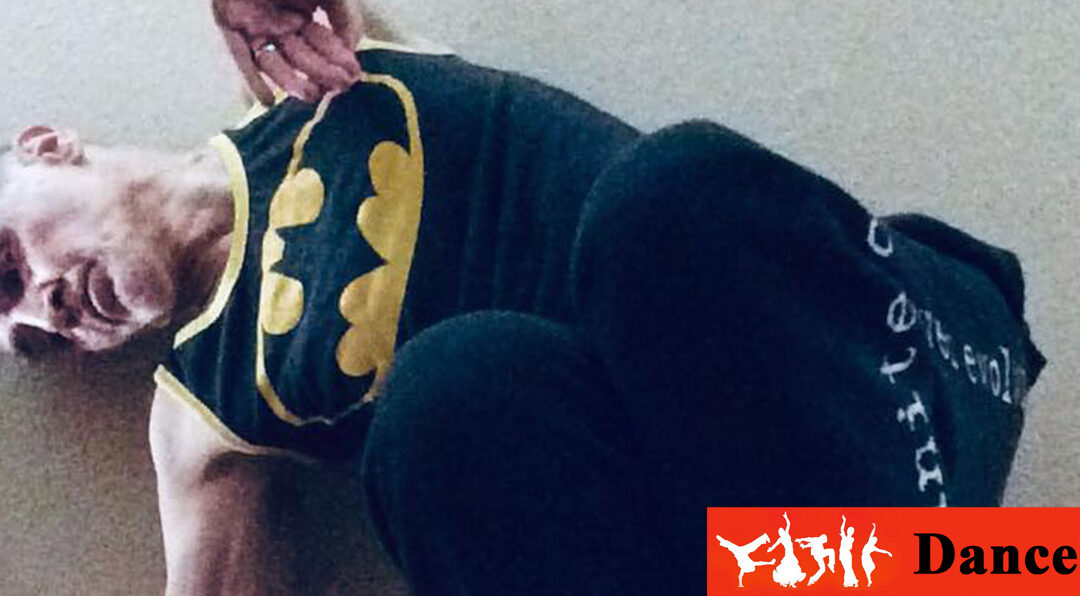
Randall Flinn discusses his journey from disco champion to director of a modern dance company. Follow Randall at https://www.instagram.com/randall_flinn/, https://www.facebook.com/randall.flinn and https://www.addeumdance.org/.
DanceTalks with Randall Flinn: Full Transcript
Hosted by Andrea Cody, Director of Dance Houston. Originally released July 8, 2020. This transcript was generated automatically and may contain small errors.
Episode summary (SEO)
On this episode of DanceTalks from Dance Houston, host Andrea Cody talks with Randall Flinn, founder and artistic director of Houston’s Ad Deum Dance Company. A Houston native whose older brother and sister were professional ballroom dancers, Randall was too afraid of wearing tights to audition for the new High School for the Performing and Visual Arts, and instead learned street dance at his high school, in Houston’s discos and from Solid Gold dancer Darcel Wynne in Los Angeles. He led his own disco company, taught “Rock Disco” in exchange for training, studied with Glenn Hunsucker and Camille Long Hill’s Discovery Dance Group, won the Texas disco championship and opened concerts for KRLY with his company, The Love Machine. He shares how hearing the gospel at a Billy Graham crusade at Rice Stadium changed the way he saw his art, how Ad Deum became a community where dancers could grow in faith and in excellence, and what the COVID-19 shutdown taught him about community and seeing dancers as people, not just performers. Recorded June 21, 2020.
Key takeaways
- Get a wide range of training. Graham teaches groundedness and theatricality, Limón succession and fall and recovery, and Horton strength; Randall encourages young dancers to explore them all.
- Your worth isn’t your performance. A teacher’s challenge, “what if you could never dance again?”, helped Randall see that dance had become his security blanket.
- Art can serve and heal. Ad Deum brings dance to places of grief and brokenness, from Paris’s Place de la République to New York after 9/11.
- Community is the heart of it. Stripped of performances by COVID-19, Randall found that what he missed most was relationship and human connection.
- See dancers as people. Directors should ask how their dancers are really doing, not only whether they can do three turns instead of two.
Transcript
This transcript has been lightly edited for readability: filler words and repeats were removed, and several passages that could not be heard clearly in the recording, including parts of the last 15 minutes, were left out.
[0:00] Introduction and a dancing family
Andrea: Hello and welcome to DanceTalks. I’m your host, Andrea Cody. Today is June 21, 2020, and my guest is Randall Flinn. Randall is the founder and artistic director of Ad Deum Dance Company. Randall, welcome to DanceTalks.
Randall Flinn: Thanks, Andrea. It’s really a pleasure to be here. It’s quite an honor, so thank you for having me.
Andrea: Mine too. Please introduce yourself to us and tell us a little bit about your background.
Randall Flinn: Well, I’m old, so that could take a couple of years, but yes. I was born and raised right here in Houston, Texas, so I’m a native. I started my dance training a little later, in my teen years. But my older brother and sister, who are 10 years older than I am, so now they’re ancient, were professional ballroom dancers back in the days of the dinosaurs, and they were the featured dancers, the stars, of a Saturday television show. I was a baby, maybe five years old.
My family is both Italian and Irish. And just by the way, don’t ever do that. Not a good mix. I’m just warning you; don’t say I didn’t warn you. Because it’s a very family-oriented culture, the relatives would gather around the television, especially my Italian relatives, with all eyes peeled on my brother and sister. Of course, I’m the youngest in the family, and I think there’s a rule somewhere that the youngest child is supposed to get all the attention. So in my five-year-old brain, I figured it out: they’re getting attention because they’re dancing, so if I want attention, I’ll dance.
[2:14] A closet dancer
Randall Flinn: So I just started dancing, freestyle, whatever, and as I got a little older, my sister would grab me and say, okay, do this with me. But this was the late 1960s getting into the ’70s, and especially in Texas, where it’s cowboys and football and baseball, being a man and dancing was not the norm, back in the day anyway. We didn’t have the male role models in dance. We didn’t have the image of Baryshnikov or Travolta, or So You Think You Can Dance or Dancing with the Stars. There was American Bandstand, but that was looked at as a hobby; you don’t make a profession or a vocation out of it. And I grew up in a neighborhood that was kind of rough, where everybody played football. So there was that fear and peer pressure: okay, I really love this. I love dancing, and I would love to study more about dance, but I’m afraid of the backlash I might receive if I do. So I became a closet dancer, in a sense.
At home it was fine, because my mom and dad enjoyed dancing, and so did my sister, but I didn’t want to share with anyone else that I had this passion. Then I got information somewhere, I forget from whom, that Houston was starting a new school called the High School for the Performing and Visual Arts, and that there would be a dance department. And I thought, oh my gosh, that’s what I would desire.
[4:19] The tights
Randall Flinn: I’ll tell you right now, it’s not a happy story. I got the application, filled it out, had the audition scheduled, and I got back the requirements right before the audition. And the requirements for male dancers were black tights, a dance belt, which I didn’t know what that was, and white ballet shoes. And I just thought, I can’t. My military dad would not get this. My friends would not get this. Even though, oh my gosh, inside my heart I so longed for this, I couldn’t do it. This was in 1974, if I remember right.
In those days there were zoning laws in Houston. Even though a school may have been close to where you lived, you were zoned to the school that HISD told you to go to. I was zoned to a school at least 15 miles from my home, way down on the south side of Houston; I lived in southwest Houston. So at first I was very hesitant. I grew up in a poor neighborhood, and the racial diversity there was mainly between poor Caucasians and poor Hispanics. The African American community wasn’t in my neighborhood. Maybe they knew better than to move in, not because of racial prejudice, but because of all the bad things happening there all the time.
[6:26] “Go, white boy, go”
Randall Flinn: I remember getting off the bus and walking up to the front of the school, and I saw so many people standing on the sidewalk with their big old boom boxes, doing all these street dances and line dances. My eyes got wide open. But I’ll be honest, I was a little fearful, because I thought, man, I would really love to enter into that culture, but will I be accepted? So I’m in there watching, and you could see the African American community sticking together very closely, and the Caucasian community keeping its distance, kind of segregated. But I wasn’t interested in what the Caucasian community was doing. They weren’t dancing. What the African American community was doing, oh my gosh, I thought it was so free.
I stood there for about 30 minutes, just frozen. Then I thought, I’ve got to get in. I can do this; I know I can do those dances. So I worked my way in and started dancing, and all of a sudden I heard, “Go, white boy, go! Go, white boy, go!” And I made a home there, and beautiful friendships that I had never had before in my life. So thank you, African American community, for accepting me and sharing your culture with me. It was life-giving. I started a dance club at the school, and all of the other students were African American, and we did cover songs from Rufus and Chaka Khan. That was pretty amazing.
[8:37] Discos and Los Angeles
Randall Flinn: I loved it. I would go to the African American discos and spend countless hours there, and street dance became my thing. I actually started as a street dancer.
Andrea: When you say discos, was that an all-ages place?
Randall Flinn: No. I think the statute of limitations has run out on this, so…
Andrea: Okay, so you got in. Cool.
Randall Flinn: I got in. We’ll just put it that way. I got snuck in a lot, but it’s okay. It was amazing. It freed something inside of me that needed to be freed, and the acceptance was so amazing. I wasn’t embarrassed to release that inner dancer in that disco. It was liberating. And I wanted to know more about this style of dance, so I took off to Los Angeles and befriended some incredible people who were part of a television show called Solid Gold. The lead dancer, Darcel Leonard Wynne, a gorgeous African American woman, became a friend of mine. I would go to LA and study locking and whacking. Whacking was basically what I was known for.
Andrea: When was this?
Randall Flinn: This was 1978, ’79, somewhere around there.
Andrea: It was called that then?
Randall Flinn: Oh yeah, definitely. There were specific studios where street dance was taught, but outside of the studios, I learned the techniques in the clubs more than anything. So I became this disco guy. I don’t want to put things in a box, but not so much the John Travolta disco; more the street dance flavor. And I would travel and teach as well. I would go to LA, learn these techniques, come back to Houston and teach classes in these styles of street dance.
Andrea: What did you call it? Disco dancing? Hustle?
Randall Flinn: The hustle was more the line dances, and there was a partner dance called the hustle as well, and I did participate in that, but mine was more freestyle street dance, I guess you could say.
Andrea: And when you say disco, was the music disco music like we think of it today?
Randall Flinn: Oh yeah, definitely. There were so many major disco stars at the time.
[11:47] The City Dancers and Houston’s clubs
Randall Flinn: So I came back to Houston and created a company of street dancers. We were called the City Dancers, and we performed at discotheques in the Houston area. Houston used to have tons of discos, like tons of discos. It was my company and another company, the Glenn Hunsucker Dancers, and Glenn was one of my mentors. We were the performers in the clubs. It was funny too, because some of the clubs had names like, seriously… We were an ongoing performing company at a club called Spats, S-P-A-T-S, and another at a club called Spit. So here’s my claim to fame: Spit and Spats. There was also Uncle Sam’s, and Ebony, and the Roxy, and all these places. That became my lifestyle. Thank God I never got into the whole drug culture, or any of that, but dancing was what was intoxicating for me. I think I was out in the discos at least five times a week, and of course you stay out till morning, just dancing, dancing, dancing. During my senior year, that became exhausting.
[13:53] Teaching “Rock Disco”
Randall Flinn: Let me turn the wheels back a little to 1976. I found out that in your senior year of high school you could get a work permit, and with it you could leave school at 12 o’clock and go to a job. I thought, wow, perfect. I found out there was a dance studio near my high school. It was hysterical. I walked in, I was 17, I think, and the woman asked what she could do for me. I said, well, I’m interested in filling out an application for a teaching job. And she said, okay, so how many years of ballet have you had? Zero. Uh-huh. How many years of jazz dance have you had? Zero. Do you tap? No. Do you teach baton? No. What do you teach? I can teach disco. And she said, do you not see my sign outside?
But she said, I tell you what, normally I would not do this, but show me. So I broke out my moves in the studio, and she said, so you can teach this? I said yes. And she said, okay, here’s the deal. I will open up some classes, and we’re going to call them Rock Disco. This was 1976. But the commitment you have to make is to come here at 12 and train in ballet and jazz and tap, and then be an assistant for my children’s classes. I don’t pay you anything, but you get free training. And I thought, I so want to do this. So that became my life.
[15:53] Glenn Hunsucker and Camille Long Hill
Randall Flinn: The thing was that this lady believed in me, and she wanted to introduce me to the wider Houston dance community. At the time, there were Glenn Hunsucker and Patsy Swayze; those were the two known for jazz dance. And for modern dance, or modern jazz at that point, there was Camille Long Hill’s Discovery Dance Group. I thought, okay, I want to know these people. So I started taking classes. I became an apprentice in Glenn Hunsucker’s company and later a company member, and I also became a company member of Discovery.
It was hysterical, because Glenn was pure jazz, a mixture of New York styles, LA styles and Fosse, and Camille was a purist, very Ted Shawn, a little bit of Gus Giordano. With me, she would go, “Okay, Little Glenn, that’s not how we do it here. Little Glenn, stop moving the hips. This is not about your hips, Little Glenn.” So I was called Little Glenn, which I thought was an honor. Glenn, if you hear this, for me it was an honor. But Camille was trying to scold me, basically.
[18:06] Leaving high school
Randall Flinn: So even though I didn’t go to the High School for the Performing and Visual Arts, it seemed like another door opened. Glenn had morning classes that started at 9:30 or 10, and Glenn said, you should take my morning classes. And I’m thinking, well, I’m still in high school. But, to my shame, the hall of shame right here, I loved dancing so much, and I knew it was in my blood. It’s what I was born to do. So six weeks before high school graduation (kids, do not do this if you’re listening), with the cap and the gown and the ring and the invitations and the whole bit, I quit high school. I know, I know. Please don’t lecture me.
Andrea: I won’t tell anyone.
Randall Flinn: Well, I’m telling the whole world right now. Yes, Randall Flinn walked away from high school six weeks before graduation to pursue his dance career.
Andrea: And did he ever go back?
Randall Flinn: That’s my story and I’m sticking to it. Now, what’s redemptive in this story: initially I had no shame; I was a spirited, artistic guy. Later in life it hits you, and you go, man, that’s kind of a regret, and it bites. But I see what I call the hand of God in my life, because years later I would go to the High School for the Performing and Visual Arts, and I still go there. I love going there as a teacher, and I’ve worked there as a choreographer. I’ve also had several professorships at universities. And to this very day, when I walk into the high school for the performing arts, I have to chuckle and think, man, I’m here teaching and instructing these students, and this is the school I so wanted to go to, but didn’t because I didn’t want to wear tights.
Andrea: Oh man. Are they still wearing tights?
Randall Flinn: Of course, of course, with no shame. Thank God for a new decade of life.
[20:29] From jazz to modern
Randall Flinn: So that’s kind of my background. Later on I moved out of the jazz genre, even though I think it still lives in me. Once in a while I’ll pull it out, and they’ll go, we didn’t know you could do that.
Andrea: Yeah, I’ve seen it from you. Awesome.
Randall Flinn: But then I got more into the modern genre. I studied Graham technique and Limón technique, and I found that the things I wanted to share as an older artist had a deeper connection with the modern dance techniques, because I wanted to speak about deeper issues of life and relationship, and the jazz genre didn’t always lend itself to that emotional depth the way modern did. So that became my thing, and now I guess people recognize me as a modern dance teacher.
Andrea: Right. How do you describe your style?
Randall Flinn: Oh gosh, it’s a salad bowl. Whenever people take my class, they go, wait a minute, you had some Graham in there, you even pulled out some Horton technique, and then you’ve got this contemporary jazz thing going on. What’s up with you? I say, hey, this is just a collaboration of so many different diversities. And I try to encourage young dancers with that: get a wide range of experience. Graham technique teaches you so much about groundedness, about theatricality, about working between your legs and taking space. Limón technique teaches you about succession and flow, fall and recovery. Horton is a strengthening technique. There’s so much diversity: release techniques, somatics, on and on it goes. So I tried not to stay in one particular codification, but to explore different dimensions that could also lend themselves to my own stylizations. But to be honest, I think it’s a little vain to talk about your own stylizations, because let’s face it, everything is influenced by others. That’s the beauty of art. It’s not that you’ve invented a style; you’ve been influenced by others.
Andrea: And those are your big influences. That’s cool.
[23:44] Texas disco champion and The Love Machine
Andrea: How did the call come for you to start a dance company?
Randall Flinn: Oh my gosh. Okay, I’m going to make this short and sweet. I was minding my own business as a professional dancer; my career was basically in the ’80s. And here’s another interesting point of history. One of my past claims to fame is that I was the Texas disco champion. Yes, thank you very much, drum roll, please. I won it in 1980 or 1981. It’s the only thing my mother ever kept, because I got a big trophy. Out of my whole dance career, that’s what my mom kept. I actually have it upstairs in my room. I also participated in a television show, Dance Fever, way back in the day, so I got to be known in that realm.
There was a radio station in Houston, KRLY, Love 94, I think, and they wanted a dance company to open all of their shows for the disco stars coming to Houston. So I got the job, and we were with Kool & the Gang, and KC and the Sunshine Band, and Dionne Warwick, and we would open their concerts. Okay, are you ready for this? You want to know the name of the company? Are you sure? The name of the company was The Love Machine.
Andrea: So, Randall Flinn’s Love Machine.
Randall Flinn: Oh, yes. We thought we were hot stuff. A lot of the dancers had been Houston Oilers Derrick Dolls, I think that’s what they were called back in the day. So I was living this disco fever life, wanting so much to gather attention and be seen and recognized. The motto of dancers back in the day was Fame: “I’m gonna live forever.” It was all about that, and I was in that race.
[26:01] Searching for affirmation
Randall Flinn: But to be honest, it wasn’t so much about fame as in narcissistic pride or celebrity. It was a need to find affirmation, for myself personally. I made a joke about the Italian family, but it was no joking matter: my Irish father was mentally ill, and he was abusive, and there was so much brokenness in my life. I didn’t know what it was to be loved as a son. So dance, as wonderful as it was, also became a covering of protection. I wasn’t getting noticed. I wasn’t the guy at school who was big and strong and a football player, and back in the day, that’s what a man was. I didn’t fit that image. With my father, I felt like an orphan. So dancing finally brought some affirmation and worth into my life. Like the character Linus with his blanket, dancing was my blanket, and I was scared to death of anyone taking that blanket from me, because I knew there would be a big void in my life.
As a matter of fact, one of my most memorable conversations, which was so difficult, was with my first major ballet teacher. Her name was Dina Rosenbaum, or people know her as Dina Vail. Dina was a ballet teacher here in Houston for years and years. She studied at the Juilliard School; just an amazing teacher. One day she said to me, “You know, Randall, you have so many friends. I’m jealous of you.” And I said, “But you know, Dina, my friendships are based on what I do, not who I am.” She said, “So you think your friendships are there because of your dancing?” And I said, “Yes, Dina. If I didn’t have the dancing, I don’t think I would have those friends.” She said, “Well, I hope you don’t feel that way about me. Randall, I value you for who you are.” And then she said, “What if something happened and you could never dance again?” And I said to her, and I regret this, “I would rather be dead.”
We were driving on 610, and she made me pull the car over to the side of the road. She said, “Don’t you ever say anything like that again. I pity you so much, that you think the worth of your humanity is based on your performance. I pray for you that you can be healed.”
[30:08] A Billy Graham crusade
Randall Flinn: Well, her prayer actually worked, because not long after that, a friend took me to Rice Stadium for a Billy Graham crusade. Now I’ll be honest: I didn’t know who Billy Graham was. I knew who Donna Summer was, I knew KC and the Sunshine Band, Rufus and Chaka Khan, but who’s Billy Graham? Is he a disco star?
Andrea: You had tunnel vision.
Randall Flinn: Exactly. And I heard the gospel for the first time. You would think, being in Texas, the Bible Belt in a sense, so conditioned by Christian culture, that I would have heard it, but I had never heard the gospel in my entire life. I had heard religious things, and the law of God was emphasized in my life, but I had no clue about grace. Grace was not in my vocabulary. My father did not treat me with grace. Dancing did not treat me with grace. It was all about: if you perform, you get noticed, but you have to prove yourself. Grace was just not at work in my life.
But when I heard Billy Graham speak, I didn’t hear a message of law or of performance. I heard a message of grace. And I had two choices: either this is the greatest deception in the entire world, or it’s the greatest truth in the entire world. Something in my heart knew it wasn’t a deception, that grace was real, and that if there is a God, he must be a God of grace and a God of love. So I opened up my heart that day. There were no firecrackers that went off, but deep inside, at the core of my humanity, I knew something had changed. I had found a healing balm that went deep into my soul. Dance had become a Band-Aid, but it never became a healer. I found the healing in that relationship.
[32:23] Dance as a gift of service
Randall Flinn: That transformed the way I saw the world, and the way I saw my art. When I looked at the gospel, I saw that Jesus’s ministry was to serve people who were broken. He even said, I have not come for the people who are whole; it’s the sick who need a physician. If you think you’re fine, maybe you don’t think you need me, but if you really know your own brokenness, maybe you’ll receive. And I thought, okay, Jesus, you came to serve and not to be served. Maybe I’ve got the equation wrong. Maybe I was looking to be served, and not thinking about serving. Maybe my gift can be a gift of serving, not just adulation and promotion, consumerism or utilitarianism, but a gift that serves the brokenness of humanity. So that became my mission.
But I thought, am I crazy? Am I the only dancer who feels like this? Back in the day it was all stars and stripes, and people were looking to be the next American Idol, the winner on So You Think You Can Dance. I couldn’t connect with that so much. My mission felt so unique, and I felt alone in it, to be quite honest. By the grace of God, I began to travel the world, which I never expected. And I would meet other professional dancers, like my friend Steve Rooks, who was a principal dancer with the Martha Graham Company for 10 years, who truly knew the Lord and the Lord’s grace. When we first met, it was, okay, we’d better have a professional conversation. But then I realized we had this thing in common, and we were able to talk about our faith, and I thought, oh my gosh, this is life-giving. Steve was one of the first people I could really talk with, not just about dance and the industry, but about the deeper things of life.
[34:42] A community of faith and artistry
Randall Flinn: Little by little, I connected with more artists who felt the same way. But unfortunately, as artists, they weren’t necessarily valued within a local church structure. They didn’t always feel welcome or comfortable, because they were a bit of an artistic oddity, and the church didn’t really know what to do with them. Sometimes the church can be codified too, and put people in a box. So I met these artists who really wanted to walk with the Lord and know the Lord, but many of them had been scarred by the structures of the local church. I’m also an ordained pastor, so I’m speaking as a pastor here as well, because it happens; it’s just a reality. My heart would bleed for these people, who felt they had to choose: do I pursue my faith and walk with the Lord, or do I put that aside to focus on my career? And I thought, why should that have to be a choice? That’s a ridiculous choice.
So I thought, God, it would be so cool if there were a community where faith could be discussed, including hard questions about faith, where people could grow spiritually and at the same time grow in excellence artistically. I began to pray that somewhere in the world someone would create a community like this. Don’t pray these things, because the finger will come back to you and say, do it. I was in my early 20s, 21 years old, and I thought, I don’t know how to do this. Come on, I was Mr. “Shake Your Groove Thing.” I actually won the Texas disco championship dancing to “Shake Your Groove Thing.” But I put it out there: who is interested in joining a community like this? Initially there were about 10 dancers, and they came from everywhere. One guy left the Michael Jackson Bad tour to be part of the company. Another dancer came from Finland. I never expected this to happen.
A beautiful woman became my associate director. Her name is Laura Morton, and she’s now a professor of ballet, but at the time she was dancing with Delia Stewart’s Dance Expansions, which became the Houston Met. I met Laura when I was choreographing for Dance Expansions. She shared her life and her vision, and we became a team. Now, in 2020, we have the main company still going. By the grace of God, he’s kept us going, and I’m going to tell you right now, that’s not because of my intellect or my ingenuity or my greatness in any way, shape or form. When I use the word grace, I mean it with all sincerity. It really has been the grace of God upon this community.
[38:57] What COVID-19 revealed
Andrea: Awesome. How are you doing these days?
Randall Flinn: Well, of course COVID has had its negative effects on all the arts, and I know people have struggled. We had a lot of things canceled, just like everybody. So I can’t have a pity party; come on, we’re all in the same boat together. But you do pout a little. It’s not being childish; it’s facing the reality that what you’ve been in and depended on got quarantined, basically. So what do you do? At first it hit me hard, and I did some grieving or mourning. But I really had to be honest with my own heart, and sometimes it’s challenging to commune with your own heart. I asked myself, okay, what am I really grieving? That we’re not on a stage performing somewhere, that we don’t have bookings, that we’re not in dance class or rehearsals? Is that the true mourning? And I realized it’s a part of it, but no, it’s not the heart of it.
I felt challenged, and again I’ll use the word, I felt challenged by the Lord: Randall, what is it you miss? God, I miss relationship. I miss community. That’s what I grieve for. Take away the sparkles, take away all the bling of dance, and what am I really in this for? Andrea, it hit me: it’s for community. It’s for communion. It’s for human connection, and in that human connection, creativity is born. But I’m just as guilty as anyone of getting caught up in this creative, productive machine, where we sometimes negate the humanity of it all and the purity of the essence behind it. And COVID has beautifully stripped me of the decorations and the accessories.
[42:00] Getting to know dancers as people
Randall Flinn: My accessories right now are not in operation, so I have the pure essence of what’s there, and what’s still there are these gorgeous, life-giving relationships. I’ve gotten to know my dancers even more, and they’ve gotten to know me more, because right now the conversation isn’t about the next gig or the choreography. I’m not standing at the front of the room with my big notepad, jotting down every little thing that needs to be fixed. The directive isn’t, can you do three turns instead of two? Now it’s, hey, Lindsey, tell me how you’re doing. What’s going on in your life right now? How are you really doing on the inside?
It’s interesting, because I believe that especially in Western culture, when you meet someone, first comes the politeness: how are you? But then you want to shut that down immediately and go to the next question: what do you do? So I identify you by what you do. “Oh yes, I’m Andrea Cody, I’m the artistic director of…” But that doesn’t tell me who you are. It’s a shame, if you think about it, that the norm is that the only time we get to share who we are is with a therapist or a minister, where we can really open up and be stripped of what we do. It’s not that what we do is wrong in any sense of the word, but it’s so easy to forget who we are, and who people are. All directors say “my dancers,” but if you think about it, even that statement is so utilitarian: my dancers, my paintbrushes. These incredible people, I don’t want to know them just as dancers. I want to know who they are as people. And if I get to know who they are as people, more creativity will flow.
[44:55] COVID lessons
Randall Flinn: So COVID has beautifully stripped me of that routine, and it’s taught me. There’s been some suffering, but I’m learning there are life lessons within suffering, because you get back to what is vital and essential and what can really be embraced. Dance is fleeting, and it will constantly change. I say dance does not make good religion, and it doesn’t make good faith. You’ve got to have something deeper than that. I call these my COVID lessons. And I would think I would know better, to be quite honest; I’m a pastor. But I want to know that relational side more, because I realize that if that’s what I really need in life, then that’s what my artists really need in their lives as well, and from that nurturing, beauty will arise. If I get into just the workload, it will be all about performance and function, and our identity will get submerged within that. I want to break that box, because I think it really is stifling.
Andrea: So some of the ways you’re doing that now are these conversations.
Randall Flinn: Creating more in-depth conversation, asking different questions than before, taking time to listen. I’m an artistic director. What do directors do? They give directives. I’m really good at giving directives, let me tell you. This whole COVID thing has shown me that. Going to the grocery store, I want to direct everybody.
Andrea: Are you referring to the mask order that’s going into place today?
Randall Flinn: Yes, and the physical distancing order. I’m thankful that there’s a directive. As a choreographer, I can’t always work with improv. Improv serves its purpose, but without a directive it’s chaos. So that’s the part of COVID that has driven me crazy here in Houston.
Andrea: I do appreciate the dress rehearsals we’ve had, though, because it takes practice. We should be able to do this social distancing thing, but it takes some getting used to. You have to look out for the tape on the floor and watch your back.
Randall Flinn: For us as dancers, we’re used to tape on the floor. You stand on your quarter marks; that’s no big deal for us. But I get what you’re saying, and it is a learning curve, there’s no doubt about that. So I’m learning to give grace as well. I find myself in the supermarket doing choreography: okay, I’m going to go devant, because this person over here is going completely off.
[49:44] Vulnerability and healing
Andrea: What are those terms? I’m trying to get to where people can get a sense of what you do.
Randall Flinn: I think my journey with faith allowed more vulnerability to come forth in my life. Being vulnerable, especially in my younger years, was frightening, because it means exposing yourself. But with the freedom found in grace, it has called forth a desire in me to speak the truth of my life and my experiences, and especially to find the common denominator of all humanity. So much of that common denominator is brokenness. It’s suffering. These are realities of life, and as a culture we try to hide them. Think of our elderly population: we kind of put them in nursing homes, out of mainstream culture, so we don’t have to consider our own futures, if we’re young people, that one day we will be the elderly. We’d like to celebrate what we see as pretty and attractive, and dismiss ourselves from the things that are deeply uncomfortable.
Andrea: And yet that is our common denominator.
Randall Flinn: So what I’ve journeyed into is finding that common denominator and finding where my gift can be a balm, like medicine, a healing oil, toward that brokenness. For instance, every year we go to Paris to perform in the Place de la République, where the horrific terrorist attack happened. For Parisians, any time they go to this outdoor square, they’re reminded of that horrific event. So every summer we turn that place into a place of beauty. We bring beautiful works of dance that inspire hope and healing; not religious within a box, but truly transcendent and redemptive artistry. People stand for hours watching the performances. We’re there for eight hours, and people are weeping, and then they want to talk to us. We always hear “merci beaucoup, merci beaucoup.” They’re so thankful, and some say, we never realized how art could bring healing to us. So I think healing is probably one of the main virtues that’s important to me as someone who creates work.
[53:14] Times Square after 9/11
Randall Flinn: One of the works we’ve taken all around the world we first performed in New York, right on the heels of 9/11. A friend of mine was with the Radio City Rockettes; she was also captain of the Rockettes. She helped make it happen, and we were given a street corner in Times Square, closed down, with police protection, to perform. People were just in tears. You felt this transcendent presence all around you. And I saw what was happening with the people. They weren’t celebrating the celebrity of the artistry; it wasn’t about that. They were just receiving, and that so spoke to me. Then someone said to me, you know, I think your work is very priestly. You’re a choreographer and a director, but it’s truly a priestly assignment, a very non-traditional one. It’s not that I’m a priest or minister in a traditional church setting, but that I’m called as a priest to the culture, to bring redemptive beauty and redemptive hope into the culture. And I truly believe that. I want to be faithful to that, and I thank God for the grace to be faithful to it, because it’s not always easy.
[58:03] A young dancer in the hallway
Andrea: Awesome. Well, can you minister to us now and tell us, if we were one of your dancers, what you’d like to send us off with?
Randall Flinn: Wow. Okay, I’ll start by sharing this. Many years ago, I taught for many years as a modern dance teacher at Houston Ballet. My class was over, and I was walking the hallway of the building, and I saw a young dancer, about 13 years old, facing the ballet barre with her back to me. I sensed that something wasn’t right. So I opened the door, and I heard her crying, and I knew her. I said, “Are you okay?” She said, “No, Mr. Flinn, I’m not okay.” I said, “Can you tell me what’s wrong?” She said, “I’ve lost my joy.” She didn’t know how to break free of it. She said, “I want to find the joy again,” and that she felt she was being looked at only for what she could do.
And yes, this needs to be discussed as well, because it does happen. It happens a lot, and it breaks dancers. It breaks artists. So if I could say anything to those listening today, it’s that my desire for artists is that they can be seen on a deeper level, that each of them would be seen, and that we would all be cautious about false identity. Who are you? Or, what do you do? “Oh, I’m a dancer.” Okay, but is that all you are? Five, six, seven, eight, here’s the pirouette, here’s the arabesque? What truly makes you a dancer, what really makes you an artist, is who you are on the inside. It’s your character, your attributes, your integrity, your brokenness and your blessings. It’s all of the above. It’s hard, because you can fall into that routine and associate so strongly with that identity, even when it’s never said out loud.
My hope for all the dancers listening is that if you have struggled with that, or if you can identify with it, this would be a time of healing. I feel like right now, in the world in general, it’s a time for healing and a time for resolve. Yes, there is definitely a need for racial reconciliation and healing, but I think there’s also a need for human reconciliation and healing, where we have put people in a box and used them. Maybe not maliciously, but in a sense it was usury, because it was to exalt our own throne, not to wash their feet and serve them.
[62:30] An apology to dancers
Randall Flinn: I don’t want to do that, and I want to speak as a director. I apologize sincerely. You know what the African American community is saying, and it’s true: your silence only adds to it. So I want to apologize to the dance artists who have ever suffered from this. As a director, I want to stand in proxy as a mediator and say: forgive us. Forgive the directors who treat you just like a machine, who only see the value of what you can offer, and if you can’t offer that… Forgive us for not seeing the beautiful human being you are, for not taking the time to listen to your heart instead of always giving you directives, and for trying to create in you our image of you, instead of helping you become the better image of yourself. So to the dance community, I would just say: forgive us. Forgive the teachers. Forgive the directors. We know not what we do sometimes, and I take that as my own responsibility. That’s what Jesus said from the cross: Father, forgive them, for they know not what they do. And it’s true.
Andrea: My guest today is Randall Flinn. Randall, thank you for being a part of DanceTalks.
Randall Flinn: It’s my joy. Thank you for a very open and honest time. I appreciate it.
Andrea: Me too.