
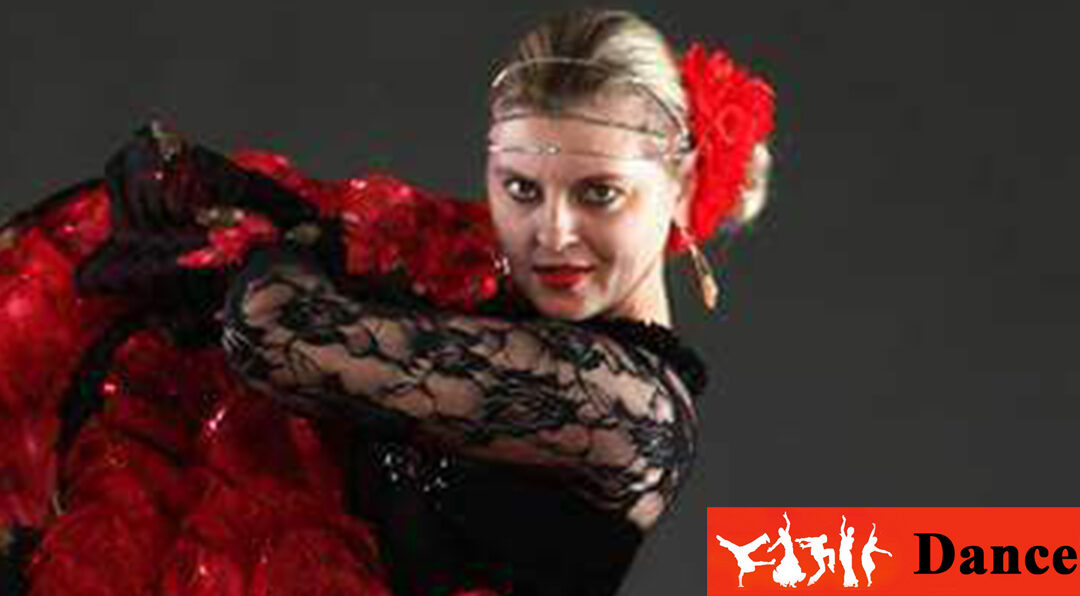
Oksana Chernyuk and Kristian Skydanovych share the stories of their journeys to Houston from Ukraine. Listen to how Oksana became the happy woman she dreamed of being when she was a young girl in a snowed-in Soviet village. Follow her company Sunrise International Dance Company at https://www.facebook.com/Sunrise-International-Dance-Company-1385084981804918 and https://www.instagram.com/sunrisedancecompany/
DanceTalks with Oksana Chernyuk and Kristian Skydanovych: Full Transcript
Hosted by Andrea Cody, Director of Dance Houston. Originally released October 26, 2020. This transcript was generated automatically and may contain small errors.
Episode summary (SEO)
On this episode of DanceTalks from Dance Houston, host Andrea Cody talks with Oksana Chernyuk, founder and artistic director of Sunrise International Dance Company in Houston, and Ukrainian tap dancer Kristian Skydanovych, a member, star and teacher of the company. Oksana grew up in a village near Odessa, Ukraine, dreaming of ballet after seeing Maya Plisetskaya on TV, trained in ballet school and folk dance ensembles, toured with the professional folk company Black Sea, and taught herself tap from a worn-out videotape of That’s Dancing! She came to Houston in 1996, began teaching at The Kincaid School, and opened Sunrise International Dance Company in 2008. She shares the story behind the company’s name, her big international shows at the Hobby Center, the history of Ukrainian folk dance, and how she kept dancing through the pandemic with Zoom classes and charity concerts in Odessa. Kristian, a tap champion from Odessa’s Bravo ensemble, talks about learning from videos, his teacher, and the flamenco-tap project the two are creating together. Recorded October 16, 2020.
Key takeaways
- Learn by jumping in. Oksana was put in a group of 15-year-olds when she was six, so she learned by watching and asking older dancers, and her company still teaches that intensively.
- Every style is part of being a dancer. Folk, ballet, tap, flamenco, jazz and contemporary all feed one another, and Oksana’s personal style is a blend of the many dancers she has studied.
- Folk dance tells the story of everyday life. Ukrainian moves grew out of soldiers dancing around the campfire, the costumes women wore, and villagers dancing together after a day of work.
- Turn a negative into a positive. When the pandemic emptied her studio, Oksana moved classes to Zoom and reached students who had always lived too far away to come.
- The show must go on. Whatever happens, keep dancing, keep believing in miracles, and go for it.
Transcript
This transcript has been lightly edited for readability: filler words and repeats were removed, and a few short passages that could not be heard clearly were left out.
[0:00] Introduction and a childhood dream of ballet
Andrea: Hello and welcome to DanceTalks. I’m your host, Andrea Cody. Today is October 16, 2020, and my guests are Oksana Chernyuk, artistic director and founder of Sunrise International Dance Company, and Kristian Skydanovych, a member, star and teacher of Sunrise International Dance Company. Thank you both so much for being a part of DanceTalks.
Oksana Chernyuk: Sure. Thank you, Andrea. It’s our honor that you invited us to be with you and talk.
Kristian Skydanovych: Thank you. Mine too.
Andrea: Let’s start from the beginning. Where were you born?
Oksana Chernyuk: I was born in Ukraine, in a village called Dachne. In Russian, a “dacha” is the house you go to for vacation, but this was our home, there in the village. There was absolutely no dancing there, but when I was four years old I started having dreams about ballet, about how I was in a tutu, dancing. One night, when I was a little girl, I saw Maya Plisetskaya on TV, and it hit me, especially when she goes down at the end.
My father was a musician, an accordion player, and my mother was a singer. Whenever people came to our house, my father played Swan Lake and I danced. My mom made me costumes from white sheets, because we didn’t have any fancy fabric at that time. It’s a village about 25 kilometers from Odessa. So in that tutu, I started performing for our neighbors.
[2:07] Walking through the snow to dance
Oksana Chernyuk: Every night I was dreaming about ballet. There was a store in the city that had ballet pointe shoes, but only in a size ten and a half, huge. Every day I asked my mom, “Can you buy these for me, please?” and she said, “But they’re huge. You’re a little girl.” So I kept dreaming about ballet.
Then in my village there was a little place where they started teaching dancing. It wasn’t professional, just for fun, with a few kids, and I had to walk 12 kilometers to get there, maybe seven or eight miles. Imagine: it’s winter, there’s snow everywhere, and we don’t have a good road, so sometimes you sink down into the snow. It was two hours walking there and two hours coming back, and the rehearsal was only one hour.
The teacher there also taught in the city, and she said, “Oksana, I would like to take you and introduce you to the Palace of Pioneers.” Long ago in my country we had the Pioneers, schoolkids who wore red neckties, and that palace belonged to them. One day we took the train, an hour and a half to the city. I was about six years old. We came to the palace, and the director of a famous group there, called Detstvo, which translates as “Childhood,” put me at the barre and said, “Stand in first position. Do a demi-plié. Do a split.” He raised my leg, which was very painful, and then he said, “Show me your point. Show me your bridge. Okay, we’ll give you a decision later.” I was so excited. “Oh my God, I’m going to dance!”
[5:13] Learning from older dancers
Oksana Chernyuk: Then he told the lady who brought me, “We don’t have space right now; everything is booked, but we can take Oksana into the older group, with the 15-year-olds.” And that’s why I’m telling you this: since then, I’ve learned everything from people who were ahead of me, not from the beginning. That’s why my company is very intensive right now. You can come for one week and you can be in a split, you can jump, you can dance, because that’s how they taught me.
I was thrown into an older group that already knew everything, and I asked, “How can I do this?” They said, “Just ask those kids to teach you,” and I said, “Please, please teach me this.” We didn’t have time, so I had to learn everything by watching while they rehearsed. Nobody taught me fouettés; I just saw how they did them. Most of the turns and movements, I learned by watching. Tap dance I learned from Fred Astaire, Ginger Rogers and Eleanor Powell, watching the video. All my life I was jumping into the older groups and had to learn everything very fast.
At the same time, my mom brought me to ballet school, because I kept telling her, “I want to go to ballet,” and this group was folk dance. Ballet school was very strict in Ukraine and Russia; it was the Soviet Union then, and we were all together. If you were one minute late, you could be dropped from the school. If you didn’t have your uniform, you could be dropped. You had to be super quiet in class. They never punished us or screamed at us; they just looked at you, and you thought, “This is it. I have to do it.”
[8:21] Costumes, the Black Sea company and tap shoes
Oksana Chernyuk: So I finished ballet school, and in parallel I was in that dance company, and we performed a lot in beautiful costumes. The older girls danced a Slovak dance in beautiful red skirts, and I always dreamed of dancing in that costume, but it never happened. That’s why I started making my own costumes, and all my students have amazing costumes: in my childhood I didn’t have what I was dreaming of.
After those two companies, I went to a professional folk dance company called Black Sea, and we toured on a cruise ship and in other countries. That was fun. But I never belonged to only one company, because somehow I became very popular in my city. I was the first woman there who learned tap dance.
Here’s how I learned tap. At that time my father bought a VCR, and in the Soviet Union, if you had a VCR, you were a god, because you could see all these videos from the United States with dancing. Nobody taught you; you just watched. With another teacher of mine, we got a video with the Nicholas Brothers, Fred Astaire, Eleanor Powell and Ginger Rogers. The movie was called That’s Dancing! That movie inspired me. First, of course, Michael Jackson inspired me most, and then them. You could barely see the picture, because so many people had already watched it; it was one videotape going around the whole city, and we didn’t know how to make copies.
Then I started thinking, “How are they doing this? They have this metal thing on their shoes?” My father brought me to his best friend, a very old man named Emil Glad, God bless his soul. My father said, “You want to tap? I thought you wanted to do ballet!” I said, “I want to do ballet, figure skating and gymnastics, and be a flight attendant and a bartender.” I don’t know why I had all that in my little head.
And I always dreamed of going to the United States. When I was little, I saw an American commercial; we didn’t have commercials. It was for Wrigley’s chewing gum, and people were driving a car in California, so happy, chewing gum. I said, “Mom, I want to go to the United States.” She said, “Why?” I said, “Look, they’re happy people. They have chewing gum, and they’re already happy.”
So, back to the videotape. I started learning the steps, and Emil Glad showed me a tap. Only one person in the city had them, and he lent them to me. My father worked in manufacturing with metal, so he made a copy. Then we didn’t know how to put them on shoes. I only had one pair of boots, and I cut them and screwed the taps on, and my mom was very angry about that. Because it wasn’t professional, one day I was dancing and a tap flew right off.
[13:41] Coming to Houston and teaching at Kincaid
Oksana Chernyuk: So all my life I was dancing, and I never thought about teaching or having a company. Everybody asked me, “Oksana, are you going to be a teacher?” and I said, “No, I’m going to perform all my life.” But wherever I went, kids were around me. Once I went to a party all dressed up, thinking maybe I’d meet someone, and the kids sat with me and started dancing. People asked, “Did you meet anybody?” and I said, “No, the kids were around me.”
When I came to the United States, I kept performing, and parents started asking, “Oksana, why don’t you teach kids?” I said, “No, no, I want to perform.” Then once I was performing a Soviet show at a Russian restaurant, and the head of performing arts at The Kincaid School came. She said right away, “Can you come to Kincaid and start teaching our kids folk dance, just whatever you’re doing here?” Kincaid is a very famous school, and I couldn’t say no. That’s how I started teaching for the first time in my life.
They were so excited and welcomed me, and they gave me about a hundred kids right away. Believe it or not, I didn’t know how to teach them. I remembered how I was taught, where you don’t talk, and on the first day they were all talking and playing. I thought I would come in and they would behave and say, “Hello, Miss Oksana,” like in my country. It took me about a year to get used to teaching, because being with kids as friends is one thing, and teaching them is another.
Plus my English: I thought I spoke English well, but not well enough for teaching. So I went to HCC and read lots of books, in English, about how you teach in the United States, how you talk with kids and with parents, and the terminology. With ballet it was easier, because the terminology is French, but there were also jazz, contemporary and everything else. I love all styles, and I study all of them, because I think once you become a dancer, you have to do everything. Sometimes Andrea calls and says, “Hey, Oksana, do you have a Spanish dance? An Egyptian dance?” and I say, “Sure, let’s go dance,” because you can always learn. It’s all about expression, about giving people the joy you feel inside.
[17:50] Discovering flamenco
Oksana Chernyuk: Besides ballet, folk, figure skating and being a flight attendant, I dreamed of learning flamenco. When I came to the United States, I found a video of Riverdance with Michael Flatley, and what hit me first was María Pagés. She danced flamenco, and he danced Riverdance, and it was a fire dance. Again I watched the video and started dancing, but it was very far from what I do now.
One day I met Lucia Rodriguez. I was performing tap, and she was dancing with her flamenco group, and for the first time I saw live how they do it. I went to her right away and said, “Miss Lucia, can you teach me flamenco?” She said, “Sure, call me.” She lived far away, near Telephone Road, an hour of driving in traffic, or 45 minutes if you’re lucky.
Andrea: Well, it’s not in the snow.
Oksana Chernyuk: Yes! In the Soviet Union, it took an hour and a half on a crowded train to get to school, and sometimes the train was two hours late and you’re standing in the snow, freezing. When people ask me, “Do you miss winter?” I say, “Nope. It was too much.”
So I started studying flamenco maybe 15 or even 20 years ago. I’ve lived in Houston for about 25 years. We came here in 1996, when we were invited to perform, and seven of us stayed. Then about half went back to Ukraine, but my partner, Mr. Yuri, and I stayed. We’ve known each other about 35 years. He’s a folk dancer and teaches our boys, and now he has learned acrobatic tricks with the little kids, throwing them up in the air.
Last year we went to the Tremaine competition in Dallas, where Derek Hough and Paula Abdul were. I said to my kids, “Guys, I don’t know if we’ll win anything, because it’s only our second competition, but let’s just be there.” We won three gold medals. When we performed one dance with Mr. Yuri, he was a beast, and the little kids, six years old, were doing acrobatic tricks where he throws them in the air and catches them. There were six judges, and they told me they were from Cirque du Soleil. I got goosebumps, because Cirque du Soleil, for me, is like the universe. At that point I started believing even more in Sunrise.
That’s pretty much how I started dancing. I’m sorry for the chaos!
[21:55] Founding Sunrise International Dance Company
Andrea: Back up just a little bit. When did you start Sunrise International Dance Company?
Oksana Chernyuk: I worked at Kincaid for years, and then I realized, “Oh wow, I can teach kids. I can do something on my own.” So in 2008 I opened Sunrise International Dance Company. I didn’t have any students. Usually people build their students first, like a foundation, and then open. I did the opposite: I opened, then I started.
We rented our first facility about a mile from here, and we needed a sign, but we didn’t know what to name our company. The store before us had moved out and left their sign, a huge one with lights, that said “Sunrise Sip and Smoke.” We said, “Hmm, let’s take away the ‘Sip and Smoke.'” Sunrise was right in the middle, so we became Sunrise, and then International Dance Company, because I realized we could have every nationality. Right now we have Brazilian, Chinese, Japanese, African American, Russian, Ukrainian, Polish, you name it. We became Sunrise International Dance Company on June 2, 2008. In my country, early June is the children’s celebration day. So whatever the universe gives us, we take.
[25:04] Kristian’s story
Oksana Chernyuk: Tell us your story, Kristian.
Kristian Skydanovych: I’ve been dancing since I was five. My grandma took me to a dance ensemble called Bravo. I spent two years in the beginners group. Sorry for my English; sometimes I’ll ask Oksana for the words, okay?
Andrea: Sure.
Kristian Skydanovych: There were a lot of dance styles: jazz, contemporary and ballet, the work at the barre. Ballet is the foundation of every dancer. There was also tap dance, and after six years in Bravo, tap dance came and hit me, because I love music, and my legs are my musical instrument. I’m just playing. Since then I’ve been tapping, tapping, tapping. For the first three years I was at a really low level in tap, just basic steps like shuffle, ball, heel.
Oksana Chernyuk: Tell them you’re a champion, a vice champion of the world tap competition.
Kristian Skydanovych: And many times Ukrainian champion, in different categories. I’ve also performed at Disneyland with my ensemble, because it performs at a really high level in different dance styles and is very famous in Ukraine, in Odessa. That’s why we’ve performed in different countries.
Oksana Chernyuk: And there’s a huge tap company in Boston, Massachusetts, that he knows. They’re friends with the mayor there, and they performed at Trump’s inauguration. They’re very famous in Boston. I was here and didn’t know about them; I had to go to Ukraine to learn about a famous tap group in Boston!
Kristian Skydanovych: There was a tap festival in Odessa, a dance festival where most of the people came to learn tap at the master classes, with a lot of nice teachers. Odessa is the center of tap dance in Ukraine.
Oksana Chernyuk: I danced tap with my partner in Odessa before I left, and he became the teacher of some of the famous tap dancers there. After I left Ukraine, my students who had seen what we did started building this whole industry, and when I came back after ten years, tap was at a very high level. But it’s not as popular in Ukraine as it is here. Here, New York has a big tap population, but in Houston I don’t see much. A long time ago I saw one tap group at the JCC, when I was performing there with a flamenco group, and they were amazing, but I never saw them again. So we have to bring tap back to Houston.
[31:26] Dreaming up shows
Andrea: Tell me about some of the shows that you do.
Oksana Chernyuk: I became a choreographer in my country a long time ago, because when I was sleeping, something was always going on in my head: you should dance this, you should have these costumes, you should do this choreography. It’s like a composer; they say music came to Mozart in his sleep, and he woke up and wrote it down. That’s what happened with me. When I started teaching, something told me to do productions: concerts, then shows.
The first costume I made here: an agency called me and asked, “Do you have a Gypsy dance?” I didn’t, but I said, “Sure, of course I have a Gypsy dance.” They said, “Can you perform in two days?” I said, “Of course.” And I didn’t have a costume. A Gypsy costume is like a Mexican skirt, huge, with miles of ruffles; it takes forever. So I went to Walmart, bought a sewing machine and fabric, read the instructions, and made the costume in one day. I still have it, maybe 15 or 20 years later. Two days later I performed and made my first money for a performance, and since then I’ve sewn costumes for all the productions.
When I had a group of kids, it didn’t matter whether they could do it or not. I pushed them: “Guys, we’re doing a show.” “What show? We just started dancing!” “Don’t worry, we’ll work every day for a few months, and we’ll get there.” At Kincaid they asked, “Can you do a recital?” I asked, “What is a recital?” They said it’s when you show what you’ve learned. They thought I would bring one dance with the kids, step together, clap, in simple costumes. No, no, no. I made a huge concert: little kids doing six or seven dances, changing costumes, because I made costumes for every dance. The parents were like, “What’s going on?” I realized that in the United States, little kids usually do one very simple dance so parents can take pictures. My kids were six or seven years old, and that first recital already looked like a show. We had an emcee, I performed, Mr. Yuri performed, and I invited other dancers.
Mr. Yuri is very strict, and he said, “You can’t put professional dancers with beginners.” I said, “Why not? They’ll see how professionals dance, and they’ll dream about it, and it will inspire them.” And it worked: the kids watched the professionals and right away started repeating what they did. That was my first show, a show slash recital at Kincaid. Then I worked at The Village School as well and did a show there.
[35:40] Journey Through the Seasons and The Lion King
Oksana Chernyuk: My own company started growing. I started with four students. Before this disaster, the pandemic, I had 50 kids; right now I have six, and I’m happy, because they’re amazing, and for us it’s quality, not quantity. When my group had grown to 50 kids, and they were very good, and I also had Mr. Jeffrey Louis, Mr. Kenny and Mr. Sydney, plus three girls from a gymnastics school who are amazing, I decided to do my first big show, Journey Through the Seasons.
Why that name? Because we’re international, and all my shows are international. You travel with the seasons, summer, winter, spring, all over the world. In spring you go to Ukraine for a Ukrainian dance; in winter you go to Russia for a Russian dance in a beautiful, magical forest, with crowns that Mr. Yuri made from metal hangers and I decorated. We performed at a high school theater in The Woodlands, and I combined Journey Through the Seasons with The Lion King for the second part.
It was our first show on a professional stage, a beautiful theater, and they gave us fog for the second part. During “Circle of Life,” when Simba is growing up, they put on so much fog that the fire alarm went off. In a theater, if the alarm goes off, you have to stop the show. I was standing backstage crying, because it’s one of the best parts. I ran to the technicians and asked, “Can we do anything? The show must go on.” Because there was no fire, just fog, the police officers there agreed, they pressed a button, the music never stopped, and we kept going. We have it on video.
The same thing happened last year at the Hobby Center. We had just finished, there was lots of fog, and the alarm went off again, but that time they asked us to leave. So we all went outside in our bare feet and danced right there. The fire department came and asked, “Where’s the fire?” I said, “Guys, stay there. We’re going to perform for you.” So we performed for the fire department too.
[39:52] Aladdin and the magic carpet
Oksana Chernyuk: That’s how my shows started. Then whenever I go to a movie, a Disney movie for example, it gives me inspiration, and I take the story and make my own version. This year I did Aladdin. Kristian performed as Aladdin, and Mr. Kenny performed as well. Instead of a magic carpet, for the first time we had a gymnast on aerial silks carrying Aladdin and Princess Jasmine. The show was international again: Aladdin traveled to Brazil, to a Gypsy caravan, and into other stories like Moana and Ariel, and the little kids were octopuses and jellyfish. They had fun.
Whenever people ask me to do a little concert, somehow it becomes a huge show. Andrea, you know this.
Andrea: Yes! I asked you to come to the mall and said, “Just bring me one dance, two dancers,” and you brought your whole company. We were in the middle of the mall, and you had such amazing participation; you stopped people dead in their tracks. They were all watching, and then you invited them in so graciously. My own son participated, and he usually doesn’t. I have video of him dancing with you, and I don’t know how many, 20 or 30 people from the audience. I think you came three times: once you did The Nutcracker, once flamenco, and once a Russian dance where everyone went in a circle. Such a knockout. I love it.
Oksana Chernyuk: Thank you.
Andrea: And I remember the first time we booked you as a performer, maybe 2007 or 2008, a long time ago. You performed at the River Oaks Country Club, and I said you’ve got a set of wheels on you, because you’re so fast. Your feet are incredible. I love your shows.
Oksana Chernyuk: Thank you. And then you invited us to the Wortham Theater. What was it you did every year?
Andrea: We called it Dance Houston for 10 or 12 years, and now we call it Celebration of Dance. We did our 17th annual last year, and I’m looking forward to doing one again soon.
Oksana Chernyuk: Absolutely. I hope the theaters will all be open again.
[44:02] Selling out the Hobby Center
Oksana Chernyuk: We’ve performed five or six times at the Hobby Center. After performing in the high school, I decided to perform again on a professional stage, but the schools I asked said no, or the price was very high, like $10,000 or $12,000 a day. Something told me, “Why don’t you go to the Hobby Center? Jump right into a super professional theater where all the stars and Broadway stars come.” They said, “Sure, we can rent you the theater, but tell us what it’s all about and how much you want to charge for tickets.” It was expensive, but friends helped me with sponsorship. Joe Myers Toyota was our first sponsor. Thank you, Mr. Myers! They gave us money and made a banner for us.
Our first show there was Snow Queen’s Frozen Journey. Again a journey; I like to travel, you can tell. A flight attendant through dance! I made tickets $10 each, because my goal was to bring everybody, to make it affordable and inspire the kids. We were an unknown company, and we filled Zilkha Hall. The manager asked, “How did you do that? You didn’t have much promotion, and you have a full house.” I said, “I don’t know. Ask the universe.”
The second time, they said the only date left was January 23, and the Rockettes from New York would be in Sarofim Hall the same day. “How are you going to sell your tickets when everybody is going there?” I said, “I’ll take my chance,” because I had already promised the kids we would perform, and kids can remember something like that for the rest of their lives. We had to raise the price, because rent and costumes are very expensive, and we sold out again. The Rockettes sold out, we shared the theater with them, and we sold out too. We were so happy. In all our shows we’ve been booked, and we got many students from them, because people who couldn’t get tickets came to study with us.
[48:10] The history of Ukrainian folk dance
Andrea: Can you teach us a little bit about the history of the dances you do, the difference between folk dances and ballet, or any insight you have from back home?
Oksana Chernyuk: I can tell you about Ukrainian dance. Take the Cossack footwork the men do. When I saw breakdance here, I said, “Hey guys, you’re doing Ukrainian dance!” And I put some breakdancers in a Ukrainian dance. For the men’s part, I hope I’m not wrong, but this is what I’ve read: when they went to war, they had swords and rode horses, and that’s why they wear those huge red pants. When they came back to their camp, instead of just sleeping, they made a fire and danced around it. That’s how they relaxed. Step by step it came down to these days, when people perform and use those movements.
For Ukrainian women, we have different costumes: sometimes a huge skirt, sometimes a very tight one. We have a movement called verevochka, which means “little rope,” like a braid. In the region where they wear a huge skirt, they do a very big passé in it, and in the region where they wear a tight skirt, they do a little one.
People worked in their villages, and when they were tired, they came home, got together and danced. I think it’s the same story for every nationality. Flamenco dancers are born and start dancing in the market; they know all these movements and footwork even without shoes.
Yesterday I learned a story about the cajón. Until yesterday, I thought the cajón was a Spanish instrument for flamenco. The father of one of my students saw a video clip I made about my studio, with a scene where I’m playing a percussion instrument, and he said, “Oksana, you play the cajón! Do you know where it came from?” I stopped myself from answering, and that was a good decision, because otherwise it would have been embarrassing. He said the cajón came from Peru, made by people of African descent; when they came back from work, they made this drum and started dancing and drumming. The famous guitarist Paco de Lucía saw this instrument while he was traveling in Peru, and he brought it into flamenco. That father kept sending me the whole history.
So what I mean is that the dances of every nationality, from my country, from the United States, tap, came from people working or celebrating something, and these movements traveled from there to here. I saw this in That’s Dancing!, which starts in Africa, with people dancing and making rhythm, and then improvising more and more, and today we still see lots of movements and rhythms from there.
In Ukrainian dance, women wear necklaces and flower crowns. Do you know why we put a hand on the necklace when we bow? Because when you bow, the necklace hangs down, so you hold it. And why don’t we bow lower? Because of the flower crown, so it doesn’t fall off. So you just bow and put your eyes down. We also have a movement, heel, toe, tap, tap, tap, that means digging. People try to talk through their movements. In every nationality, they worked the land on their farms, came home for supper in the evening, and then danced, sang or played. It’s fun.
[56:38] Personal style and inspiration
Andrea: I’ll ask you both this, and we’ll start with you. Tell me, in your own words, how you define your personal style and what really inspires you to dance.
Oksana Chernyuk: That’s a good question. I have so many styles in my character, in my dancing and in my expression. Sometimes you can see Liza Minnelli, sometimes Eleanor Powell, sometimes Ginger Rogers, sometimes Fred Astaire, sometimes Michael Jackson. As I told you, I learned by watching other dancers, like a sponge, taking a little here and a little there. I thought Michael Jackson’s style was his alone, but when you look at how he studied, you can see so many other dancers in him. So I have lots of characters, and they combine into one, and boom: Miss Oksana, who I am. But if you look closer when I’m dancing, sometimes you see María Pagés, the famous flamenco dancer, and sometimes Sara Baras.
A long time ago I started researching myself: why do I dress like this, with flowers? I’ve dressed like this since I was a little kid. Sometimes I wore pants with a bandana around my knee, and my mom said, “Oksana, take that off. Your friends will think you hurt your knee.” I said, “It’s a style!” Then I read that maybe it’s because I’m an Aquarius, and Aquarians live life like a movie: they dress like they’re in a movie and behave like they’re in a movie. Yesterday we went to Walmart to buy a bicycle for Kristian, because in Houston, if you don’t have a car, you’re stuck. I saw these hats, forgot all about the bicycle, and tried them on right away, because I’d seen one in Alice in Wonderland and wanted to be like Alice. That’s who I am, and that’s what moves me.
Andrea: It’s funny. You grew up watching so much American TV, and when you describe that chewing gum commercial, I feel like you jumped into the TV. Now you’re the one chewing gum: kids flock to you, they want to be with you, you make them so happy, and you exude that vibrance and joy of life that is so contagious and attractive.
Oksana Chernyuk: You’re right! You just opened my eyes. I always wondered why that is.
Andrea: I mean it in the best way.
Oksana Chernyuk: Driving on the freeway in California. This is it! Kristian, you go.
Kristian Skydanovych: The question was how I describe my personal style and who inspires me. About three years ago, I felt that I needed something in my heart; something was missing in my dancing, and my level wasn’t so great. So I started watching a lot of videos on YouTube, and I felt I should watch one video hundreds of times, and I did.
Oksana Chernyuk: Which videos? Who was in them?
Kristian Skydanovych: Michael Jackson, and a lot of dancers from the USA. That’s how we learn in Europe. It took me a whole year of watching videos. I was practicing too, but it wasn’t there yet. Then after one year, I made a jump and had some improvement.
Andrea: Like you woke up.
Kristian Skydanovych: Yes, after a year. Then I started learning more movements and tricks: how the feet should go, relaxing, where you put your weight, how you work your upper body. When you jump, sometimes you push to the right or to the left to get the result you want and come back to the position where you started.
Oksana Chernyuk: But what was your inspiration, the reason you started dancing?
Kristian Skydanovych: My teacher. She is a dancer and choreographer, and she’s the owner of Bravo, my ensemble, which has the highest award in our country for a folk ensemble, from Ukraine. I was like her child, her son, and she put a lot of energy, a lot of knowledge and a lot of love into me.
Andrea: That’s amazing.
Kristian Skydanovych: And after that year of improvement, I promised myself that one day I would be such a tap dancer that everybody would know me as a cool, professional tap dancer. I’m still searching for my style.
Oksana Chernyuk: Now he wants to do more flamenco in his tap.
Kristian Skydanovych: I want to combine flamenco and tap. It’s going to be a fire explosion, cool and hot.
Oksana Chernyuk: He also tried teaching kids this year. I was busy and asked him to substitute for me, and you have to see how good he is with the kids. He changed right away: whatever I asked him to do, like cartwheels, he did. The kids love him so much. I’m very happy that I have another partner in Sunrise International Dance Company. We’re all stars rising.
Andrea: I’m happy for you guys.
Oksana Chernyuk: We’re happy, because right now we’re working on this flamenco-tap project together.
[66:22] The pandemic: from Las Vegas to Zoom
Andrea: Before we go on, I want you to tell me what you’ve been doing recently, because I know you were in Ukraine for quite a while.
Oksana Chernyuk: Two months. When this pandemic disaster started, I was actually in Las Vegas, and I witnessed what I call the magic of Beauty and the Beast, when in the old story the witch puts the whole kingdom to sleep. I was staying at Caesars Palace, on the 41st floor, right in front of the Bellagio, and I had tears in my eyes, because I was witnessing everything shut down. I talk about this and I get goosebumps. I walked downstairs and asked, “Guys, what’s going on?” They said, “We’re shutting down all of Las Vegas.” The streets were empty. Caesars Palace was the last to shut down, and they said, “Ma’am, you should leave.” Everything was being cleaned and closed. Because I live in a story, I told them, “This looks like Beauty and the Beast. We’re going to wake up; Prince Charming will come and kiss the princess.” They said, “Uh-huh, okay.” I said, “Watch this.”
Then I came to Houston, and it hit me pretty badly, because all my students stopped coming to the studio, of course, for their safety. For two weeks, believe it or not, I just lay on my bed eating popcorn and watching not very inspiring soap operas.
Andrea: I remember. I was worried about you.
Oksana Chernyuk: It was a kind of depression. Then I said, “Wait a minute. Why do I have to be depressed? I have a very nice laptop computer.” And at that time the universe sent me a message. Everything I have, this studio and all the costumes, I feel belongs to the universe, and I’m like a messenger bringing it here. Maybe it sounds crazy, but that’s how it is. A girl named Irene came to me and said, “Miss Oksana, do you need some help with teaching?” I said, “Yes, I need help. I don’t have students, but I definitely need help.”
We got together here in my empty studio, and I saw people starting to use Zoom. I said, “Why don’t we start Zoom?” I had no idea how; me and computers are very far from each other. But I pushed myself, and I got ten kids on Zoom. It was only 40 minutes, because I didn’t know how to upgrade. It was very successful. We hadn’t seen each other for a month, and when I clicked into Zoom and all my kids were there, saying “Miss Oksana!”, I had tears. You can’t be with them, but somehow they’re there, and they believe we will dance together again. I felt that they needed me, and when somebody needs me, I’m alive.
Then I saw a kids’ show where kids were dancing on Zoom, and again I watched how they did it and practiced with my kids, and they were so happy. I even got new kids who said, “We always wanted to come to your studio, but it’s so far, and now because of Zoom we can join Sunrise.” Long ago my mom taught me, “Oksana, even something negative can be turned positive.” The pandemic is very negative and very sad, but because of it, we can be together with kids who aren’t here.
So I started thinking positive. When Galveston opened for a little while, I jumped right in. I was there in May, shooting videos for the kids to inspire them: you can dance in a little room, you can dance outside. And I remember, Andrea, you texted me, “How are you, Oksana?” I really appreciate that you kept us together at that time. You gave us a class so we could teach from home, and I saw myself on YouTube teaching in my little room. Thank you so much for that.
Andrea: Thanks for doing it. Of course.
[73:41] A summer of dance in Odessa
Oksana Chernyuk: Before the pandemic I had bought tickets to Ukraine. I always go to Ukraine in summer, because I love my city and I’ve met amazing people there; I met Kristian there, and I’m so happy about that. My flight kept changing, but I didn’t give up, even when people said, “Oksana, are you crazy? It’s dangerous to fly right now.” Something told me I should go. Finally Turkish Airlines said, “You can fly.” My ticket was for July 18. They said, “Not the 18th, but you can fly July 19, or better, July 27.” I said, “I’ll take it.”
In Ukraine it was just like here. I did my two weeks of self-quarantine. But my city, Odessa, is on the Black Sea, a place people go for vacation, with lots of tourists and fresh air, and in summer it was more open, even some theaters. There were lots of artists, dancers and singers who hadn’t been able to perform and were hungry to perform. I met the people in charge of some open-air stages and said, “Guys, can we perform? I have so many friends who really want to perform for free.” So we started performing.
Our last performances were for older people from a retirement home and for orphans. I had brought some costumes from here, just in case, with these beautiful crowns. At the first concert I had about 60 performers. I asked for one number, and people came with six numbers, and I couldn’t say no, because I knew they wanted to perform. We did it as safely as we could, with masks. When we started performing, there was this magic of dance and singing; principal singers from the Odessa Opera House joined us too. The audience came to me with tears and said, “Oksana, thank you for doing this.” I asked the people who own little shops and coffee shops nearby, who are always there, and they said, “We’ve been here a long time, and we’ve never seen a presentation like this.” All the costumes, the energy, tap, singing, contemporary, even a gymnastics number, a flower dance. The kids touched my crown and said, “I’ve never seen anything like it.”
I was supposed to stay one month and fly back at the end of August, because usually I come back August 30, spend half of September organizing the school, and open in October. But I had to wait for Kristian to finish his studies there, because I wanted to bring him here as my partner and dancer, and his parents asked, “Can you stay another month?” I said, “If it helps, let’s do it.” And I didn’t stop performing. I’m telling you this in advance, because it’s not released yet: I shot lots of video with professional dancers there in costume. We even shot one video dancing in the water. It’s all coming up. I just need to edit it, because I’ve realized another hobby of mine is video editing. Did you see the promotional video about my studio?
Andrea: I haven’t seen it yet. I’ll check it out.
Oksana Chernyuk: It’s very fun. Kristian filmed it, and I did the editing.
Andrea: Cool. We’ll link to it.
Oksana Chernyuk: What I did in Ukraine this time was a lot of charity for the performing arts, and I only realized it when I came back. “Wait a minute, what kind of vacation was that?” I was working 24 hours a day, morning to night, making costumes and rehearsing. I also taught flamenco to students from a performing arts school, like our HSPVA. Finally my dream came true: I taught 20 professional girls who had never danced flamenco. They have the jumps, the beautiful port de bras, the footwork. It was a blessing. Every day going to rehearsal was a celebration of dance.
[81:01] What’s next: flamenco tap and A Whole New World
Oksana Chernyuk: Then I came back here to no students and an empty studio. Did I get depressed? No, no, no. I cleaned my studio and started rehearsing. Kristian and I are working on a huge flamenco-tap project, and we’re looking forward to going to the World of Dance competition, with Jennifer Lopez and Derek Hough. At my age I still want to try! He’s young, and I still want to go there and perform. Right now I have six very good girls who stayed with me, and Sunrise is starting new students, including one boy who’s seven. He came in and right away started doing kicks, so inspired: “I want to dance! I want to dance!” So right now we have nine members, and I believe very soon we’re going to grow and grow. Even with this disaster around us, we’re happy. The show must go on. That’s it for us.
Andrea: It’s awesome to see you in good spirits. Thank you for sharing your joy.
Oksana Chernyuk: Thank you, Andrea. We’re very happy to be with Dance Houston. Thank you for remembering us and inviting us all the time. We look forward to working with you and bringing new inspiration.
Andrea: What’s your plan for the flamenco tap?
Oksana Chernyuk: For World of Dance. And right now we’re preparing a pre-Halloween show for October 25 with excerpts from our new international show, called A Whole New World, inspired by lots of Disney stories, including Frozen, Aladdin and Beauty and the Beast, plus what’s going on in the world right now. When all this ends, I think we’re going to be in a completely new world.
Andrea: Brilliant.
Oksana Chernyuk: On October 25, here at Sunrise, we’ll do excerpts from this show, and you can see a little flamenco tap. We already performed flamenco tap at the opening of the jazz festival in Odessa on September 26. That’s another funny story: in an Odessa group chat, a lady posted, “Hey guys, for the jazz fest opening we need some people who can drive a truck with the food.” I wrote to her, “Can we perform there?” She said, “Show me what you’ve got.” I showed her, and she said, “You’re in.”
Andrea: You’re always ready to audition. That’s what’s cool.
[85:24] Words of wisdom and closing
Andrea: We’re going to wrap this up, but we’re also going to give everybody a sneak peek of what you’re working on. For our listeners, head over to YouTube to catch the end of this episode and see a little performance. To finish our interview, would you please share some advice, whether it’s to dancers about dance or to people about life? Your words of wisdom, your motto, what you say to your company before they go out and perform.
Oksana Chernyuk: I always remember the Freddie Mercury song, “The Show Must Go On.” Whatever is happening, the show must go on. Guys, just go for it. And never give up on miracles, because miracles exist. Here we are; Sunrise exists. The miracle exists. The show must go on, guys. God bless you all. Keep dancing, keep singing, keep living, and be safe.
Andrea: Thank you. My guests today are Oksana Chernyuk, the artistic director and founder of Sunrise International Dance Company, and Kristian Skydanovych. Skydanovych: like sky. Sunrise and sky! Thank you for being a part of DanceTalks.
Oksana Chernyuk: Thank you.