
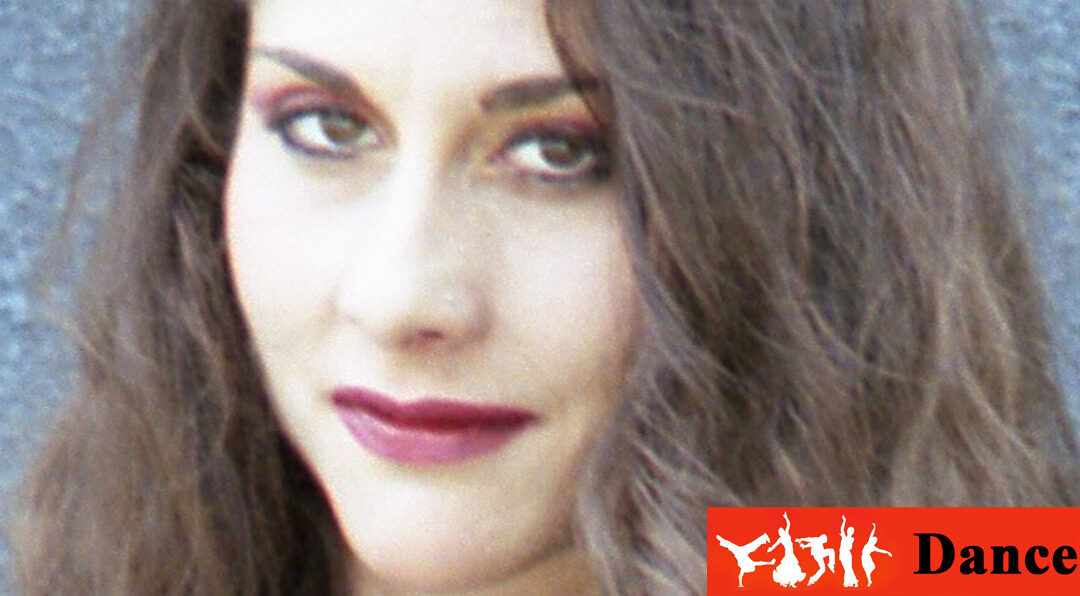
Kristina talks about Middle Eastern dance and culture. This conversation is a follow-up to a previous episode published May 16, 2020. Learn more at http://www.divinedances.com.
DanceTalks with Kristina Koutsoudas: Full Transcript
Hosted by Andrea Cody, Director of Dance Houston. Originally released August 17, 2020. This transcript was generated automatically and may contain small errors.
Episode summary (SEO)
On this follow-up episode of DanceTalks from Dance Houston, host Andrea Cody talks again with Kristina Koutsoudas, a Houston teacher of Middle Eastern dance and culture with a master’s degree in cross-cultural studies from the University of Houston–Clear Lake, a five-time Houston Arts Alliance individual artist award recipient, and one of the Houston Press 100 Creatives for choreography. Kristina remembers growing up in a family where everyone danced at parties and weddings, and her mother danced alone when she was happy and when she was sad. She describes searching for that family feeling in one dance community after another, from Middle Eastern dance to East Indian classical dance to North African dance, and the pain of an art form that has no respected place in its own culture, from a 2000s UN report on Arab arts that didn’t list dance to dancers in Egypt shunned by their families. Kristina and Andrea talk about the three-hour Dance Houston dance marathon on April 25, 2020, dancing at home through video chat, the Shim Sham relay for Frankie Manning’s birthday, how World War II and Charlie Parker’s “no dancing” moment changed American dance, grief and dancing on the grave, cultural dances shaped by the land, teaching on Zoom, and Kristina’s next project, Inara, an anthology based on Mesopotamian mythology. Recorded May 16, 2020; released August 17, 2020.
Key takeaways
- Dance belongs in the home. In much of the Middle East, dance lives in homes and family gatherings, which video chat has unexpectedly let us share.
- Simple dances can go deepest. Cultural dances are often basic so everyone can join, with one person leading and the group supporting.
- There’s a time to grieve and a time to dance. Like the jokers in a Dogon ceremony, artists help people move through grief and rise again.
- Culture is encoded in the land. Rhythms, instruments, dyes and dress come from a specific place, and that knowledge took centuries to build.
- Anything is better than nothing. Online classes can’t replace the studio, but preparing material in advance leaves more time to watch and coach each student.
Transcript
This transcript has been lightly edited for readability: filler words and repeats were removed, and several passages that could not be heard clearly in the recording were left out or condensed. The recording for this episode is especially hard to hear in places, so some sections are summarized more briefly than usual.
[0:04] Introduction
Andrea: Hello and welcome to DanceTalks. Today is May 16, 2020, and my guest is Kristina Koutsoudas. Kristina is a teacher of Middle Eastern dance and culture. She has a master’s in cultural studies, with a concentration in Middle Eastern culture, from the University of Houston–Clear Lake. She’s a five-time recipient of an individual artist award from the Houston Arts Alliance, and she was also named for choreography in the Houston Press 100 Creatives. This conversation is a follow-up to a previous episode, so if you haven’t heard that one, you may want to pause here and go catch up. We’re going to jump right in.
[0:39] Dancing in the family
Kristina Koutsoudas: It was just something you did. We always had parties, and we always danced at parties, and we danced at weddings, and we danced at other people’s houses. It was like My Big Fat Greek Wedding. My mom would dance alone when she was happy and when she was sad, and I grew up watching her. I think she was the greatest influence, because dance was a way for her to cope, to renew and restore. She would use it as a kind of freedom: play music, merge with the music, and come out of that experience feeling happy. And there were all the aunts, the ones who pinched your cheeks and the ones who would tell stupid jokes, and those cousins you’d get hit for saying, “Wow, they’re pretty good-looking,” and they’d say, “No, you can’t date them.” It was a great experience, and that was wonderful about dancing in our family.
[2:20] Losing the family home
Kristina Koutsoudas: I can go two directions with this. I discovered dance later. Actually, I’m the baby of my family, and family meant everything. I don’t have brothers or sisters; my parents divorced when I was young. We would go back to the family home compound every summer, several times a year actually, and all the sisters and brothers and extended family would come back. Then the next generations grew up, and they stopped coming back. Everybody stopped returning, and I was devastated.
Then I discovered dance: not only the physical practice of it, but that you could get paid to do it. It was like, “Why would I ever leave this? This is what I’ve found in life.” But it was never really my family. I became part of that culture, and I learned not only the dance but the food and the customs and the experiences and spiritual aspects around it, and I became part of this huge family. But it wasn’t really my family. After a while, other things started to happen. The dance community couldn’t sustain itself, for example, and it started to fall apart, and there was no more place for people to come back to, and I lost my family again. I was back in the same place.
[4:27] One dance after another
Kristina Koutsoudas: Then I would find another form of dance, and each one gave me something new. The next one was East Indian classical dance, and I was overwhelmed and blown away by how beautiful it was. The one thing that really bothered me about Middle Eastern dance was where we performed, because there was no real place for dance in Middle Eastern culture. We had to perform at clubs, and after a while that wasn’t the way I was experiencing the dance. I didn’t feel appreciated or heard or received the way the dance was for me. It’s not a sexual experience for me. It’s an expression of joy, an expression of beauty and creativity.
I saw a show at a dance studio where somebody shared their temple dancing, and I was blown away. I said, “I want to do that.” I found an amazing instructor, and I started learning with the six-year-olds. Of course I could learn faster than that, because I had previous dance training and I was older, but it still took a long time. It was so meaningful and so powerful. The practice alone was a discipline, like martial arts or yoga, much less trying to share it with other people and do justice to your teacher and the tradition. It was overwhelming, but fantastic, and it became more than just the dance again. I started going to temple with my teachers, participating and learning about the culture, the dress (I started to call it a dress, not a costume) and the history. And the deeper I went, the more I realized that it deserved nothing less than complete and utter commitment if I were to carry it forward. As much as I adored it, I couldn’t make that complete commitment, so I left.
[7:30] Each dance is a language
Kristina Koutsoudas: And of course it happened again: I would find another community, trying to recreate that family again and again. Each one of them is like a language, a beauty through which you can express yourself emotionally and physically in a way you can’t in any other.
Andrea: I think it’s amazing that’s what you’re doing, sharing those cultures with other people.
Kristina Koutsoudas: People used to walk to the well to get water and pass by their beloved working in the fields. That doesn’t happen anymore; it’s all over the internet. That changes your body of history. It changes the way you relate and the way you move physically. There are wars. Dance lets us link back to our ancestors and that more powerful way of moving. So that’s what I’ve been doing. And I’ve come back around to North African dance, which I feel is really close to my own culture. Greece and North Africa shared much of ancient history; there was a lot of trade and movement between people, and similar worship, even before that era. I feel closer to that, but I still don’t feel I’ve found what really fits my skin, which is kind of exciting.
[9:33] No place for Middle Eastern dance
Kristina Koutsoudas: The not-so-good part is that there’s no place for Middle Eastern dance in our culture except commercially, like I talked about. That’s part of the reason I keep going into all these other cultures. And it’s really sad. It’s a people’s dance. It belongs in the home, it belongs in the community, and it doesn’t have a place anymore. I wish it would have a place again. When I finished my graduate degree, I went to Egypt and looked for dance there, and I couldn’t find it. There was belly dancing on the cruise ships on the Nile and maybe in some ballrooms, but no dance schools. That was over ten years ago, and I don’t know that things have really improved.
I’ll say two things. The UN put out a report on arts and culture in the Arab states, and dance wasn’t even listed as an art. It wasn’t even under folklore. That was in 2005 or 2006, when I did my graduate work.
Andrea: Maybe it has changed recently.
Kristina Koutsoudas: I hope they’re starting to reclaim it on that level. Yes, people know belly dancing, but those belly dancers had to sacrifice a lot to get there; they needed people behind them, supporting them financially and protecting their reputation. Sadly enough, my own father was born and raised in Egypt, and that’s how Middle Eastern culture came into my family, and that’s how he viewed it. I started dancing at 14 and performing at 16, and of course I didn’t talk about it. I know that’s what a dad does, but it was very hurtful. And I’m not the only one. There are worse cases, where dancers in Egypt, if you look at the documentary about the dancers of Cairo, get abused as soon as their families find out: they put cigarettes out on them, or kick them out of the house and say, “That’s it, you’re on your own.” And all they did was study dance.
Andrea: So it’s been so divorced from its spirit.
Kristina Koutsoudas: Because it’s such an inherently spiritual art form, and it embodies not the consumption part of sexuality, but the real life-giving part of sexuality: the real joyfulness and the fertility. That’s in flamenco, that’s in African dance, it’s in all these beautiful forms, and I think that is what’s so threatening about it. I think that’s why it’s gotten divorced from its spirit.
[14:04] The dance marathon
Andrea: So you think the dance really is a thing of the home; it happens in the home. And on April 25, 2020, we had a dance marathon, and you led a session from your home to our homes, through various regional dances. How did you feel?
Kristina Koutsoudas: I felt great, but it was one of the hardest performances I think I’ve ever done, because people weren’t gathered around me. I felt like I was trying to reach through everybody’s computer to reach their heart, and I turned it up something like 50 times the volume I would normally use in a theater, where I could feel the presence of the audience much more easily. You have all this great energy building up, and you want it to rebound, and instead it was just… I’m alone, but I’m not alone. It’s so weird. I don’t know how to describe the experience. But I appreciate the opportunity, because otherwise people might never have gotten to see it. And people are coming back from all over. Houston’s so big; by the time people finish work and drive somewhere to get to class, it takes forever. But now they can join from anywhere.
Andrea: It wasn’t just a class; it was a performance, a demonstration and a follow-along. Very detailed. I learned so much, and we got a good workout too. It was the one class my little four-year-old really gravitated to. He stepped up right when you showed us tricks with the scarf, and you said if you have a partner, you can put the scarf over your partner. So he would put his scarf over my head and hang from my neck and fly around. It’s our new favorite thing to do. I posted a video of us doing it on Facebook. I think it’s just going to take a while for the feedback and appreciation to come back.
Kristina Koutsoudas: Thank you, I appreciate that. I felt like I had to give a little introduction, because I didn’t think people would have time to google it right then: “What is this thing? Do I like it or not?” So I’d demonstrate it, and then if you want to keep dancing, here’s some history. I feel it’s important to know some of that; it gives it a different context and experience.
Andrea: I’m glad you did.
[18:06] Simple dances
Kristina Koutsoudas: It should be fun. It shouldn’t be stressful. When I first started to dance, the more challenging and complex the movements you gave me, the better. But I was told by a dance teacher I really revere that sometimes the simplest dances are the ones that penetrate your heart the most, and that you’ll remember. That’s the whole thing with cultural dance. People dismiss it: “Oh, it’s easy.” It’s supposed to be easy, because a lot of people are supposed to be dancing it, and the hard part is keeping all those people together. As someone who has to coordinate the moving parts of a show, getting everyone to do the same thing at the same point in the right place and move as one person, that’s why we do it. We’re not alone; we can experience it with many people and still be ourselves. The movements are often basic, and then one person gets the opportunity to lead, and the rest of the group supports them. It’s a kind of model for community.
Some of the games I showed you with the scarf come from children’s games that were actually rituals from old ages and dances that got turned into kids’ games. That’s what I’m learning about now, so it’s pretty fun.
Andrea: That marathon was high-powered. I loved hearing the music throughout: not only yours, but African music and samba. Every time I turned on the marathon, I was taken somewhere else. It was really fun.
Kristina Koutsoudas: Didn’t you have somebody at like one o’clock in the morning? I wish I had made that one.
Andrea: He was from Mozambique. His connection wasn’t quite strong enough, so a friend in Paris patched him in on WhatsApp. It’s kind of crazy to think he was in Mozambique and we could see him in Houston. Each hour was led by a different dancer, with lots of different styles; it was just whoever wanted to do it, and it was all on Central time.
[23:13] The Shim Sham relay
Kristina Koutsoudas: There’s going to be a celebration of Frankie Manning’s birthday on Tuesday, May 26. They’re doing a Shim Sham relay. What’s fun about it is that at eight o’clock your time, whatever your time is, you do the dance and post it with the relay hashtag and #HappyBirthdayFrankie, so as the globe turns, the relay will wave from one time zone to the next. That’ll be fun to watch.
Andrea: The Shim Sham was created by Leonard Reed and his partner. It’s nice to get that intimacy with people in their homes. When we talked last time about going to the Middle East, you said you don’t really see dance there, because it’s in the homes. This is a whole new genre. If I went there, I couldn’t get in, because I wouldn’t know you. But if I stay in my home and we somehow connect, I end up inside your home. I did not see that coming, but it’s really cool, and you get to see a whole new side of people’s culture.
Kristina Koutsoudas: All the podcasts and shows coming from people’s homes are informal, and with so much happening, so much tragedy, performing or having big shows doesn’t seem right. But maybe some good things are coming out of it, like returning dance to its roots. When dance stops being part of everyday life and becomes about us performing, I think we’ve lost something there. So I’m glad to see it coming back. Thank you for doing that.
[26:51] World War II and “no dancing”
Andrea: What you said about now not being a time for dance reminds me of World War II. During the war, with the draft, the ballroom managers filled in the dance floors with tables and chairs and put up “no dancing” signs. I heard from Norma Miller that Charlie Parker walked out on stage, turned to face the “no dancing” sign with his back to the audience, and out came cool jazz. It’s like, “We don’t want people to dance, and if you dance, you’re out of here.” The culture changed so much.
Kristina Koutsoudas: It just wasn’t a time for dance. It had gone from renaissance to world war. And dance became highly, highly specialized, something for trained dancers rather than something everybody does. If you look at the content of concert dance, suddenly there was no narrative, and it could be just male or just female dancers. On a social level, partner dancing started breaking down. Ballroom dancing stopped being a thing, and then in the ’60s we had individual dances like the mashed potato. Then we went into disco, where we got our partners back, but from there it went into slam dancing, which got more and more violent. And we still haven’t really gotten back to that partner and group dancing, unless you’re part of a culture, maybe. That’s the effect of the wars, Vietnam and all of that.
[32:27] Social distancing dances
Andrea: And now what I’m seeing in the parks are social-distancing dance practices: little groups, right alongside people running up and down the hill with their trainers, all spread out.
Kristina Koutsoudas: I can see that, unless you wear a body glove. Have you seen those? Someone took a shower curtain and attached gloves to it, so you could put your hands in the gloves and hug someone through the shower curtain. Pretty funny.
Andrea: I was thinking about scuba gear, and then astronaut gear. Too heavy.
[33:26] A time for grief and a time to dance
Kristina Koutsoudas: I wanted to clarify that I didn’t mean it isn’t time to dance. There should be a time for grief. People sometimes want to pass over that part, understandably, because it isn’t pleasant. But in Dogon culture, in West Africa, there’s a grieving period when someone has died, and there are individuals who act like clowns, who make sure grief moves along. They have to allow people to grieve, but then the time for that is over, and life can begin again. There’s a time and place for everything in that ceremony, and there’s a time for the jokers. Our part is that we also have to dance. We can’t sink into grief. We have to get up. There’s a Sufi saying that dancing isn’t always rising from the ground gracefully; it’s tearing your heart to pieces and rising from the ashes.
There’s a beautiful scene in a movie by Tony Gatlif. A man finds out that his best friend has died. His son plays music on the violin, and he pours his friend a glass of his favorite whiskey into the dirt and lights some cigarettes for him and puts them in the dirt. Then, with tears pouring down his face, he starts singing and dancing on the grave. It’s one of the most beautiful scenes, and anyone who’s had those moments knows how hard that is to do. But you have to, because the soul that has passed on is no longer in pain, and there’s a time and place for it.
[36:57] Dancing in the present
Kristina Koutsoudas: We made this movement now. Maybe it disappears, and we can make another one in the next moment, and another one. We live with uncertainty all the time. There’s a blank space, the empty canvas, and we just keep moving through it. Each time it can be the same or it can be different. It is what it is. It doesn’t have to be perfect; it just has to be real. I remember the postmodern definition of dance was movement through space and time.
Andrea: The way you describe cultural dance, it’s like going with the flow. It’s in the present.
Kristina Koutsoudas: I would compare it to learning how to write, or how to use a computer, or play an instrument. There’s a period when you spend time learning the keyboard and where your fingers go. And then the artist inside can come out. It isn’t that the artist is a special kind of man, but every man is a special kind of artist. In the group, people had the keyboard down. We all knew the same words, and somebody would say their piece, and that would be supported, and then we’d move on.
[39:48] Modernism and sharing culture online
Andrea: When we talk about modernism coming out of the war and persisting to today, it’s almost a cultural dance of its own, done by members of a culture, whether they’re from North America or wherever. I understand some people do it improvisationally too.
Kristina Koutsoudas: For the most part, the way to experience other cultures used to be travel. Now that we’ve gotten a glimpse of what it’s like to share with people through Google Meet and Zoom, where shall we go with that? You can keep exploring those cultures, and that’s really enticing to me. Not only is the commute fantastic compared to getting on a plane, it’s affordable, and it’s comfortable to be home.
[42:30] Cross-pollination and cultures shaped by the land
Kristina Koutsoudas: It’s cross-pollination and sharing. In every form I’ve studied, I see it going in both directions: people coming up with their own individual interpretation, their personal voice, but I hope people can also collectively come together, and that the tradition of dance somehow remains. New traditions can be born, or old ones maintained and expanded, like Lindy Hop, the new cultural dance of the U.S., or salsa on a wide scale.
Andrea: It’s wonderful to see individual expression, and then that rebounds into the culture.
Kristina Koutsoudas: Right, like you say, cross-pollinating. Because one thing people don’t realize about cultural dance, which I tried to talk about, is that cultural arts were formed in a specific region, on a specific piece of land. The rhythms of the music come from the people working that land, and their footsteps are encoded in it. The musical instruments were made from the trees or the animals living on that particular part of the land. The dress people wear is harvested from the plants; the dyes come from the land and the animals. Everything is fashioned from the land, which is no longer happening, because now products are made and shipped from all over. In some cases they’re improvements. Certainly drumheads made of plastic never depend on the humidity and heat, and you don’t have to hold them over a fire to get the tone. But at the same time, you lose the particular tone and quality of sound that natural things had. There’s value in both. I’m saying it because it will inevitably change, but I do feel a sadness and a loss. It took hundreds and thousands of years to develop those traditions.
[46:15] Not everything from the past is perfect
Kristina Koutsoudas: And those traditions have always been taught in private, in the dance schools, and certainly in martial arts and in India, where it’s not always the easiest experience. It can be physically challenging to the point of what we might call abuse today: abuse of authority, physical and emotional exhaustion, practices that might damage the body, the materials where you practice. Hopefully all those things will improve. There are things that need changing, and some change comes from Western influence. I’m trying to say that not everything from the past is peachy keen. But we don’t want to lose whatever comes from the inside out, from the heart, that gives a voice to the next several generations. That art of living. Maybe COVID has brought us back home to what’s important: making dinner, hanging out with friends, being able to walk outside. Simple things. Everyday life has become, “Oh my God, can I actually do that?”
[48:33] Dancing together online
Andrea: Up until now, social media for dance has been like a message in a bottle. If you post a photo or video, you’re just tossing it out there; who knows where it’s going. With the new leap onto video chats and group chats, it’s like a cruise ship. We’re all doing it together. It’s really live, and I’m open to it. I’m not sure what’s next, but I like seeing what people are doing. Last night Susana Collins and her partner did a virtual tango show, and I checked it out. There were a lot of people online hanging out, and we all got to watch them perform and make requests. Another one’s coming up: a one-woman show where she’s going to read her latest work. People keep sending me invites, and I’m like, “Yes, I’m going.” As a mom, it’s great to be able to see these artists and support them without having to get a babysitter and leave the kids for an extra hour just to get there and park.
Kristina Koutsoudas: It’s a lot.
Andrea: I appreciate people opening up like you did, being willing to be so transparent and maybe vulnerable. It’s so heroic, and it’s asking a lot. For you to be willing to share yourself and open up your home and let anybody in is a really generous thing to do.
Kristina Koutsoudas: It’s so funny, because it’s hard for me to just watch dance. I always want to take part. I want to watch and then do it.
Andrea: I think it’s a real physiological thing. If you watch somebody on TV get their finger cut off, you flinch, like you feel it for a second. There’s a real movement that happens to you. So if all it does is get you to turn off your phone, turn on the music and start enjoying your home and your space, that’s great inspiration.
[51:44] Making dance accessible
Kristina Koutsoudas: And it’s nice to know other people are interested. Maybe that’s a thing: “Here, I’m going to show you something, and now you do it with me.” Because there are so many people who are too old, or disabled, or can’t afford to go get this kind of inspiration or connection. When you put it out there, it’s accessible in a way it never has been. Miller Outdoor Theatre is an incredible venue, but not everybody can get the best seats, and it’s hard to see sometimes. I wish they had video screens, so people in the back could actually see, like they have at big conventions and rock concerts and stadiums. Part of the fun of Miller is sitting outside with your family, having a picnic, eating and drinking. Greece has outdoor movie theaters all the time. But here there’s no other place like that except Miller. So it would be really nice if they could make it visible. It’s audible, which is great.
Andrea: I didn’t even think about that.
Kristina Koutsoudas: I’m just trying to think outside the box, of some other kind of format, maybe including some of the literature that goes with the dance, and more inclusive of more people. In fact, today I was reviewing some past pieces and thinking, “I need to finish those.” I have clips of myself in the studio, and I thought, “Oh my God, I need to set that on people, because it’s really good. I need to work this bit differently.” You know how you work: I like this, I don’t like that, that didn’t work, that does. But now I want a big group of people, and what’s really difficult is finding the people. But now that they’re home and have time, maybe I can find a few and get them started.
[54:54] Teaching on Zoom
Kristina Koutsoudas: I resisted teaching on the internet for a long time. All of these online students were my students before, so I’ve seen them in class for long stretches of time. What makes me hesitate is a student I haven’t had before. I can kind of see what they’re doing on Zoom, and I give them feedback in real time as much as I can, but I don’t want people to make mistakes that they keep repeating.
Andrea: And learn bad habits.
Kristina Koutsoudas: But at this time, anything’s better than nothing. We just have to hope for the best and sort it out later. I just made an instructional video of what I would normally teach in my first hour, and it took 12 minutes. The whole rest of the time is waiting and watching and praising and little pointers here and there. The actual technique took 12 minutes. When you really think about that connection we have with our students, it’s like, whoa.
Andrea: It’s not the same, but with video chat, preparing a little something in advance for them to practice means you can spend more time looking at them and taking turns.
Kristina Koutsoudas: That’s the theory, anyway. That’s the structure: I warm them up, I demonstrate, and now I’ve figured out how to use the sound.
Andrea: How are you doing sound?
Kristina Koutsoudas: With original sound. On Zoom, thankfully, there’s a way to modulate the background. It was annoying before, because the preset controls would suppress background noise, so you couldn’t play music and speak over it. But original sound is in the administrative settings: you go in and disable the suppression, and then you get the option on every call. It doesn’t set itself automatically, but it’s great; it’s just one feature you can use when you teach.
Andrea: That’s awesome, thanks.
Kristina Koutsoudas: I’m loving what’s coming out of Dance Houston. It’s a departure from what you normally do, and I think it’s really needed right now. Do more.
Andrea: Well, let’s have another brainstorming meeting. All of the new initiatives really came out of artist-led conversations, and I love seeing what everybody wants to do and everybody rallying around ideas, jumping on board and carrying the torch. It’s fun to have a blank slate.
Kristina Koutsoudas: A blank slate, and we will not leave it blank; we will go all over it.
[59:00] Summer in Houston
Andrea: In the summer we need to do stuff. Everybody wants to rush outside, but we don’t really spend time out there.
Kristina Koutsoudas: I don’t know what’s going to happen by fall, so I’m not even saying anything. Right now, I’m happy staying in the air conditioning. It’s going to be 85 degrees tomorrow. We can dance inside. I think our 70-degree weather has left us. It’s so funny, because the costuming in most of the countries I deal with is very layered and extensive. Traditional dress was made for mountainous regions; I just can’t perform outside in it in the summer here. I would die.
Andrea: You did well in that December 15 performance outside.
Kristina Koutsoudas: Not so good in the summer. If I showed you what I’m thinking of buying for my next costume, oh my God.
[61:07] Classes and Inara
Andrea: Keep us posted about what you’re going to do next. How can we connect with you online if we want to be one of your students?
Kristina Koutsoudas: My website, divinedances.com, is my new site, and you can email [email protected], and I will respond. I don’t have a class list posted, but I think there are listings in the Dance Houston directory; if you forget, you can always go there and it will list my email. Shoot me an email, because I have different classes started, and I’d like to place people according to their abilities. With everything the way it is, I haven’t really scheduled anything in terms of performances.
Actually, I should talk about this. For my next work, I wanted to do something different, and to do that I needed a narrative, because older dance was connected to a narrative behind it, a story of divinity or cultural representation that would be the foundation for the dance. So I proposed to write an anthology based on old Mesopotamian mythology of the goddess Ishtar, whose other name is Inara, and I’ve created the whole world. I’m trying to finish that; that’s my next project. Once that gets done, we’ll have a public reading, and then maybe bring some of it to life with dance. In the meantime, I’m also teaching the North African classes.
Andrea: Great. Thank you, Kristina. Thanks for coming back.
Kristina Koutsoudas: Thank you.
Andrea: Thanks for listening. Please subscribe and share our podcast, and reach out to us on social media if you’d like to talk. To support DanceTalks, donate to Dance Houston. Talk to you on Monday.