
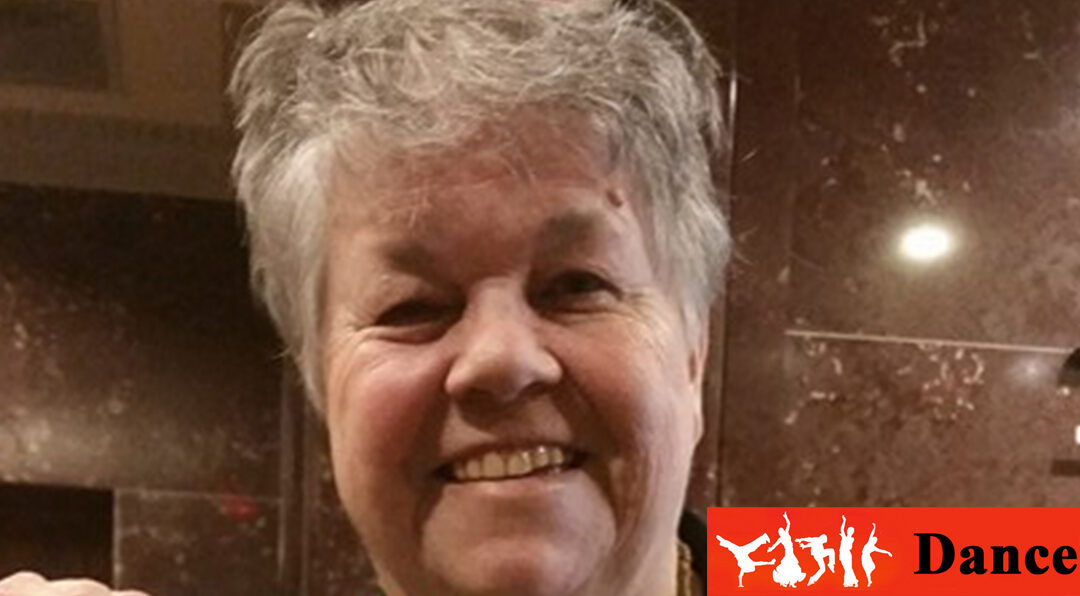
Kathy Wood talks about hard work being the key to success in her career as the founder and artistic director of Fly Dance Company. Follow them at https://www.facebook.com/FlyDanceCompany and https://www.instagram.com/flydancecompany/
DanceTalks with Kathy Wood: Full Transcript
Hosted by Andrea Cody, Director of Dance Houston. Originally released October 19, 2020. This transcript was generated automatically and may contain small errors.
Episode summary (SEO)
On this episode of DanceTalks from Dance Houston, host Andrea Cody talks with Kathy Wood, founder and artistic director of Houston’s FLY Dance Company. Born in Orange, Texas, during World War II, Kathy grew up dancing to her father’s band, twirled baton, danced as a Kilgore Rangerette under Gussie Nell Davis, and spent 16 years directing high school drill teams. After seeing street dancers at a Westheimer arts festival, she invited them to rehearse at her studio in Montrose, and their partnership became FLY Dance Company, the “theatrical hip-hop” company that toured the country, performed ten sold-out shows at the Kennedy Center, and danced in Europe and Mexico. Kathy explains how she builds choreography from her dancers’ own movement like found-object art, why great endings matter, her work with the Houston Dance Coalition, how she co-founded the Texas Dance Educators Association and helped push for dance certification in Texas schools, and why hard work is the key to success. She also shares programs, photos and press from FLY’s archives. Recorded October 16, 2020.
Key takeaways
- Use what your dancers bring. Kathy builds the skeleton, staging and ideas, and lets her dancers create the movement, treating their unique style like found objects in a work of art.
- End big. Following Doris Humphrey’s advice, Kathy makes the ending the most powerful part of a dance, and every trick has to mean something in the piece.
- Advocacy changes schools. Five drill team directors, Kathy among them, founded the Texas Dance Educators Association, which grew from 13 people to hundreds and helped bring dance certification to Texas.
- Give young people a place to happen. FLY showed schools that hip-hop dancers aren’t gang members, and one coach’s change of heart made it all worthwhile.
- Hard work is the thing. Win or lose, the answer is the same: we’ve got to work harder, keep looking forward, and stay positive.
Transcript
This transcript has been lightly edited for readability: filler words and repeats were removed, and a few short passages that could not be heard clearly were left out.
[0:00] Introduction and growing up dancing
Andrea: Hello and welcome to DanceTalks. I’m your host, Andrea Cody. Today is October 16, 2020, and my guest is Kathy Wood. Kathy Wood is the founder and artistic director of FLY Dance Company. Kathy, welcome to DanceTalks.
Kathy Wood: Thank you. I’m happy to be here.
Andrea: Me too. Where were you born?
Kathy Wood: Orange, Texas, during the war. My daddy was working on ships for the war.
Andrea: Which war?
Kathy Wood: World War II. He was a welder on the ships, and I was born there.
Andrea: Where’s Orange?
Kathy Wood: Near Beaumont. I’m a Texan from birth to death, I guess. I’ve never lived anywhere but Texas.
Andrea: What’s your first memory of dancing?
Kathy Wood: My mom and dad dancing. My dad played in a dance band, à la Bob Wills, and I remember them out on the floor. They could really dance well. We danced at my house all the time, because the band practiced there, and we had a big old piano that my sister played. So we danced a lot.
[1:18] Baton twirling, the Rangerettes and teaching drill team
Andrea: Tell me about your training.
Kathy Wood: I was a baton twirler in high school, and we did something innovative called dance twirl: we danced and twirled at the same time. My sister taught me the first twirling routine I learned, and then we took twirling from a lady named Arnodean Bolton, from Henderson, who later became director of the Rangerettes. I was also a Rangerette, under Gussie Nell Davis. But I got a lot of my training from Arnodean, and then I started teaching. I didn’t have much opportunity to perform; my first two years of college was it. From that point on I was teaching, and I wish I could have performed more, because I love to perform. I’m a natural performer; I perform all the time, even at home. But there just wasn’t the opportunity, so you do what you can and stay in it. I became a teacher.
I got married and had a baby, and then I went back to school to get my teaching certificate so I could have girls’ drill teams. I did that for 16 years, until I got totally burned out, because it takes your heart and your soul. You have to give everything.
[2:21] How FLY Dance Company began
Kathy Wood: I retired, and I saw some guys dancing on the street at a Westheimer arts festival. I started talking to them, and since I had just built a studio in Montrose, I invited them over to rehearse. We started collaborating, and I decided to enter them in the Dance Coalition’s adjudicated concert, just for experience. There were 30 groups entered, and I said, “We’ll never make it; we’re not modern dance.” Not only did we make the concert, we got the finale position. That started FLY Dance Company.
It wasn’t called FLY at first. It was called Coro, their street name for their crew. After a while we needed a professional name, and I liked the word “fly.” It was short, and I wanted something kids could spell easily and recognize right off. We started with Young Audiences, doing school shows, and the guys thought they had died and gone to heaven. They were making $75 a show and thought that was being wealthy.
Andrea: What year was that?
Kathy Wood: I would say ’90 or ’91.
Andrea: Good money.
Kathy Wood: Good money, especially since two of them were still in school and couldn’t work and do this too.
Andrea: Did they all have cars to get around to the schools?
Kathy Wood: No, no. My Volvo is what they went in. We met at my house and went in my car. I didn’t trust them back then to get there on time, so they had to meet at my house about an hour ahead, or I’d pick them up at school. We were still learning discipline. They were free spirits; no one had ever told them they had to be professional. That was a new concept and a hard lesson to learn, but they did quite well. We did over 110 shows the first year with Young Audiences, sometimes three and four shows a day. That’s hard work.
[5:28] School shows and going national
Andrea: All school levels? Tell me about the show.
Kathy Wood: We started out doing the history of street dance, and we included a piece to music by Antonio Vivaldi to show that the movement could be done to anything. That always surprised everyone, and the teachers especially loved it because we included classical music. We had to be very careful to keep the music clean, because back then it was all gangster rap with a lot of cuss words. They were delighted when we’d come out with this violin music. It was very popular. Then we developed an anatomy show called No Bones About It, a Black History Month show, and Classical FLY, where we danced to all classical music. So we had about five different shows.
Then we graduated to Dallas; they hired us. Then New Orleans and New Jersey hired us a lot. We’d go to APAP, our booking conference in New York, and then do shows in New Jersey, and that would pay for our trip to the booking conference.
Andrea: And that’s the Association of Performing Arts Presenters, in New York every January.
Kathy Wood: Yes. We still go.
Andrea: When did the company start?
Kathy Wood: About 25 years ago. My husband, Mike, did the business part. He came up to me one day and said, “Do you want a nationally known dance company?” I said yes.
Andrea: Was that Christmas morning?
Kathy Wood: And he said, “Okay, then let’s go for it.” We started going to national booking conferences. Our first break was at the Texas Commission on the Arts’ big annual conference. We were on their touring roster, we performed, and we got a standing ovation. Next we went to the Western Arts Alliance conference in Phoenix, a big conference for the West Coast, and we performed there and got a standing ovation. Getting a standing ovation from presenters, the people who book you into theaters, is phenomenal, because they’ve seen everything in the world. One man came up and said, “I’ve been coming to this conference for 30 years. Do you know how many times I’ve seen that?” My husband said no, because we were pretty naive about it. He said, “Never.”
At that point I sent the guys out into the lobby to shake hands and meet and greet, and people were running back to our booth to book us. We did over 65 concerts that spring, and that’s when we really got our start nationally. We were just shaking our heads.
[9:40] Life on tour, from Estonia to Montenegro
Kathy Wood: I was gone 25 weeks a year on tour. I was never home, and when we were home, we had to rehearse, because we had to have a season here for the grants we were getting, with new material for our Houston concerts. Anybody who thinks touring money comes easy, I’ve got news for you: it’s the hardest work I’ve ever done. After five years, I couldn’t get out of bed. I had to stop touring, because I wasn’t young enough to tour.
And I was the only one old enough to drive the van. I didn’t realize until we started renting vans that only someone 25 or older could drive. When we went to Europe, I thought, “They can drive the van, because in Europe you don’t have to be 25.” We got over there, and the only vans available were stick shift, and none of them could drive one. So I had to drive again.
Andrea: Oh, man. How did Mike get you to Europe?
Kathy Wood: A German came over and booked us for a tour. We went to Europe four or five times. We went to Paris, and to Estonia. Estonia was a trip. We were the only dance company at a theater festival, and it was the first concert we ever did. I didn’t realize I needed to fill the gaps between pieces, and I only had four guys, so it was a pretty rough concert. Nobody spoke English, but they thought we were pretty good. We stayed in a small town, and everybody in charge of everything was under 30, because they had thrown out all their older bureaucrats; the country had just broken away from Russia. It was like a brand-new country, a real eye-opener. But it was a lot of fun, and they treated us well. I would never do that today, jump into an unstable country like that.
The guys went to Montenegro this last year and several other countries that don’t have all the stability they need, and they went on a long tour of Germany. So they’re still moving and grooving.
[12:51] Meeting Mike, and raising Jennifer
Andrea: Mike’s amazing. How did you meet?
Kathy Wood: A blind date. I was invited to teach the twirlers at White Oak High School and then go on a trip to Norfolk, Virginia, with the band. While I was there, someone got me a date with Mike. He was a senior. We went swimming at Tyler State Park, and that started the romance. About six years later we got married. I knew he was the one. I was dating some other guy, and I went home and broke up with him so I could date Mike.
Andrea: A match made in heaven.
Kathy Wood: It is. Fifty-five years.
Andrea: When was your daughter Jennifer born?
Kathy Wood: In ’65, I think.
Andrea: Tell me about raising her. She’s a choreographer too. How was her childhood different from and the same as yours?
Kathy Wood: It was different. She used to go with me to rehearsals all the time. I worked with the twirlers here in Houston at the Lamar High School band, and she went with me. I had a group of little girls her age that I took to competitions, and she danced a lot, took dance classes, and was in my drill team at Memorial. We didn’t have much money, so I couldn’t pay a babysitter, and I took her with me. She was a sweet kid. She’d sit and play. When I visited one of my colleagues and we talked for hours, Jennifer would sit there and draw and listen. So she grew up knowing the ropes.
When we built the Duplex, our studio theater in Montrose, we launched both our dance companies there. She did pieces for the shows, and I was working with hip-hop. We were developing our own companies at the same time. We’re alike but separate: she has her own ideas, and I have mine, and I respect that as an artist. But we call on each other when we need help. When she had her theater, the Barnevelder, and we didn’t have a rehearsal space, we rehearsed there, and she’s called on me to help with costumes and other things.
Andrea: It’s fun having a kid who does the same thing you do.
Kathy Wood: It’s a great friendship.
[17:05] Theatrical hip-hop and found-object choreography
Andrea: How would you describe the style of FLY Dance Company?
Kathy Wood: I think it’s theatrical hip-hop. The movement is theirs, and the ideas and the staging are mine, and combined it’s a good combination. I don’t put my movement on them, because they looked terrible doing it, so I decided early on that I wouldn’t change them. A lot of people have pushed me to get them into ballet classes. It would ruin them; they’d tear up that teacher inside of five minutes. They have such unique movement, with a physical strength I can’t duplicate. When you come across a kid who is absolutely fascinating to watch, why would you make him look different? Use that.
It’s like finding a found object in art. When you find a found object that fascinates you, you use it in the design of the painting. That’s how I look at my choreography: a piece of art with a beginning and an ending, and you place these found objects within the design of the piece.
I follow Doris Humphrey’s checklist: have a great opening, and your ending is 40 percent.
Andrea: What does that mean?
Kathy Wood: That the ending is the most powerful part of your dance, and you’d better end big, or clever, or unique. For instance, we did a piece at the Jewish Community Center, and I have one kid who can do phenomenal head spins. Everybody just puts a kid out there and lets him do the head spin. For our ending, the music faded out, and I had him doing a head spin with all the other guys crowded around him, and then they melded back into the darkness while he continued on in the spotlight. It was touching. I kept saying, “I love this.” It was so strong, and the audience went nuts. It was better than him just getting out there and doing a head spin, because it gave it context in the piece. I’ve got kids who can do flips and everything, but I don’t want them just flipping across the stage. If they do a flip, it’s got to mean something; it’s got to be part of the choreography.
I enjoy not having to train them to move, because I taught Dance I for 25 years, and I hate Dance I. I hate teaching ballet with a passion. It’s so boring to me. I wish I could overcome that, but it’s like basic drawing: I’ve been there, done that. So it’s nice to have students who come with a movement vocabulary I can use. That’s what hip-hop has done for me. It’s allowed me to keep choreographing without having to do the movement myself.
[21:11] Kathy’s creative process
Andrea: How do you do that? What’s your creative process with them?
Kathy Wood: I put on some music and watch them dance for a while. Then I say, “Okay, we’re going to start.” I usually have a beginning and an ending, and I do a skeleton: we move here, we move there. Then we put in the juicy parts, like the cherries or the chocolate chips. I’ll say, “You two, get over there. I want a 32-count duet, and I want you to move from there to there. I want some floor work, but I want you up doing some weights here.” They’ll come back with the most phenomenal thing you’ve ever seen, and I could not think of anything better. I may say, “Instead of facing front, face the diagonal,” and change little things like that, but basically they’re better choreographers of the movement than anybody I’ve ever seen, because their thing is doing something new and different. They use a lot of strong physical stuff that I’ve never done in my life, much less thought of. It’s like digging in a bag and coming out with wonderful stuff. So I use it, and I don’t take credit for the choreography by myself. It’s “choreographed by Kathy Wood and dancers.” I stage it; they’re not good at that. I put it into context.
Andrea: It makes me think: when they freestyle, they’re doing a very personal, spiritual, connected interpretation of the music, expressing their feelings and ideas and innovations. Then you come from the outside, from the audience’s perspective, putting together a collage and translating what’s in their heart out to where people can see it and be engaged and intrigued by it.
Kathy Wood: A lot of times there’s a little trick in the music, and they’ll add something automatically, without me saying a word. I always keep that, because I want them to feel like it’s their piece of choreography too, and it makes for a better performance if they can feel that little thing in the music. Sometimes it adds a comedic, fun characterization that I love. “Why didn’t I think of that?” So it’s fun to watch them develop a piece on us. I’m the driving force: “Get up, let’s do this again, go for it.” It’s generally my idea, but they contribute a whole lot.
Andrea: Do you always pick the music and the costumes?
Kathy Wood: Yes. When I give them choreographic credit on their own, they can pick the music, but they have to pass it by me. I don’t go for music that’s not interesting, that’s totally repetitious from beginning to end. It has to have highs and lows. I’m very music driven. If I don’t like the music, it’s not going to happen.
Andrea: Your dad was a musician.
Kathy Wood: Yes, and I played saxophone in the band, so I can read music. I’m sort of a musician. And my maiden name is Musick: Kathy Sue Musick.
Andrea: That’s a cute name.
[27:19] The Houston Dance Coalition
Andrea: I know you were involved with the Houston Dance Coalition and the Texas Dance Educators Association. Which came first for you?
Kathy Wood: The Coalition. The president was Jeff Salzberg. He was at the Cullen theater at U of H, and when he left, the Coalition was very much in debt, with bills that weren’t paid. I was the only one left, so I took over the presidency to get us out of debt. We did a few fundraisers and got out of debt, and then Nancy Henderek took over, and I left. She still runs Dance Salad, but that’s a separate organization.
Andrea: She’s using the Coalition’s nonprofit?
Kathy Wood: Nancy and Christina took over the nonprofit, because they had two big projects and I wasn’t interested in running the Coalition. One was Dance Salad, an international dance festival that came to Houston once a year, and the other was the Weekend of Texas Contemporary Dance, at Miller Outdoor Theatre. Then I think Christina dropped out.
[29:25] Founding the Texas Dance Educators Association
Kathy Wood: When I was teaching at Friendswood, about three years in, five of us directors decided to start the Texas Dance Educators Association. At first it was the Texas Dance/Drill Team Directors Association; they changed it to Dance Educators later. We started it because we found out we didn’t have the same budget as athletics or the same salary, and we were working twice as hard. We wanted a way to get together and compare things, a sort of lobby or backup group for all these directors. A lot of them were young women who were timid and had no courage, so we backed them up: “Dobie High School does this for its director, and Friendswood does this for its director.” That’s how the idea got started.
It has grown into something really big. We started with 13 people, and now it’s 700 or 900 people. They bring about 1,000 kids every year, and there are all these vendors. The five of us are founders, and we get honored every year.
Andrea: And TDEA has been very supportive of Dance Houston. Thank you. It’s a wonderful way to connect with teachers, and whenever we have something to share, it’s always really well received and appreciated.
Kathy Wood: That’s good. The five of us also started advocating dance education for these directors, because until we got involved, the drill team director might be an English teacher or the PE teacher who knew nothing about dance. Joanna Friesen got involved and pushed TEA, the Texas Education Agency, to institute a dance certification, and others contributed too, and that’s how we finally got dance certification pushed through.
Andrea: That was on your watch? I just assumed it was always there.
Kathy Wood: When I left Friendswood to teach at Memorial, I had to get a dance certification. I wasn’t grandmothered in. I had to go back to school, and Joanna was my teacher at that time, so she helped. She asked, “Have you had ballet class before? Okay, I’ll give you credit for Ballet I.” It’s crazy. But that’s the history. The educators have become more knowledgeable because of the dance certification, and dance is being emphasized now. Schools have dance classes other than drill team, and some even have boys’ classes. FLY Dance Company started that at Lamar High School: Sharon Roberts was there, and she hired one of my dancers to start a hip-hop program. That spread all over the state, and now a lot of schools have separate boys’ hip-hop classes.
[34:36] Boys, girls, hip-hop and ballet
Andrea: So what is up with that? Boys do hip-hop and girls do ballet?
Kathy Wood: I just don’t think girls are strong enough to do hip-hop, with all the upper body strength it takes. Kinesiology. Now, if the girls would take on popping and locking, I think they’d be great at it.
Andrea: You see it on World of Dance.
Kathy Wood: I don’t watch that show. I don’t like that they do death-defying tricks just to get attention. I think they should discourage that. That’s not dance.
Andrea: There was a guy who fractured something this season, I think his knee.
Kathy Wood: What gets me is that kids see it on TV and try it, and I just don’t advocate that. I think there’s a better way to show real dance. We do some pretty athletic things, but I usually have a spotter, and we don’t throw people around and catch them. There’s enough good dance going on that I don’t need to. If that’s what you’re going to do, have an acrobatic competition, but stick with dance. I understand they’ve got to sell the show, but I’m not going to watch it.
Andrea: So rewind. Boys do hip-hop. Why don’t boys do ballet?
Kathy Wood: Well, boys do ballet, but ballet is a feminine form of dance and always has been, from the very beginning. It’s about dancing on pointe, and the man is there for support. The things men do in ballet are very athletic, and they’re not considered great unless they can really jump. But line up, get in position, leap across the floor, run back, get in position, leap across the floor: it’s so boring to me. I love the athleticism, but it could be choreographed better, I think.
Andrea: I see guys in hip-hop being the center of attention, the star of the show, really able to show off the strength they were born with.
Kathy Wood: We have performed with ballet dancers in Clear Lake, on pointe. It was a collaboration with Amber Thornton.
Andrea: I remember her working with them.
Kathy Wood: Amber couldn’t choreograph the guys; she didn’t know what to do with them. So I helped with some things, because I knew both sides. I felt sorry for her, because working with just one medium of dance is limiting yourself. I’ve had to study jazz, tap, ballet, African and hip-hop, and people ask, “How do you do this?” Because I’ve been exposed to so much that I can draw from all of it. Even my baton twirling has helped me in dance: put something in my hand, and I know what to do with it.
[39:53] Teaching tap with no tap shoes
Kathy Wood: Because I’ve been exposed to so many different things, I can choreograph, and it doesn’t daunt me. Take tap dance: I’ve had maybe six tap lessons. When I was teaching in Tyler, we were invited to a tap festival in Dallas, and we did a jazz piece. They were so enamored with the kids that they said, “We want you back, but can you please tap dance?” I said, “This is a free program. My kids don’t have tap shoes; they can’t afford them.” They said, “We’ll buy them for you.” So they bought us tap shoes, but we didn’t get them until two weeks before the performance. I was teaching tap with no shoes.
It was very beginner, and I told them my kids would be beginners, but because of my background of never letting something discourage me, we did a good tap dance. I did some camouflage: you do basic warm-ups, tap, tap, tap to the front, then to the side, then to the back. And I had a little girl who was a champion ball dribbler. Guess what music I used? The Harlem Globetrotters’ “Sweet Georgia Brown.” My kids were doing warm-ups, and two people threw this little girl two balls, and she was out there in front dribbling, and nobody noticed the kids weren’t doing great tap dancing. We had three pieces, and at the end I taught them one time step. The kids ate it up. It was so basic, but it worked.
[41:53] Seeing dance in person
Andrea: You said you investigated all these different styles. Today, people just grow up seeing it. It dawned on me the other day, looking through our archives, that Dance Houston started before YouTube. No wonder I thought there was such a huge need for a festival featuring all different dance styles: there wasn’t a place to see them in 2003 and 2004, and I think YouTube started in 2005. Now people grow up watching everything. Can we expect them all to know what all these things are as they grow up?
Kathy Wood: It doesn’t matter that it’s all out there. It’s whether or not you seek it out and watch it. I’ve got kids who have never seen a full ballet, not even The Nutcracker, and don’t know a lot of things because they’ve never had the opportunity to experience them in real life. I remember taking the FLY guys to see Stomp. I told them, “Dress up. Something nice.” One of them showed up in a brand-new jersey and sweatpants. I said, “That’s not what I meant. I want you looking a little nicer.” When we took them to booking conferences, I told them they had to look nice. “No jerseys,” I would always say. They have no idea what it takes unless they physically go through the motions. To that kid, looking nice was a brand-new jersey, pants and shoes that weren’t dirty, because that is his world. Kids don’t learn anything other than what’s in their own tight little world, no matter what they see on TV. Did you emulate somebody on TV when you were growing up?
Andrea: I didn’t, really. When I was growing up, the most popular girls were Debbie Gibson, who didn’t really dance, though I would sing her songs, and Madonna, after “Lucky Star,” a pop tune from 1985 or ’86, when I was five or six years old. I loved Madonna, and then she went in a direction that was shocking to me and my family, and it definitely opened my mind to issues and ideas and perspectives. But I wasn’t going to do her dance. That wasn’t me.
Kathy Wood: I was watching Gene Kelly, Fred Astaire, Cyd Charisse, Debbie Reynolds, Ann Miller, all those people. My mother sold tickets at the movie theater, so every night I had to go to the movies, whether I wanted to or not. I saw movies 10 or 12 times, and I have some movies totally memorized. I guess that was a big part of my loving show business, because I love that performing aspect of it.
Andrea: You really got to see them, 12 times over, so you could appreciate the perspective and staging and production value, the presentation element of dance.
Kathy Wood: And we didn’t have TV at that time. This was before TV. When we got a TV, it was black and white, and we could only watch two channels, really one, and there wasn’t much on. But I remember going to that station for telethons as a baton twirler. My junior year, one of our members came down with polio, and she was in an iron lung the rest of her life. Her mother hadn’t had her vaccinated, and it was really sad. We went on and told that story and were prominent in their promotion. That was a big deal, to be on TV.
[48:12] Gussie Nell Davis, “Miss Showbiz”
Kathy Wood: The only performing gigs we ever did were for the band at halftime in high school. Of course we had talent shows; they were pretty bad, but we did those. Then college came, and it was different. I was introduced to Miss Showbiz, Gussie Nell Davis. She was incredible. I still use some of her philosophies today.
Andrea: Can you share one with us?
Kathy Wood: Always leave the audience wanting to see more. Use music that people can sing along to, identify with or enjoy. Always keep your chin up when performing. She instilled something in those girls that I had never seen a woman do before. She made you feel like a really important person and have pride in what you were doing, no matter how talented you were. She kept saying, “If you’re not talented this way, you’re talented that way.” I never was a very good performer. I wanted to be, but I didn’t have it. So I made myself useful. I had a great memory when I was younger, and I can still remember the first dance I ever learned and things I taught in high school. She made me realize that even if I wasn’t a great performer, I could go on and be an important contributor to dance.
[50:12] Kathy’s contribution: putting hip-hop on stage
Andrea: In your own words, how have you contributed to the field of dance?
Kathy Wood: In dance drill team, I think I contributed the idea that you don’t have to be a slap-your-thigh high kicker; you can actually dance, do modern and contemporary, and open the door to new ideas. And I think I contributed to the hip-hop world by putting them on stage. That’s what I set out to do when I first saw them: these young men need a place to happen.
Andrea: What year was that first festival?
Kathy Wood: I think ’91, somewhere around there.
Andrea: In ’91 we had hip-hop on MTV, and that’s entertainment. To put it on stage means something different.
Kathy Wood: It’s art. Back then, people thought hip-hop was gang related, and we battled that when we went into schools. Principals thought that because the guys wore hats and baggy pants, they were in gangs, when what we were doing was talking about life skills. Coaches would come up when we did Young Audiences shows and say, “Get that hat on straight,” if it was a little crooked. Ridiculous stuff like that.
At the Texas Commission on the Arts’ big convention, they asked us to come talk about dance in schools, and the guys got up and talked about how they’d been mistreated in school. Jorge talked about how the coach used to run him out of the gym at lunch, when they just wanted a little corner to practice in. He talked about not having a place to happen in school. Afterward a coach came up to us, practically in tears, and said, “I just didn’t realize. I’ve been throwing these kids out every day for coming in to practice in the gym. I’m going to tell them they can have this section to practice in.” I thought to myself, all by itself, that one guy was worth it. If we changed that one mind and gave some other kids a chance, it was worth it.
It’s been about building these kids up and teaching them how to get along in life, and that they are important. They’re not throwaways. I’ve fed a lot of kids and picked them up, and some of them have moved in with us. It’s been hard, but I believe in them. I believe they’re extremely talented and there’s a path for them if they want to work hard enough, and that’s what I tell them: good things come through hard work. If we go to a competition and come in last, I tell them, “We’ve got to work harder.” If we win, I tell them, “We’ve got to work harder.” You work as hard as you can, and winning and losing take care of themselves. I don’t put myself up against anybody but me. If we don’t do well, we’ve got to work harder. Hard work’s the thing.
[54:29] Treasures from the FLY archives
Andrea: I want to dig into some of the materials you’ve brought from the archives. For listeners who would like to join us for this next section, please go over to YouTube, because we’re going to hold up and show you some of Kathy’s memory books.
Kathy Wood: This is from the Virginia Arts Festival. This is the program: here’s Alvin Ailey, and here’s FLY Dance Company, in the same program, with Ballet Hispanico. Another Virginia Arts Festival, and an article about us. We kept a lot of this because we thought it was important. Here’s the Vail International Dance Festival program; it’s all ballet, and FLY Dance Company closed the night. This is Estonia. This was the Paris hip-hop festival. This all really happened. More hip-hop, Clear Lake contemporary ballet, there’s FLY. This is a Black dance festival in Austin. This is New York. This is Reno. This is a Dance Now festival in New York, and this is what they passed out, which I thought was clever: bookmarks to advertise.
We danced at Cooper Union, in the hall where Abraham Lincoln gave a famous speech in New York. This is Monterrey, Mexico. This is the Extremadura festival. And this is Longwood Gardens, the home of some famous wealthy man; the whole place is fascinating. Those are just festivals.
This is the cue sheet the Kennedy Center did for us. We performed ten sold-out concerts there. They did all the writing.
Andrea: What year was this?
Kathy Wood: 2004, 2005. And this is a half-page article in The New York Times. Here’s the actual newspaper: “pops and locks set to Bach.” That’s the most important thing to the guys. We got four-color photos.
Andrea: You sure did. Half a page. I see Javier Garcia, George “Rock” Williams, Jorge Casco.
Kathy Wood: And here’s JC. This is an advertisement we had, and this is from Christina Giannelli’s A Weekend of Texas Contemporary Dance. These are postcards we sent out, and more advertising.
Andrea: Oh, you got them all in suits! Looking fly.
Kathy Wood: This is interesting: a booking calendar with all the booking dates for a year. If you look at it, you’ll see how busy we were.
Andrea: This is from APAP, the Association of Performing Arts Presenters. Oh my goodness! No wonder you couldn’t get out of bed.
Kathy Wood: Every year: 2003, 2004, 2005, 2006. Here’s the first one, 2000. Not as filled up.
Andrea: Good work.
Kathy Wood: This is Dance Magazine, with an article about FLY.
Andrea: That’s our national dance magazine here in the U.S.
Kathy Wood: It was about hip-hop, in 2004. And this is the Kennedy Center news, “straight out of Houston.” This shows how much money we started with and how much we ended with when I retired.
Andrea: From nothing to very close to half a million a year in annual revenue. Amazing.
[62:45] Funding a Houston company
Andrea: How did Houston support you?
Kathy Wood: Houston Endowment started us out with a $40,000 grant, and the Arts Alliance contributed, but not as much. They always thought we took their money and spent it out of town, but we had a full season here in Houston, and I tried to convince them that we spent that money on the Houston season. I was adamant about having a season here, because I didn’t want us to be just a touring company. I wanted the company to be known in Houston. So the Endowment helped, and the Arts Alliance, and I think Target gave us a couple of grants. With that much money, we should have been declared a major company, especially in 2005, but they said you had to earn the money here in Houston. They changed the rules. We were doing as full a season here as Houston Ballet, and they still didn’t declare us a major. Our first grant writer, Ernest Lewis, said there are just two kinds of people who fund you: those who do, and those who don’t.
This is sort of the highlights; Mike did this piece. It talks about 64 concerts, all standing ovations; 104 outreach programs and workshops; 7,200 seats sold out for four concerts at the Ordway in St. Paul. That’s just the 2004 to 2005 season: Jacob’s Pillow Inside/Out, the Colonial Theatre in Pittsfield, Vail International, Lincoln Center, summer tours in Germany. And in 2004, the year before: 61 concerts with standing ovations, 110 outreach programs, 10 sold-out performances at the Kennedy Center, and our first pops concert with a symphony orchestra.
Andrea: Congratulations. It’s amazing.
Kathy Wood: And things like this from presenters: “I will have to retire from the arts committee now, since I will never be able to find another program to top FLY.” And the FLY dancers’ message: “Stay in school, listen to your teachers, work hard, and surround yourself with positive people.” That’s Jorge Casco, taking it to the streets.
[65:52] Jorge Casco and The Journey to Mars
Andrea: Tell us about Jorge.
Kathy Wood: Right now he’s taking care of his father, but he’s been active in resurrecting the company. After I retired and moved to Tyler, and then we moved back, he basically runs the company now. I’m just doing the fun part, choreographing and rehearsing. He and a couple of others work on the booking and the mechanics and take care of the costumes. I make the costumes, but they take care of them. I was told I’m not doing that work anymore; I’m too old.
Andrea: They threw you a big birthday party last year.
Kathy Wood: That was fun. I love getting all those guys together, because they tell so many funny stories. I could tell a lot more, but I won’t.
Andrea: How did you meet Jorge?
Kathy Wood: We did a show at his school, Spring Woods, and he came up and gave me his phone number. Then I did a pilot program at Spring Shadows, and his little brother, Danny, was in it. I was teaching hip-hop, and instead of going to PE class, students could come to hip-hop class. Jorge came over and said, “I’ve got three other guys. Will you work with us?” I told them I’d give them 30 minutes twice a week, and if they gave me any lip or were late, I wasn’t going to work with them, because I was usually pretty tired by the end of the day.
So I started working with them, and I got a grant from Colin Powell’s America’s Promise. There was a big push about going to Mars; NASA was promoting it big time. I got a $6,000 grant, but the dancers had to be 18 and under, so I couldn’t use FLY Dance Company, and I recruited Jorge and his crew. All summer long we worked on a piece called The Journey to Mars. I bought them sandwiches, and I paid them $400. When I told Jorge I could only pay $400, he thought it was $400 for all five of them, and it was $400 apiece. He said, “I remember taking that check home and giving it to my mother, and she accused me of stealing it,” because he had never made that much money in his life.
Andrea: He wasn’t even 18.
Kathy Wood: No, he was young. We performed at the Children’s Museum for the mayor and a whole bunch of people, and it was pretty incredible. They had big black robes, stretch hats with pipe cleaners and ping-pong balls on the ends, and see-through masks, and they changed into Martians after they landed on the planet. I had orange fabric across the stage. The music was “Mars” from The Planets, so it was classical music. They did a great job, and everybody was stunned that these high school kids were doing this production. That’s how I got involved with Jorge.
[71:02] Kennedy Center memories and the Dallas Texans
Andrea: Show us your last items.
Kathy Wood: This is Inside Arts. Mike wanted me to show you our ad. We weren’t playing around. This is the Kennedy Center, and a picture of the guys. That’s Jorge. Publicity shots, more of the cue sheet, and the Kennedy Center Playbill. And this is Mike’s guest artist pass.
Andrea: Mike Wood. 2004. Amazing. Y’all did it.
Kathy Wood: We sure did. And now they’re doing symphonies. They did the Cincinnati Symphony, a major, major symphony, five concerts with them last year, and it’s big money to perform with them, so you can support the dancers.
Andrea: Good job. Who’s this lovely lady?
Kathy Wood: That’s me as a Dallas Texan. The Dallas Texans had a professional twirling drill team. The Texans became the Kansas City Chiefs: there were two professional teams in Dallas, and there wasn’t enough market for both, so they flipped a coin, the Texans had to leave, and they became the Kansas City Chiefs. For three years I was in that group. We performed at the Polo Grounds in New York, and we performed at the Cotton Bowl every other weekend in the fall. That was my uniform and how I looked. I was a junior, a senior, and in my first year of college.
And this is my Rangerette picture. I was a Kilgore Rangerette for one year; I was in the band at Kilgore for one year and a Rangerette for one. I learned more from Gussie Nell Davis, being in the Rangerettes, than from anybody. She was a phenomenal woman, really professional, and she always had good things to say about girls. I really respected her for that, because at that time, in the ’60s, we women weren’t too strong, but she was very strong.
[74:21] The pandemic and a new piece
Kathy Wood: I feel like I’m losing my voice. I haven’t talked this much in a while!
Andrea: We can wrap up soon. How are you handling things since the pandemic came up?
Kathy Wood: Pretty good. I thought I had it. I came down with a little fever and a cough and got tested, and it was negative. I was scared, but I’ve gotten over it; I think it was just allergies. I’m trying to stay in. I’m sewing a lot. I’ve sewn up almost everything I have at the house, like 12 jackets and a bunch of jewelry cases, so I’m doing all right. And I’ve got a piece I want to choreograph about the pandemic.
Andrea: Do you want to tell us a little about it?
Kathy Wood: I want them all in white, and I want to use Barbra Streisand’s “Imagine,” which goes into Louis Armstrong’s “What a Wonderful World.” For the first part I want canons, like ghosts, and when it goes into “What a Wonderful World,” I want their costumes to change color as they dance. I’ve figured out how. I once did a piece with drill teams with magic scarves that changed colors; it’s the same premise, changing their shirt color. The song talks about wonderful colors and the blue of the sky. It’s really stepping out for hip-hop to do something like that, because it’s a slow piece, but I’ve been wanting to do it.
Andrea: I’d love to see it.
Kathy Wood: Maybe later on. I still choreograph in my sleep a lot. I imagine stuff, and I’ve got it all ready to go. I just need dancers. After this, when we get back to rehearsal, maybe I’ll get to do it.
[77:33] Words of wisdom and closing
Andrea: You’ve already given us so much, and I know you’re a very generous person, so I have to ask: would you give us one more word of wisdom?
Kathy Wood: Keep working as hard as you can. That’s the only way to achieve. And keep looking forward and be positive.
Andrea: My guest today is Kathy Wood. Kathy Wood is the artistic director and founder of FLY Dance Company. Kathy, thank you for being a part of DanceTalks.
Kathy Wood: You’re welcome. I enjoyed it.
Andrea: Thanks for listening. Please subscribe and share our podcast, and reach out to us on social media if you’d like to talk. To support DanceTalks, donate to Dance Houston. Talk to you on Monday.