
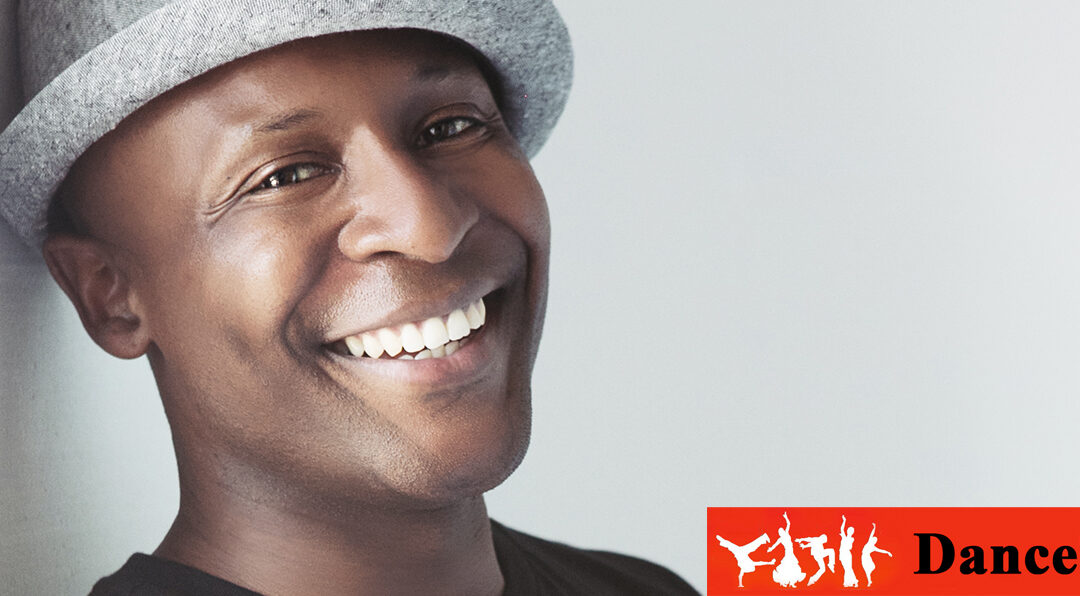
Elijah Gibson, Founder and Director of Social Movement Contemporary Dance, conveys messages through dance and storytelling. Hear him out and picture how he does it. Follow him at https://www.facebook.com/elijah.a.gibson, and his company at https://www.facebook.com/SMCDances and https://www.instagram.com/socialmovementdance/
DanceTalks with Elijah Gibson: Full Transcript
Hosted by Andrea Cody, Director of Dance Houston. Originally released July 28, 2020. This transcript was generated automatically and may contain small errors.
Episode summary (SEO)
On this episode of DanceTalks from Dance Houston, host Andrea Cody talks with Elijah Gibson, founder and director of Social Movement Contemporary Dance in Houston. Elijah started with a summer tap class in a San Diego park, taught himself for a year, and danced with San Diego’s citywide parks and recreation program before moving to Bryan, Texas. A biology major who joined every club, he discovered he could major in dance after department chair Dana Nicolay found him practicing alone in the dance building. Elijah became the first male dancer on Sam Houston State’s Orange Pride dance team to compete at UDA Nationals, competed in the Jazz Dance World Congress choreography competition, and then danced for eight years with Gus Giordano’s Giordano Jazz Dance Chicago, touring the world. He shares memories of Chicago’s close-knit dance scene and the Dance Chicago festival, his view that jazz dance is rooted in African movement, and why every Social Movement piece starts with an idea he needs to talk about, from We Are Greenwood and The Black Card to Game Show and The Girlie Show. He also talks about building audiences in Houston and why dancers need a point of view. Recorded July 2020; this episode may contain some adult language.
Key takeaways
- Go back to the source. Elijah teaches that jazz dance is rooted in African movement, and that educators should know and acknowledge where the styles they teach come from.
- The idea comes first. For Elijah, the steps are the easy part; every work starts with something he needs to say about the human condition.
- Art can start a conversation. Social Movement’s pieces aim to create dialogue about social issues, not to tell audiences what to think.
- Community means showing up. Chicago’s scene thrived because non-dancers and dancers alike went to see one another’s work, and Houston can grow that kind of support.
- Dancers need a point of view. Stay aware, stay engaged, read the original source, and bring your beliefs into the studio with you.
Transcript
This transcript has been lightly edited for readability: filler words and repeats were removed, and several passages that could not be heard clearly in the recording were left out.
[0:00] Introduction: learning to tap
Andrea: Before we begin, today’s episode may contain some adult language. Hello and welcome to DanceTalks. My guest is Elijah Gibson. Elijah is the founder and director of Social Movement Contemporary Dance. Elijah, welcome to DanceTalks.
Elijah Gibson: Thank you for having me.
Andrea: Thanks for being here. I’m really looking forward to sharing your story. Would you please take us from the top and tell us how you first learned to dance?
Elijah Gibson: My story begins when I was about eight years old. My introduction to dance was through tap. I’m from San Diego, California, and every summer there was a park we would go to, with different activities you could do for a week: finger painting, gymnastics, music. One year they had tap dancing, so we took a tap class, and it was great. It was fun, and it just resonated with me. I would practice all year and jump around, and my mom was always like, “What are you doing in there, making all that noise?” And I’d say, “I’m tap dancing.” The following summer I went back to the same teacher, and when she saw what I could do, she asked, “Who taught you that? How did you pick this up?” I told her I taught myself; I had practiced every day for the past year. She said, “Well, I need to speak to your mom.” That basically started it. I tapped and danced with San Diego Parks and Recreation, which had a citywide program.
[2:03] Bryan, Texas
Elijah Gibson: Right before high school, I moved to Bryan, Texas; my mom’s from that area. Coming from San Diego to Bryan was complete culture shock. There was that mentality that all the guys play football, and if you’re a girl, you’re on the drill team or pom squad. Of course I didn’t do any of those. I still wanted to dance, and it took us a while, but we found a dance studio called MCM, with Ms. Montalbano, and I danced there for some years. Then mid-high school I kind of stopped. I was really involved in high school; I was in pretty much every club. I was even in Future Farmers of America. I was just one of those people who did everything.
[3:03] College: biology to dance
Elijah Gibson: Then I went off to college, to Sam Houston State University, where I got my undergrad. I actually went to school for biology, a biology major with a minor in chemistry, and just like in high school, I joined pretty much every club. I was with the NAACP, and every spring we’d have a fashion show with a band that came in to play during intermission. I forgot to mention that in my freshman year there was a kid in College Station, maybe about eight years old, who was a tap dancer, and he was extremely talented, crazy good. No one could teach him because he was so good, so I would drive back and give him private lessons. That’s how I stayed involved.
Back to the NAACP function: the band canceled, and we were in a meeting, and I jokingly said, “Oh, I can tap dance for you.” They said yes, and I was kidding. Then the night before the show I got a phone call. We didn’t have cell phones then; they called my dorm phone, I punched in my four-digit code to get the message, and they were asking if I could tap dance. I was like, “Are you serious? This is tomorrow. I was just kidding.”
One of my friends in the gospel choir, another club I was in, was a dance major, and she invited me to see a production called Dances at 8, which was student run. They did everything: the choreography, the sound, the tech. When I went to the show I asked her, “How do you do this stuff?” She said, “Oh, I’m a dance major.” And I was like, “Dance major? You can get a degree in dance?”
I knew they had a dance building, so I took my shoes, went to one of the back rooms and practiced. This man walked by, Dana Nicolay, who was the chair of the dance department at the time, and he poked his head in. The first thing I thought was, “Oh my gosh, I’m going to get in trouble. I’m not supposed to be in here.” But he didn’t say anything. Then he walked by again and poked his head in again, and I thought the same thing. He kept doing it, and about the sixth time, he finally walked in and introduced himself. I told him who I was, what I was doing there and how I found out about the building. He went and spoke to my friend the dance major, and she approached me. Long story short, I made dance my minor in my sophomore year, and in the spring semester of my sophomore year I switched my major to dance and made biology and chemistry my minors. Of course my mom was like, “What are you doing?” That was my introduction to what started everything with my training.
[6:06] Jazz Dance World Congress
Andrea: That’s amazing. I know you went on to dance for eight years with Gus Giordano’s Jazz Dance Chicago. How did you get there?
Elijah Gibson: It was amazing. It was so crazy. When I was in college, we didn’t have social media and all these different things, and dance was still so new to me that I didn’t really know much. But Dana and the department did a really good job of keeping us informed about dance. Back then it was ballet companies and cruise ships, and they posted those notices on the bulletin board. But Jazz Dance World Congress was a thing, started by Gus Giordano’s Jazz Dance Chicago. Now they have all these different dance conventions, but at the time it was the epitome of a dance convention. There was nothing like it. You had classes from the godfathers of jazz: Gus himself, Matt Mattox, Luigi, Frank Hatchett, Pattie Obey, Susan Quinn, so many people. At lunchtime they had matinee performances for the choreography competition. People from around the world submitted choreography, they selected finalists, and every day there were about four or five matinee performances. In the evening you had a mixed bag of professional companies performing.
While I was in school, I started a little dance group, and we would perform around campus. When it was time to sell the yearbook (I don’t even know if colleges do yearbooks now), they asked if my group could do performances every day in the mall area, the commons where everyone hung out. So basically we were doing flash mobs before flash mobs were even a thing. I’m not saying I created flash mobs, but I was doing them before.
Andrea: Awesome. Trendsetter.
Elijah Gibson: I didn’t really have formal jazz training. I took some classes at the studio, but to learn, I just started teaching. Every Tuesday and Thursday there was a jazz class, and so many people came, dance majors and people who weren’t dance majors but liked to dance. All of our training was ballet and modern, and our modern was Graham and Cunningham, so we didn’t really have that jazz outlet. There was the classical musical theater teacher, but I wanted something different. That’s what started it; then I started choreographing and we did shows.
The year before I graduated, if I’m not getting the years mixed up, I auditioned for Orange Pride, the dance team at school, and I made the team. There had never been a guy on it, and there had never been a guy dancing at UDA Nationals on a collegiate dance team. Cheerleaders were co-ed, but I was the first male dancer to ever go to UDA Nationals. There may be many, but there’s only one first.
I always loaded up on classes; I was bored if I only took 12 or 15 credit hours. I was even in school during the summer, and when I finished and skipped the second summer session, I was bored. I was looking through, I think, Dance Magazine, and I saw Jazz Dance World Congress. That year, ’98, I want to say it was in Phoenix or Tucson, Arizona; don’t quote me on the place. It was too late to enter, so I decided I’d submit choreography the next year. We submitted a tape and were accepted into the competition, and in 1999 we went to Buffalo, New York, and competed. We didn’t win anything. But the crazy thing is, in school I had learned about Gus Giordano in history class, but I didn’t really know there was a competition. And one of the founding members, Pattie Obey, would come teach master classes at our school, and I never knew she was affiliated with Gus. At Jazz Dance World Congress, when Gus and Patti and the other teachers walked in with their entourage, everyone just looked at them like gods. The fact that I knew Patti, or had a connection with her from our school, made me feel even more special.
[12:37] “You’re going to be in an amazing company”
Elijah Gibson: I will never forget: after we competed, we saw them walking, and everyone was staring, and Gus said to me, “Young man, you’re going to be in an amazing company.” I was like, oh my gosh. We got an honorable mention, whatever. There was an audition there, I think for the company, the second company and scholarships, and I got into the second company. That’s what moved me to Chicago. And after the event was over, Pattie Obey came up to me (I don’t even know if she remembers this) and said, “Did you have a good time?” I said yes, I enjoyed it and wanted to do it again. She said, “Would you come back?” I said, “Yes. Next year I plan on being on that stage with one of those professional companies.” The following year, the Congress was in Buffalo, New York, again, and I was on that stage. I opened the Congress with Gus Giordano Jazz Dance Chicago. That was my very first performance with them. It was surreal, probably one of the most memorable performances.
Andrea: What a dream come true.
Elijah Gibson: Yeah, crazy how it all fell into place.
[13:45] Chicago and the company
Andrea: Tell us what the company was like in Chicago, what the scene was like, your memories.
Elijah Gibson: You have to think about this. I had been living the past four years in Huntsville, Texas.
Andrea: Wait, before you go on, can you describe what Huntsville, Texas, is like?
Elijah Gibson: I’ll describe what it was like then; it’s 2020 now, so it’s totally different. I’m going to age myself: before I moved to Chicago in 1999, it was a small college town. Moving to Chicago was eye-opening. You have to realize, I was catapulted into this place with a world-renowned dance company, coming straight from college, and that just doesn’t really happen. Getting a job like that right out of college is not the norm. It was a huge learning experience; I learned so much. I remember the very first day of rehearsal, we went to lunch, and they said, “All right, let’s go to the bank.” And I thought, we’re getting paid already? It’s my first day! We went to the bank (it’s a Chase now, but at the time it was Bank One), and right in the lobby there was a huge industrial scale. They sat us down: surprise weigh-in. And I thought, first off, couldn’t you just go to the dollar store and get a little scale for the studio’s break room?
But Chicago, the dance scene, was amazing. I say this all the time; I was just having this conversation yesterday with a good friend who has a studio and is having a hard time finding teachers with COVID, and we started talking about the Chicago dance scene. It was such an amazing community. You had Joffrey, Giordano, River North, Luna Negra, Hubbard Street, Muntu, Deeply Rooted.
Andrea: And it goes on and on. Joel Hall.
Elijah Gibson: Joel Hall! I love Joel Hall. I took classes there all the time. The list goes on and on. Some companies were smaller in size, but their dancers were just as phenomenal as the companies with bigger budgets and more dancers, and every one had its uniqueness, so everyone had a place. There was so much support in the dance community. Joffrey dancers and Giordano dancers always hung around each other. I don’t know if it’s because Gerald Arpino and Gus were also friends, but there was a strong connection with everyone in the community. Coming from college into a community like that, I grew so much in those first couple of years. The people I danced with at Giordano at that time taught me life, most definitely, and so did the choreographers I got to work with. There would never be anything like that, at least for me.
Andrea: I was there from ’98 to 2001, and Dance Chicago was the festival that brought all the different companies and individuals together. It blew my mind. I knew where to go take class, even if it meant a two-hour ride from the South Side; fine by me. It opened my eyes to the world of dance. Like you said, it was before social media, before So You Think You Can Dance. Most of my dance education, aside from growing up seeing the Houston Ballet, was courses where they might show a video. So to see it live, in person, and to see all those personal connections, was so awesome.
Elijah Gibson: That’s the thing about Dance Chicago. Sometimes when you go to a city like New York, there’s so much going on that unless you go with an intention, you don’t know where to go, and you keep shuffling around. Of course you need to find where your fit is going to be. But in Chicago, there was that month of dance. The opening and closing weekends had the bigger companies, and then you had a jazz night, a hip-hop night, a tap night, a kids’ night. If you came to Chicago for a month, you could literally see a different dance program every single night, plus Sunday matinees. You got a chance to see what was actually there: professional companies, groups, pickup companies. It put it all on display, and most of them had a place where you could go take class with them. It’s actually where my choreography really started getting seen by people beyond my immediate surroundings.
[21:08] Touring the world
Andrea: Aside from local performances, you were a touring company. Where did it take you?
Elijah Gibson: Everywhere around the world. It was one of my favorite things: traveling the world on someone else’s dime while doing what you love. There were five guys and five girls. When I first got there, I thought, I’m never going to get hired here. The shortest guy was probably 5’11”, if that, and even the girls were all my height, with a few exceptions. I was looking at a company full of tall men, understudying three men who were literally a foot taller than me, and wondering, why would they hire me? When you look at the company now, the heights have definitely changed and there’s a range, but there was most definitely a look back then. If you were a woman who got into the company, you had to cut your hair.
We had our home season twice a year, and we toured internationally; we would go to Europe for weeks and weeks. It was probably some of the hardest dancing I’ve ever done, with heavy partnering and a lot of physicality. It was hard, but I was young, and I thrived on that. It was great to go out of the country and see the world, especially at that time, because news media wasn’t what it is now. Overseas I would see things that were happening, and that really opened my eyes. It kind of foreshadowed what was going to come with Social Movement, seeing the effects of what was going on. In the United States, we didn’t know about some of the government things that were happening, and we were over there seeing it. It opened my eyes to a lot.
And these people were my family. Being on the road with them was really like a family. We fought, we laughed, we argued, we got on each other’s nerves. I still have a connection with all those people. One of them was like my brother; we were similar in height and always on opposite ends of the line. We had some run-ins. I remember one incident in particular (I’m not going to say what happened) when I just wanted to snap his neck. But when my mom passed, he came down and was a pallbearer. We have such a great connection still. They’re my extended family.
[24:15] Leaving, and coming back
Andrea: So why did you leave? How did you take your first step out?
Elijah Gibson: It was hard, just like leaving college to move to Chicago was a hard decision, because in college, that was my family. Even before Jazz Dance World Congress, I had auditioned for Ailey and gotten into their year-round program. But at that point I had decided I was not going to dance. I graduated early and immediately went to grad school, because starting to dance so late, in college, I knew I wasn’t ready for a job. I wasn’t prepared. So out of fright, I went to grad school, and I told myself I’d do the Ailey year-round program for a semester, then pick my biology stuff back up, and my mom would be happy that I was back on that track.
But at Jazz Dance World Congress, when I saw Giordano perform, I thought, no, this is where I need to be. Every company there was phenomenal, but the thing about Giordano was that every single night they had different rep, and every night they looked like a different company. They didn’t look like Giordano doing so-and-so’s work; they looked like a different company. Right now, so much contemporary work has a similar aesthetic. There’s some really great movement, but that’s what I loved about Giordano: every piece, I got to become a different person, with a different challenge. That’s what drew me to them.
While I was there, I started choreographing, and I felt like I needed something different. When you start finding other outlets, like choreographing and teaching, you realize as an artist that you need something more. I had been flying back and forth between Los Angeles and New York trying to decide what to do. I’m from California, but after being in the concert dance world, commercial work just wasn’t for me at that time. In New York, the musicals that were going on were singing-heavy. There was dance, but not the big choreographed numbers I really wanted to do. And then the choreography and teaching really took off for me. So I left the company and stayed in Chicago as my home base, and I traveled.
At some point a dancer left mid-season, and they asked me to come back and finish out the second half of his contract. I said okay. When I left the first time, half of us had left; it was a huge turnover, which was crazy, because with five guys and five girls, you weren’t getting into that company unless someone left. People in the second company would wait around, because we all wanted to be there so badly. I don’t know why they didn’t just bring someone up from the second company, but it didn’t matter. I finished the contract, and there was new blood, all new dancers, two of them I didn’t even know, a guy and a girl who were, as we say, “off the street.” Usually you went through the school on scholarship, then auditioned into the second company. So there was new energy, and they were all younger people. I went back and it was great. Maybe it was just different because of the younger people, but also as an artist I was a little more comfortable, and the rep had changed, along with the dynamic. I stayed the last couple of years, and then some things happened, and I decided, yeah, this isn’t for me. We won’t go there.
[30:00] From Chicago to teaching
Andrea: So then did you go right into academia?
Elijah Gibson: A former Giordano company member was teaching at Shenandoah University, and he asked me if I would be his sabbatical replacement in the spring. In the fall we toured out of the country, we were off from the second half of November through December, and we started back in January, so I didn’t know how that was going to work. But when I decided I was leaving, I happened to email him, and we started talking, and I told him I could come in for the spring semester as the sabbatical replacement. Mind you, I was also in talks elsewhere. I had seen Robert Moses’ work for the first time a couple of years before that and fell in love with it. Oh my gosh, who is this person? So I’d been in communication about possibly working there, because I knew they had turnover and were looking for people.
The thing is, I always loved teaching. I love the process of figuring things out. I don’t know if that’s the science part of me, but I love figuring out why things work. And the fact that I could teach in a setting where this is what the dancers want to do, rather than something recreational, was great. Then they had a position open up, and they asked me to apply. That’s how I became a professor at Shenandoah.
[32:17] Jazz versus contemporary
Andrea: Professor, tell me: what’s the difference between jazz dance and contemporary dance?
Elijah Gibson: This is the crazy thing, because there are so many arguments, or discussions, about what jazz dance is. My scope of what jazz dance was used to be very limited.
(The recording paused briefly here.)
Elijah Gibson: So we’re back. Even when I was in grad school, there was always a discussion about what contemporary dance is and what it isn’t. Before, I had such a narrow view of what jazz was. I thought it was just pirouettes, chassés, jazz hands, all those things. But when I went to Jazz Dance World Congress, I felt enlightened. There were so many different companies, and jazz dance seemed to be an umbrella over so many different things. And like we touched on earlier, there was no social media; now there are so many styles, and people see interpretations of jazz dance everywhere. It was great to open my eyes to what it is and what it could be. Even the contemporary work was being formed there at Jazz Dance World Congress. We were watching a lot of what’s going on now develop through the different choreographers and companies that came. So to draw a definitive line, jazz is this and not this, contemporary is this and not this, is really hard.
For me, everything starts with going back to the source and where it came from. Jazz dance is most definitely rooted in African movement, and as things evolved, it took on many different forms. There are so many arguments about what jazz dance is, and I don’t want to pin it down to one specific style. That’s what I took from Jazz Dance World Congress: it shifted my idea of what jazz dance was. And now you have contemporary. Back then, at competitions, people called it lyrical; now people say contemporary. I don’t want to say jazz is characterized by set counts and called movement, because contemporary could be that as well. It’s a really hard question to answer. It’s one of those debates we’ll always continue to have. There are diehard jazz people who even strip it down to “da-da-da-da-da,” and that’s part of it. But everything’s evolving, so for me it goes back to understanding the foundations of what jazz dance is, and when you go back to the original source, it’s all rooted in African movement.
It’s kind of like food. You can say this is Chinese food, but then you have Chinese American, or Chinese fusion. Does that make it not Chinese food anymore, because there’s a different interpretation? Someone whose lineage is Chinese decides to go to Spain and study culinary arts there, so they make a Spanish-Chinese fusion. So then you get into the whole question of appropriation and appreciation. I’m not going to say that jazz is this and isn’t that; everyone has their own interpretation. But it’s about understanding where all this stuff comes from, and you have to acknowledge that. I’m not saying everyone has to start class with “jazz started with this, this and this.” But especially in higher education, at some point it should be brought up. It doesn’t need to be in your technique class with long history lessons, but as educators, we need to know where these things come from if we’re going to keep teaching them, whether or not you teach that particular thing. I don’t know if I answered your question. I go on tangents, by the way, so just tell me, “Hey, you went off track.”
Andrea: Yes, sir. I think we got you, though. Thank you.
[38:38] Founding Social Movement Contemporary Dance
Andrea: So your company is Social Movement Contemporary Dance.
Elijah Gibson: It really started in January 2019. In 2018 I started doing some things, though not under this name yet. But honestly, Social Movement Contemporary Dance has been in the works forever. Everything I’d been doing was leading up to this. When I first got into the company, I remember us going to Germany, watching the news and reading the newspaper and thinking, this is going on over here, and we’re over here doing this. There was a social consciousness that started even before that, growing up with my dad being heavily involved in the Nation of Islam and the civil rights movement. I watched that growing up. As a kid I went to a private Black Muslim school; my name, Elijah, is in the Bible, but it also comes from that tradition. So social consciousness and awareness were always there, and even my early choreography always dealt with some aspect of the human condition and how we respond to what’s going on around us. So the company has been in the works; it’s just now called this.
To go back to the question of how I started it: I created a piece called We Are Greenwood. By now everyone has been talking about Black Wall Street, especially with recent events, and all these historical facts have been coming out. I knew about it, and I was really touched by the story, so I decided to create this piece about it. How that came about is a whole other thing; we’ll touch on it later. But that work was really the impetus that got everything started, figuring out this is what I want to do.
Even in Chicago, when I started doing a lot of choreography, people would ask, “Do you have a company? How do you audition for your company?” I’d tell them I didn’t have a company, just dancers I work with to create. They knew how I worked and how I moved, and they would do my crazy things. I’ll never forget one night I was lying in bed with an idea. I’d become obsessed when I heard music and had an idea. I called two of my dancers and another friend who was a tap dancer and said, “Meet me at Belmont Rocks,” which is by one of the beaches, “and bring your boombox.” We were out there at 1 o’clock in the morning, because I wanted to create. That’s the kind of energy that was in the city at the time. They showed up, and we were literally out there at 1 a.m. creating work. We did stuff like that.
They’d always ask if I was going to create a company, and I’d say no. I did want one, but I knew I wasn’t ready in so many ways. One, I wasn’t done moving around; I was still pursuing other things. And these are people’s jobs and lives, dedicated to your vision, and they’re part of that vision too. I knew I had to be in a place where I could say, this is where I’m going to be, and this is what this is going to be. I wasn’t there yet. I also knew it needed to be more than just dancing. With a lot of companies, I wonder, what’s the reason for you existing? It couldn’t be just because I wanted to make dances. There needed to be more to it. At some point I realized, this is what this is going to be, and this is why I’m creating it. That’s what led to the formation and the name.
[44:01] The mission: dialogue through dance
Andrea: The mission is to promote social consciousness through creative arts and community engagement by expressing the breadth and depth of the human condition through dance and storytelling. Would you expound on that and tell us how you do it?
Elijah Gibson: Believe it or not, people think I talk a lot, and I can, but I’m pretty introverted. I like to spend a lot of time by myself, to think and reflect, and sometimes just watch TV and have my own moments. Expressing my emotions isn’t something I always do with people or in public. But choreography was a way for me to talk about the things I was seeing and dealing with, or that I saw other people going through. So I created The Black Card. That show was my personal experiences dealing with cultural affirmation as a Black male in the United States. People might resonate with it, but it was my experience. All the work we do addresses some type of social issue, and not just Black issues. In the beginning that’s what people thought, so our mission statement has had lots of edits and rewrites, because we deal with the human condition: emotions, how things affect us and how we reflect on them. I say storytelling because we tell stories, and they can be linear or abstract.
It’s always about allowing dialogue to be created. We bring something to the front: this happened, this is what it is. Then hopefully people come to terms with how they deal with it, not saying anyone’s right or wrong, but they start to question, “Should I even be thinking this? What if…?” That creates dialogue, and that’s what we try to do. Then we keep engaging by going out and talking about these things, being involved with schools and teaching, and not just teaching dance; some of the work itself brings up these conversations, because these things are happening all over the place. That’s how we do our work.
[47:06] Creating work
Elijah Gibson: The interesting thing for me is that the steps are never the hard part. Sometimes people say, “I can’t think of steps.” For me, the steps are the easy thing. It always starts with an idea. Something happens and I think, I want to talk about this.
Andrea: How do you create work? What’s the beginning of the process when you approach a piece?
Elijah Gibson: I don’t want to create something so abstract that you’re sitting there trying to figure out what it’s about, because I also want the dances to be entertaining. So I sit down and think, how am I going to illustrate this? How am I going to talk about this and lay it out? I play with the layout, and then I get into the studio. In grad school, somatics was my favorite thing: Laban, Alexander and all these different approaches. We use effort qualities and how they can portray something. I can come out and do a pas de bourrée, or a shoulder roll, five different ways, and depending on the effort quality, it gives off a different meaning. So the steps are always easy. It’s a matter of figuring out how I want to say it.
Then I come into the studio and give the dancers some cues, and sometimes they don’t even know what I’m expecting them to figure out, because I haven’t given them anything to figure it out with. That’s on purpose, believe it or not. A lot of times I’m still figuring it out as we go along, and I wait a little before I even talk about what it’s about, because as the piece develops, it becomes clearer. I want their response to be natural, rather than me telling them, “This piece is about this,” and then they go into acting mode, which you do anyway. I want a natural reaction, like, “Oh, snap.” With We Are Greenwood, at one rehearsal I made them sit and watch a YouTube documentary about it. But I don’t think that was first. I think at the first rehearsal I had them all stand up, face front and close their eyes. I just wanted to see how uncomfortable it would be. When you’re dealing with social issues, there’s potential for backlash, or people arguing the point, so you have to be clear and understand that’s going to happen. I also like to set things up, so it seems like one thing and then, boom, I flip it on you. The process can vary, but it always starts with the idea: I need to talk about this.
Andrea: I’m so glad you’re starting the conversations we need to have. I love how your pieces give us time to reflect, to sit with the thoughts and process them. Dance moves through time, so it helps us meditate while you’re conveying the stories and messages to us. We get that time we really need.
[51:29] Game Show
Andrea: Would you please paint a portrait of one of your pieces, so our audience members who haven’t seen the work could imagine it, or a part of it, and then tell us what it means? You created a piece on police brutality, if you’d like to talk about that.
Elijah Gibson: Game Show. We did an evening called That’s Entertainment, and yes, the piece was about that, but there were so many layers. The initial idea came from some discrimination I experienced in a workplace; it was one of the reasons I left that place. I thought, you know what, I’m going to talk about this in the work. That’s the one thing: some people get mad, and I’m like, all right, you want to go there? I’m going to create a work about it. But you have to be smart about how you do it. Rather than dancing and saying, “This is why I’m dancing,” I need to illustrate it. There were so many things going on around that time, and again, the police brutality. This isn’t new; it happens every year. We keep having a dialogue, but we know it’s going to happen again and again, and what the result will be, especially after this last month.
There was a Saturday Night Live segment Tina Fey did, the sheet cake one. At first it took a while for me to figure out what was going on: she’s ranting about everything that’s happening while literally stuffing her mouth with cake, and if I remember correctly, it had an American flag on it. What I took away was that she’s talking about all this stuff, but at the same time she’s enjoying her cake. We always get caught up in the pageantry of what’s going on, and then a week or two later, those who get to go back to living their normal lives can forget about it. Unless it directly affects us, we don’t really follow through. At the end of the day, she can still have her cake and be fine.
So the piece starts with people of color who want to play. Growing up, we would play tag or games with teams where you run around, so they illustrate these two teams going through a situation where they’re playing, and they resolve it. Then the cops, law enforcement, come in, and they go through that. I don’t want to give away too much, because we’re actually bringing this work back. You have to see it. It’s one of my favorites, honestly, to this day. I’ve created a lot of stuff, and with some of it I’m like, what the hell is this? Who let me put this on stage? Who gave me money to do this? But whether people like this piece or not, I love it. Then the third movement is a game show, with all these other things in play, so it’s pretty layered.
What happened with this piece last year, and again, this continues to happen, is that it’s really about how people who aren’t directly affected by something can go about their lives and forget about it. It’s interesting, because even now, some people don’t want to wear a mask. Whether you believe in it or not, you might be healthy, but out of courtesy, you don’t know what this person has, or whether someone who lives with them is compromised. Some people still don’t want to wear one because they’re fine, and they don’t care. I was watching TV, and a lady was saying, “In the beginning I didn’t care about masks; I thought it was stupid. Then both my kids got sick, and I’m afraid for their lives, and I want everyone to wear their masks.” Now that she’s dealing with it, it matters. I think we just need to get out of that. It’s the selfishness. We don’t really think about it because it’s not directly affecting us; we turn a blind eye to it. That was the bottom line of the piece, and I threw in those other things to prove the point.
Andrea: You drove it hard, and I can’t wait to see it again.
Elijah Gibson: I can’t wait to bring it back. I think it’s good the way it is, but I may change some of the dancing a little bit.
[57:50] The Girlie Show
Andrea: Do you want to tell us a little bit about The Girlie Show, too?
Elijah Gibson: The Girlie Show is another one. I have people I bounce ideas off of, and I spoke to them a lot about these things. It’s good to hear other people’s feedback and dialogue about what they’re seeing when I do something. I might not always like it, but it’s good to have those checks and balances. I’ve forgotten what made me want to do it, but it addressed how we look at the female body, specifically the female dancing body. All of our bodies are objectified, whether we dance or not, but the female dancer gets it from all angles. The hard part was that as a man, I see it one way, and I didn’t want to tell the story from my point of view, because I’m not a woman. Yes, my body has been objectified, but I don’t know what women go through, and women experience it differently. So it was really about being authentic in how I told that story, and having dialogue with many different people: “What do you feel? What do you think?”
When it opened, there were four sections in the first half, because these pieces are longer in duration, and I took them to a Vegas show. You go to Las Vegas and you see the tits and ass, so we gave you all that. I did it so it almost went on too long. In the beginning you’re like, “Yeah, she’s shaking it,” and by the fourth section you’re like, “This is still going on?” It’s not that long, but you’ve seen them go through these different transitions in how they’re moving and what they’re doing with their bodies. Maybe you’re sitting next to your wife thinking, “Hmm.” It’s not that you’re doing anything, it’s just that their bodies are on display and you’re looking at them. Then I flip it. I don’t want to give it away, but then it makes you question, because now they’re not dancing in a way that’s, I guess, erotic. It wasn’t necessarily even that, but we would consider it sexual, because we sexualize everything here in the United States. Some people would look at it and say, “Oh, they’re moving their hips.” Then we changed the movement to what we’d consider a little more masculine, though I’m not saying movement and dance are gendered, and you’re still looking at them that way. It makes you question how you perceive them when they dance a certain way, what parts of the body you pay attention to, and why you’re focusing on those parts. Those are the questions I was trying to raise. People said, “Wow,” especially about the second half of the work. I don’t know when I’m going to bring it back, but when I do, I’m going to make the first part a little more elaborate. I have some ideas.
[62:08] How to support Social Movement
Andrea: How can people support you?
Elijah Gibson: All of our social media outlets: we’re on Instagram, we have a Facebook page, and we have our website. Follow, follow, follow; you can support us by following us. You can go to socialmovementdance.com, hit the support page and drop a little donation. Of course COVID affected everything, and there were so many things we had going on this season; we had some international work we were going to be doing. We were going to turn some things into film projects, but it would be irresponsible to do that with the dancers right now, even if they might be comfortable being around each other. It’s not that serious; we can take this break. At some point, maybe starting in late August or September, we may work for about a week at a time, because we have supporters who of course come out to the show, but there are people who can’t really make it out, so at least they can see what they’ve been supporting.
[63:45] Chicago and the Houston dance community
Andrea: Looking back on your time in Chicago and forward to your future in Houston, what are some of the things you loved about Chicago that we could have here?
Elijah Gibson: It’s hard to give advice on that, because every dance community is unique. Chicago will never be New York, New York will never be Houston, and Houston will never be San Francisco or LA. The one thing I will say, and of course I’m not an expert on Houston, just going by what I’ve seen, is the lack of community, in the sense that when I go see dance in Houston, it’s all dancers in the audience, and not even always that. In Chicago, there was a true dance community, where it wasn’t just dancers. You had people in the city who weren’t dancers who loved the arts, supported the arts and went to watch dance. They would show up in droves. I feel that’s one of the things missing here, that kind of support. I don’t know; I’m just going to stop there.
Andrea: Well, you deserve it. You being here is such a gift to our community, and I hope people will take the time to see you. I think once they do, they won’t be able to take their eyes off you, and I pray that support comes as soon as possible. Is there anything you think the Houston dance community could do better, from your experience in other cities, that maybe we just don’t know to do, or somebody just needs to do?
Elijah Gibson: We have Dance Houston, which is a great tool that kind of ties everyone together. In Chicago we had so many programs that brought the different organizations together. But the organizations have to want to come together. Again, we’re fairly new as a company, though I’ve been here for some years now because I was teaching at Sam Houston. Those first years I was just trying to immerse myself in these communities. It’s interesting, because support-wise, not everyone gives the same support they get from other people. You know those groups exist everywhere. But look at Urban Souls: they celebrated 15 years last year, and at that celebration, where was the dance community? That’s an amazing thing, to be somewhere for 15 years, and I felt like, where was the dance community celebrating them? It’s crazy. That right there says a lot.
Andrea: We’ve got to get out more.
[68:12] Competing with screens
Andrea: So how do you see people wanting to be entertained on their phones and TVs, and bridging the gap between that and showing up for live performances?
Elijah Gibson: That’s the hard thing, because what’s going to make someone choose dance over a movie or a concert? They go to a Beyoncé concert or a Katy Perry concert and there are fireworks and all this stuff everywhere, or they can go on TV and get these quick fixes. That’s just part of what technology has done. Maybe it’s the work itself. When I go see a show, it doesn’t always have to be extreme physical virtuosity, but I don’t want to pay $40 to see something my grandmother or my sister, who has no dance training, could do. If what’s going on isn’t entertaining, how do we expect people to want to come see it?
[69:28] What’s next
Andrea: What are you working on now?
Elijah Gibson: Right now I’m in residence for the University of Florida; I actually have to start rehearsing in a couple of minutes. I’m also working with Arts Connect right now, which is great, trying to think of programming and how we’re actually going to do this. I’m really excited about bringing work back. Like I said, we’re going to bring Game Show back in our spring show. We had some things through Cincinnati Ballet that were going to happen, which of course got canceled, but we touched base on how we’re going to bring that back. And there are projects we’re still talking about and discussing.
Andrea: Looking forward to it. Let’s close with you giving us some advice, as if we were members of your company or a company that aspired to be like yours, for what we can do during these times, in life and in dance.
[71:39] Parting advice: have a point of view
Elijah Gibson: It’s a sense of relief, honestly. I’m so grateful. A former dancer called me recently and said, “I just want to thank you for the opportunity you gave me,” not realizing back then what the work we were doing was. Realizing that everything we’ve been talking about is such an important thing that needs to be seen, the way it’s been done. To see my dancers right now be proactive about their voices, what they’re saying and what they believe in: I’m on their social media and see them. Of course they’re not out too much, but I see them protesting and talking, and it’s great to see that they’re active. We do it in the dance, but it’s also about community engagement, so to see them take an active role in those things, I love it. If you’re going to be dancing for me, you have to have a point of view. You don’t always have to agree with mine; that’s where the discussion comes in, and that actually helps with the creation of these works and how we talk about things.
I think as artists, period, we should be involved that way. When you think about dance, especially early contemporary and modern dance, it was all a reflection of what was happening, and I think we’ve moved away from that a lot. Partly that’s because with festivals and funding, they don’t want to fund work about this or that, so we change our dialogue and what we create work about just so we can get the funding or fit into the festival. That’s something I will never do. So that’s one thing.
Stay busy. Stay active. I’m not saying go out and be crazy, but keep stimulating your mind, and move around. You can do yoga. I just put my yoga mat down yesterday, and it had about 500 wrinkles in it because it had been folded up for months. I was like, oh, I might have to buy a new one. But stay active and stay engaged, physically, mentally and verbally. Talk to people. Stay aware. It’s hard, because you see so much on social media and the news, and you don’t know what’s true and what’s not. But read something, pick it up, ask people. I’m in a couple of group texts with friends, and recently I asked about a clip that had been taken down. They sent it to me, and I watched a little of it, and then I said, okay, I have to go back and find the original statement from years and years ago to really put it in context. It’s things like that. We have to stay aware. It’s easy right now to relax and chill out and be a little sedentary, and you have to take those breaks, most definitely. But that’s my encouragement to dancers and to anyone in the world who wants to be involved with what we’re doing. You can’t just come in and dance. You have to have some sense of awareness, some sense of belief in something, or it’s not going to work for you. I use my dancers; they’re part of the creation. That’s part of Social Movement. It’s a movement, and we’re also moving. For our next t-shirt, one of my dancers’ boyfriends came up with a slogan, something like “my movement, social movement contemporary,” and I might have messed it up, but I love it, so we’re going to use it. Look out for the next t-shirts.
Andrea: My guest today is Elijah Gibson. His company is Social Movement Contemporary Dance. Elijah, thank you for being a part of DanceTalks.
Elijah Gibson: Thank you for having me.