
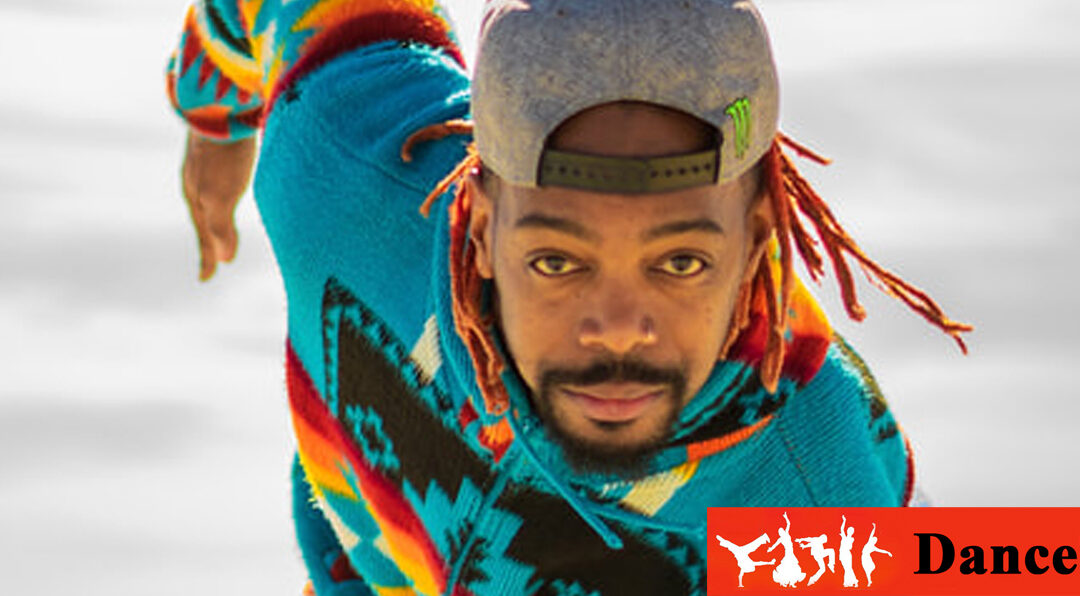
Chris Thomas talks about the essence of house dance, and how it has propelled his desire to travel the world. Follow him at https://www.instagram.com/yungchrishk/ and https://www.facebook.com/Yungchris-237174069787799
DanceTalks with Chris Thomas: Full Transcript
Hosted by Andrea Cody, Director of Dance Houston. Originally released June 22, 2020. This transcript was generated automatically and may contain small errors.
Episode summary (SEO)
On this episode of DanceTalks from Dance Houston, host Andrea Cody talks with Chris “YungChris” Thomas, a Houston-born independent dance artist, choreographer, teacher, DJ and emcee. Chris started dancing after his mom put him on a dance team at age 10, grew up as a social dancer, and after two years of college chose a life of dancing and traveling, which took him to live and teach in Bangkok for a year and to some 24 countries, with Beirut and Las Vegas among his favorites. He explains how house music grew out of disco in Chicago’s warehouse parties, how hip-hop dancers in New York’s house clubs turned it into house dance, and why street dance is one of the rare styles whose innovators are still alive to teach it. He also shares how he trained with Houston’s HaviKoro crew and in New York, how he balances creating and training, his Juneteenth event “I Celebrate Black Dance Culture,” how Houston has supported him, his dream of his own creative space, house music to check out, and a first house dance assignment: count the music and stop on eight. Recorded June 18, 2020.
Key takeaways
- Read the room. At private, corporate and wedding gigs, the guests aren’t there to see you; you’re there to please them, and a packed dance floor is the best feedback.
- Learn from the source. Street dance pioneers are still living, so dancers can get first-generation information straight from the people who were there.
- Look like yourself. Street dance is about style and personality; your dance should look like you, not just like New York or LA.
- Know the roots. Hip-hop, house, funk styles, jazz and even Detroit techno came from Black communities, and “I Celebrate Black Dance Culture” was created to raise that awareness.
- Count to eight. Even when house music seems to never stop, the eight is always there; stop on eight, pick up on one, and be willing to fall on your face while you learn.
Transcript
This transcript has been lightly edited for readability: filler words and repeats were removed, and several passages that could not be heard clearly in the recording were left out.
[0:00] Introduction and getting started
Andrea: Hello and welcome to DanceTalks. I’m your host, Andrea Cody, and my guest today is Chris Thomas. Chris is an independent dance artist. Chris, welcome to DanceTalks.
Chris Thomas: Hey, thank you for having me. I’m happy to be here.
Andrea: Great. So tell us how you got started.
Chris Thomas: In dance? My mom introduced me to dance. She saw that I got excited at a young age whenever Soul Train came across the screen. For those who don’t know what Soul Train is, you need to look it up, but it was a while back. A few years later she put me on a dance team. I had to be about 10 years old, and the director said if I could keep up with the others, I could be part of the team. Long story short, I was on the team for a while. I stopped in middle school and high school, because dance at that time wasn’t cool. It was sports, which I was not good at. Just being a young boy, I guess, exploring other things. But I was super social at school. I would go to parties, and I would always dance. I was a social dancer, pretty much like any social dancer of that generation.
[1:02] From college to Bangkok
Chris Thomas: I went to college for two years because everyone else was going, and I didn’t really know what to do after that. I realized that was not what I wanted to do with my life. So I kept training. I kept falling, I kept getting myself up. I got introduced to another group of individuals who were doing more freestyle dance, and they were actually traveling, not knowing that was the route I wanted to take with my dance career. So I started traveling with my dance, and I remember coming home and waking up one day and thinking, I’m tired of coming home. This is it; I want to dance and travel. So I prayed about it and planned, and a year later I moved to Bangkok. This was in my mid-20s. I moved to Bangkok and taught for a year. I literally just moved there, learned the language and taught my classes.
Now I pursue individual goals and dreams. I’m an individual artist: I choreograph, of course I teach, I direct entertainment through dance, and I’ve also picked up the skills of DJing and emceeing. So now I’m considered more of an entertainer. I took the entertainer umbrella instead of being one-sided, just a dancer. I get booked by entertainment coordinators, different things like that, and of course I’ve organized and produced my own events, et cetera, et cetera. So yeah, that’s how I got started and where I’m at now. I just took that question and ran with it.
[3:10] Booking and keeping clients happy
Andrea: Great, thank you. So the people who book you now for entertainment, how do they find you?
Chris Thomas: I’m connected with a few different organizations and companies that contract me out to whoever is searching for the skills I have. I also market myself. I think I do a good job with social media, and also with building great relationships and keeping those relationships, to keep the clients coming year after year. Like you said, I’m an independent artist. I’m 100% artist. Everything I do comes from my heart and from my talent. My life is 100% funded through my art.
Andrea: So how do you know you’re making the clients happy? Is there a feedback process, or are you just reading the room?
Chris Thomas: Yes. In the world I’m in, especially with DJing and emceeing private gigs, corporate gigs, weddings, birthday parties, it’s not about your talent. They’re not there to see you. You’re there to please them. So it’s a difference in the room. It’s reading the crowd, and also listening to the party coordinator, or whoever’s throwing the party, and their wants and needs for the party, and not trying to mix that with your own interpretation, because once again, they’re not there to see you. And you get good feedback from the party-goers as long as the dance floor is packed and everyone’s having a good time. Once the dance floor empties out, you’re doing something wrong. Of course, there are ways to reverse that. And feedback is always great. I have all my clients send me a paragraph about their experience of the party, and pictures and videos clearly showing people having a good time. So that’s how I keep my clients happy.
[5:22] Travels: Bangkok, Beirut and Las Vegas
Andrea: You seem to travel a lot for this work. Where has it taken you?
Chris Thomas: Oh man, I’ve been to, I want to say, 24 countries, and as we’ve talked about, I lived in Thailand for a year. Some of these countries I’ve been to two, three, almost four times. I think I’ve been to more countries than states, but I was starting to make my way around the States before COVID-19 came through. I started doing more domestic travel and domestic entertainment. If it’s anything dealing with travel, I absolutely love it, especially when I can mix it with my talent. That’s a double win.
Andrea: Favorite places, in the States or international?
Chris Thomas: Both? Okay, let’s break it down. Internationally, of course, Thailand will always have a place in my heart, because I spent the most time in Bangkok. But a strong second is Beirut, Lebanon. A lot of people probably look at me like, what, why, how? That’s in the Middle East. But to be honest, I’ve had the best times of my life in the Middle East, believe it or not, in Lebanon, because it’s a very interesting place. There’s a mixture of traditional and modern. The American dollar is in rotation there; you can pay for anything in American dollars and they’ll give you lira back. There’s an American university there, I think it’s AUB, and around the university there’s Hardee’s, Carl’s Jr., all those companies, because it’s on that American strip. But in general, the Mediterranean is beautiful, the food’s beautiful, the people are beautiful, and they party like none other, because the mentality passed down from previous generations was, we might not live to see tomorrow, so we’re going to live it up today. That mentality has been passed on through generations, so their parties, clubs and celebrations are all over the top. And Lebanon is where a lot of the Middle East goes on vacation during the summer, so you get an influx of more people and more cultures. Of course, every place has its negatives and positives, but I experienced so many great things in Lebanon. I think I’ve been three or four times.
Bringing it back to the States, my favorite place, to be honest with you, is Vegas. Vegas is number one. I love Vegas; I could live in Vegas. Beyond the Strip, you can go hiking, you can go to a pool party and then go to the mountains and go skiing. Only locals know stuff like that. There are so many outdoor things you can do, not just the Vegas Strip. And the party is once again over the top. It’s over-the-top entertainment, so when you mix entertainment and the party aspect, man, it’s beautiful. I just love the energy. It’s a party city, I love parties, and I love the interaction with people. So Vegas, and definitely D.C. I love D.C. because of its nightclub culture. Their party culture is something totally different. Go-go music is amazing.
[9:26] Places still to go
Andrea: Where do you still want to go?
Chris Thomas: New York, of course, I’ve been to. I’ve never been to Miami. Crazy, out of all the places in the world, and I’ve been to crazy places. I also want to go to Montana and Nebraska. I want to explore the northern states, just to see the outdoors. Since COVID-19 happened, I’m super open and interested in outdoor living, outdoor activities and sports, so I’d definitely love to go to those states and see that stuff.
Andrea: Cool. Have you been to every continent?
Chris Thomas: No. I haven’t been to Australia. Antarctica, no. I’ve been to Africa: Nigeria and Egypt. And Europe, South America, North America. So not all continents.
[10:30] Finding Chris online
Andrea: For people who want to see you, how can they find you online?
Chris Thomas: The best, most relevant place will be Instagram. My handle is… no, I’m sorry, I take that back, that’s my email. It’s yungchrishk. @yungchrishk is where you can find me on Instagram. I post daily freestyle videos, fun memories, things that are happening right now. But I keep it professional; I keep it artist-driven. It’s pretty much the lookbook for my artistry, the things that inspire me and the things I’m doing right now.
Andrea: Thanks. I’ll put a link to that in the notes.
[11:31] Personal style: in the moment
Andrea: How would you describe your personal style?
Chris Thomas: My personal style is a mixture of a lot of different things. It’s a melting pot of cultures. I take a lot of inspiration from other styles that I’ve learned, studied or even just seen, and I’ve blended them into what I do, with smooth transitions, of course. But it’s hard to explain; I’ve never tried to put it into words. It’s in the moment, I’ll put it that way. What you see may not be the same thing you see the next time you see me, because it’s literally in the moment. The way I train and practice, the way I set my mindset and my talent, is in the moment, because I consistently critique myself over and over again. I don’t keep one thing the same way every time I do it, because I feel like that can sometimes bring you to failure, having the same answer for too long. So I consistently try to change and update. It’s like a mechanic with a car. Mechanics love cars, and every time you see their car, they want to brag about something new they put on it. When I practice, I look at something and go, okay, I’m bored with that. Now I have more experience and knowledge, so it’s not the same thing every single time.
Sometimes I think about dance when I’m driving. I can’t sit still. I spend most of my time in my creative space, with my creative mind, thinking about new movements, or old movements done in a new way, just to keep me on my toes, because I’m always trying to get better and better and better. There’s a goal I haven’t reached yet. I don’t think I’ll ever feel like, I got good at this. It’s a challenge for myself.
[14:33] Creating versus training
Andrea: In terms of creativity and training, where are you percentage-wise? Because it sounds like you’re coming up with your own movement.
Chris Thomas: Ooh, great question. It fluctuates based on what’s coming up. If something big is coming up, there’s no more creating. I’m good with what I have; now it’s polishing, and repetition, repetition, repetition, so it comes out the way I created it in the moment. You don’t want to get on a big platform and still be looping in your head, ooh, what can I do here? I need everything that comes out to work right then. So that’s training mode, when something’s coming up.
But when there’s nothing going on, like now with COVID-19 having everything shut down, it’s all creating. Not much training, because there’s nothing to train toward. So it’s all creating, staying in shape, keeping the wheels going. Back to the cars: when you have a nice older car you want to keep, you start it up once a week just to keep the juices flowing, because if things sit too long, they get old and you have to replace them. So I keep the wheels moving. And in the midst of creating, sometimes you do forget old material, which isn’t always a bad thing, because you evolve. That’s why I love recording myself on video, so I can go back and say, oh, I used to do that, and bring it back. So the percentages change based on the situation. Right now it’s high creativity, probably 70 percent creativity and 30 percent training. But if something comes up where it’s time to perform and show what you’ve got, it’ll probably go to 70 percent training and 30 percent creativity.
[16:35] What is house?
Andrea: Cool. In Houston, where we live, there are definitely 300 dancers, maybe more like 1,500, maybe 3,000. There are a lot of people here. And you’ve really stood out in house. So tell us what house is.
Chris Thomas: All right. House dance, or house footwork, is a style you don’t see a lot of younger kids doing, because it’s not as flamboyant. You really have to know how to dance, and it relies on the music. It takes a little more training than everything else, because it’s not, hey, teach me this big trick so I can show off and look like I’m good. House is not that. You really have to know what you’re doing to follow the person who’s doing big tricks.
House is a style of music first, and it came from Chicago. It’s called house music because they played this music in warehouses, so they took the “ware” off the name and just made it house music. It originated from disco music. The thing with Chicago and music is that it always speeds up. Even now they’ve taken house music and made it something else that’s even faster, like the fast footwork, Chicago footwork, for the younger generation. So they started adding more beats per minute to the disco music, which became the warehouse music they played at these warehouse parties. People would go to a record store and ask, hey, where can I find this warehouse music, this house music? And of course the music was pushed and branded as music from Chicago.
Andrea: Did it travel to New York? When did it start in Chicago?
Chris Thomas: That’s a great question. I want to say the late ’70s, early ’80s. It could be earlier, but not later. And it traveled everywhere, but it traveled to New York, because that’s where the prominent hip-hop dancers were at the time. Hip-hop was created in New York. The music was played all over, but before it went anywhere else, it was more welcomed in the gay clubs. When the hip-hop clubs in New York became too aggressive, too violent, the dancers still wanted to dance, so they stopped going to those hip-hop clubs and started going to the house clubs, because it was about the music, it was free, they welcomed everyone, and it was dance music. With hip-hop dancers going to the house clubs, they started taking their language and their movement and applying it to house music.
So the dance changed, and it became its own foundation, its own style, its own dance: house dance. You can find a lot of hip-hop in house, just in the vocabulary. It’s like saying hi in many different languages. The greeting stays the same, but there are different ways to say it.
Andrea: It would be super impressive if you said hi in a bunch of different languages.
Chris Thomas: Next time. So that’s the foundation of where the dance and the music came from. The music came from Chicago, and the dance came from New York, and from there it traveled all over the world.
[20:20] The innovators are still living
Chris Thomas: Americans are really good at creating the fads, creating the styles. I say communities overseas are good at nurturing those things and preserving them. So when that wave happened, it slowly transferred to Europe, Southeast Asia and other places. Of course it’s big in the States now, but all over the world you can see top-tier house dance, hip-hop dance, whatever. But the origin of house: the music came from Chicago, and the dance came from New York, and some of those people are still living.
That’s what I say about street dance. Street dance is one of the rare styles where the innovators are still living. You can go to a person who was there when they left the hip-hop club and went to the house clubs, and still talk to them. You can talk to the people who threw the first hip-hop event or the first house dance event. That’s why I consistently tell my students, it’s not like ballet, jazz, African or modern, where the styles are so old that you’re probably not going to find the originators. But with hip-hop and other street styles, like locking, popping, voguing, whacking, house and Chicago footwork, you can still find those people and sit down and say, tell me the story of how this happened. They can tell you verbatim, so you’re getting first-generation information.
Andrea: Who taught you?
Chris Thomas: I got it through HaviKoro, and then from HaviKoro I wanted more, so I went to New York. I took my journey to New York to learn from the people who have been doing it for a while, and some of the people who were there when it first started. Also, every region has its own styles and history, so it’s good to know the history of the region you’re in, because that’s what makes it unique. You don’t want to dance like a New Yorker or like an LA dancer; you want to look like yourself, a Houston dancer. Street dance is all about style and personality. My dance shouldn’t look like a person’s from the Midwest or Miami or California or New York; it should look like Chris. And the foundation and information I got from New York should be a part of all of that. So it’s literally a melting pot of information.
But a lot of people skip around, and their information is incomplete because they haven’t connected all of the dots. It’s always a journey. There’s always more you can learn; it’s a never-ending journey. It’s almost like the Wizard of Oz. Well, you get to Oz, and that’s it, so that was a bad analogy, I guess. Imagine going down the road to Oz without ever getting to Oz, just traveling the road, because you can go as far as you want, or you can just stop and say, I’m good right here.
[23:59] House chose him
Chris Thomas: So that’s the style. I feel like house chose me. I went through breaking and I went through popping. I’m not patient enough to be a popper; it takes a lot of patience and a lot of small movements, and I’m too big and sporadic for that. I’ve taken locking classes and learned the foundation of locking. But when I found house, I fell in love with the music first, and from the music I just started moving and putting in my own thing. Then I learned the foundation, and I got the history, and I’m still studying house. I go to New York, take classes, I compete, I practice, of course I teach it, and I still listen to it. My kids know exactly what house music is; they listen to it and they like it.
Andrea: What is house music? How do you know it’s a house song?
Chris Thomas: That’s a great question. First, EDM is not a style of music. EDM is the umbrella term for electronic dance music. There are so many styles of house: soulful house, tech house, Afro house; you can go on and on about the different genres of house. The house music the culture really appreciates is some of the tech stuff, but a lot of soulful house: not so much the electronic stuff, but music where you can hear natural instruments. Then again, that kind of contradicts the tech house. Afro house is really big. I love Afro house; that’s more of an African influence on the music. So you can go here and there and everywhere around it, but not straight-up techno. That’s not house; that’s techno. But you can mix the two and have tech house.
So it’s an acquired ear, hearing the difference. It’s also how the music moves you. Everyone moves differently, and everyone has their own way of moving to the music. You have shuffling, which goes with straight-up techno music and isn’t affiliated with house at all, because they’re only doing one thing. House really incorporates a lot of influences: the hip-hop styles, the footwork, the soul, the flow. Everything is about the flow. A lot of people use capoeira in their movement, or mix the smooth movements of breaking into it. So to each his own. A lot of the upbeat dance music you hear is house, and a lot of it isn’t; some of it’s just techno. I’m sure there are people who love techno who say house is whack, and people who love house who say techno is whack. To each his own.
[27:05] House in pop music
Andrea: Do you hear house music in popular music? Is there anything out right now that you feel is a house song?
Chris Thomas: Lately… one of my favorite songs, which is probably more of a house-adjacent song, but you get the idea, is “We Found Love,” “we found love in a hopeless place,” with Calvin Harris. That’s on the techno side; it’s really progressive. I love that song. But you can play a house song right after it and clearly hear the difference. It’s a dance music song that hit the Top 40, which is kind of rare.
Andrea: What do you think about “Ritmo”? It’s a collaboration on the radio right now, and the hook is “this is the rhythm of the night.”
Chris Thomas: Yeah, that song, “The Rhythm of the Night,” was a really popular ’90s song. The generation before me is probably worn out on it, because it was definitely a dance song that got played a lot, and DJs used it to cater to that crowd. That’s what happens with pop: once it becomes popular, it becomes the sound of that generation or that decade, and you don’t want to hear it ever again because it was played so much. I know exactly what you’re talking about: the reggaeton version of that song, where the whole song is in Spanish. It’s a reggaeton song, so it’s not really house.
Andrea: Yes, you’re right. I was just wondering, since you mentioned the wave: when was house most popular? Is it still playing everywhere when you travel?
[29:13] House overseas and in the States
Chris Thomas: It’s still here in clubs, but it’s way more celebrated internationally. You can go to clubs internationally and you’re guaranteed there will be a mix of straight-up dance music, but in the States it’s so divided by subculture. Certain clubs don’t play it, and certain clubs do. If you want to hear it here, you have to go where it is. Overseas you find a lot of it a lot easier. Even with the dance, I feel like there’s more house dancing overseas than in the States.
Andrea: It’s almost like club music.
Chris Thomas: Exactly. It’s the standard. Also, speaking about Europe, everything there is so connected. You’re one train ride from a whole other community. In the States, we’re so spread out, especially in Texas. For us, everything is a plane ride, about $300 just for the flight, not counting the hotel and all those things, to connect with another culture. So we’re really spread out, and we only really come together for big events. In Europe it’s, hey, I want to go to Paris today to hang out with some Paris house dancers. Okay, let me buy a $50 train ticket, and I’m in a whole other country experiencing a whole other influence on the dance and the music. That’s probably why it’s so shared there: everyone’s connected through one simple train, and here we’re connected through long car rides and long plane rides. With the internet, of course, everyone got instantly connected, so now there’s no excuse. But it’s still a culture that’s not celebrated that much in the States, because we create the fad, and then we move on to something new. Something’s really popular right now, and then it gets pushed to the side because something else is coming. And then you have those culture keepers, I guess, who say, no, we’re going to keep celebrating this and push the education. So I think the culture in the States is what’s next, what’s next, what’s next, and that’s not always the case overseas. That’s my interpretation of how music and dance travel.
[32:17] Downtime during COVID-19
Andrea: So what are you doing during the downtime with COVID-19?
Chris Thomas: I started off making as many dance videos as possible, and then I came to a halt, because I thought, what am I doing? I’m just doing this for the likes. I feel like the value and the quality of what I do is bigger than people double-tapping and scrolling on. So I stopped, and I shot a short film that was supposed to be for social media, but when we looked back at the quality, it was like, nah, this is above social media. So out of this I had time to create a short film downtown, because downtown was empty, and on a normal day outside of COVID-19, that’s impossible.
I’ve still been planning and creating ideas. Through Dance Houston, we started doing Sunday classes. That’s almost the highlight of my week now, going to a different park every Sunday to teach a free class. We have a good 8 to 12 students consistently every time, so they’re actually learning and getting the raw information. We’re outdoors in the park, keeping our social distance, and no one’s touching or maneuvering bodies. They’re older students; there aren’t really kids out there.
Besides that, I started bike riding again. I was really into the bike culture before I moved to Bangkok, but when I came back I got busy with other things. When everything shut down, I thought, I really miss this culture. I’ve also gotten into investing. Last week I was up like 500 bucks. I’m still learning, but I’m still in the green. The idea of investment is really keen to me right now, so I’m reading a lot and thinking about real estate, owning land and property, and looking for information on that. I also started planning an outdoor trip: a few friends and I are going to West Texas to go hiking, do whatever you do in the desert, and go to some state parks. That all came out of the COVID-19 shutdown, because what I had planned for my birthday, if everything were normal, would have been a party, and that’s not happening right now. So I thought, what’s another option I haven’t explored? Outdoor stuff.
And with the racial outrage going on right now, I created an event called I Celebrate Black Dance Culture. Nothing political, no hidden agendas, nothing like that, just to celebrate Black dance, music and culture. So those are the things I’ve been doing, more here at home. Before, my schedule was planned up until about September: traveling, dancing, bookings here and there, competitions, spending some time in Europe. I had some really big, exciting things on the calendar this year, but it’s all good. Just knowing they were there is still satisfying to me, and I’m still finding other things to be excited about.
[36:34] Juneteenth and I Celebrate Black Dance Culture
Andrea: So today is June 18, 2020, and tomorrow is Juneteenth, and you’ve planned this event for this special day. Can you tell our listeners what Juneteenth is?
Chris Thomas: Juneteenth is the day the enslaved people in the South found out they were free. The enslaved people up north had been freed for two years before those in the South found out. How they found out, I don’t have all the intricate details, but the word came to Galveston first. The ship came into Galveston with the Emancipation Proclamation. It’s so close; Galveston is right there. So that’s how we found out in the South that slavery was abolished. And it’s never been celebrated. It’s been acknowledged, but never highlighted, not in government agencies, not even in school. Some of us didn’t learn this in school. It’s just been passed down through the culture; some people kept it going, and some people didn’t. But I feel like now is a strong time, and not just for me, but for everyone who knows about Juneteenth, to start highlighting that date and why it’s so critical to American history. The energy and the climate in America right now are still highly tense. Some changes are happening, but it’s not like everything has changed. There’s still a lot of work to do. And I feel that regardless of how anyone treats us, we’re still valuable and we’re still enough, period. So why not highlight and celebrate us if no one else will? Who better to do it?
So that’s why I decided to do something like this. I was also trying to figure out, okay, how can I do my part in the movement in a way that fits my lifestyle? I’m part of the dance community and the hip-hop subculture, so let me do something in my community and use the platform I have. That’s why I created I Celebrate Black Dance Culture. Black dance culture goes back to funk, hip-hop, all the subcultures: house, breaking, locking, whacking, vogue, footwork. We can go on and on: jazz, and of course traditional African. All those dances were created in the Black community, and a lot of people don’t know that. They weren’t created because someone was making a product. It was a natural, organic movement that created something everyone picked up on, and a lot of cultures came in; some people stole, and some people learned and then took it and ran with it without including the people of the community. So awareness is the biggest thing. A lot of kids of this generation don’t know where hip-hop came from or what influenced it. A lot of communities overseas don’t know why certain movements or certain music do what they do, or why you dress like that, because it wasn’t shared. Hip-hop today is pop culture; it’s a billion-dollar industry. But not everything in that culture is highlighted, and you don’t know the roots, because the history gets left out to make it more marketable and make more money.
So that’s why I decided to do I Celebrate Black Dance Culture. And of course, because of COVID-19, I decided to have it outdoors, where you can keep your social distance; the park is pretty big. It’s music, and that’s it. There’s no programming, no government officials or city officials speaking, none of that, no hidden agendas. It’s just straight-up music, dance and fun, point blank, period. This will be the first of its kind, and I’m setting the stage. I want to do more with this, because I feel like there’s a need, and a lot of people are reaching out and expressing their appreciation, so now I see, wow, this is a thing, and I’m going to keep it going. What it looks like in the future, I have no idea. I’m just focusing on tomorrow. I came up with the idea maybe two weeks ago, and I thought, what better day to have this celebration than Juneteenth?
So that’s the energy behind I Celebrate Black Dance Culture, and it’s for anyone and everyone. It’s a day of unity, celebration and remembrance. You’re saying, hey, I celebrate Black dance culture. I recognize it, and yes, I’m part of that culture. Yes, I’m a hip-hop dancer, yes, I’m a popper, yes, I love funk music, yes, I love jazz, yes, I’m a fan of Coltrane. There are so many influences in the culture. We didn’t even talk about techno music. Techno was Black music that came from Detroit, the Motor City. It’s surprising to hear where some of these things came from, because the face of it today is totally different, first because things are fads, and second because sometimes people erase the history to present the picture they want you to see, so you’ll buy into it, and then they make money. I could go on for days. I’m not going to get into that argument. But that’s why I decided to have it.
Andrea: And we’re not going back. We’re just moving forward. I love that you’re doing something new.
[44:49] What could change in Houston
Andrea: What could change in the city?
Chris Thomas: This is me speaking with the information I have right now. The arts have really been highlighted in the city in the past five years or so. Sometimes the placement is weird, but the arts have really been implemented. What I do wish we had in the city is more live art. That’s the whole culture in other cities: you go to a different place and you see street performers. I’d love to have street performers in Houston; that would be super cool. But it comes down to infrastructure. Where are there big crowds of people who would appreciate it? Kind of nowhere, to be honest with you. So I don’t have a direct answer to that question.
I’d love to see racism abolished along the way, but I understand some of that is generational. It’s just passed on and passed on, so it would take a generation saying, you know what, this is wrong, for people, or the culture, to acknowledge the part we played in American history, or even world history. I could go on and on about how other cultures have portrayed Black Americans, or people with dark skin in general. From my travels around the world, even in Southeast Asia, if your skin is darker, you’re considered lower in society, and having a paler, whiter face is the ideal. I don’t know if that came from European colonies or what, but that set the standard: traveling around the world separating people to implement your policies and ideas, and there’s no acknowledgment or apology or anything like that. I could go on for days, but I just wanted to start at the grassroots and go from there and see what happens.
Andrea: Cool. So, do you want to know why we’re different skin colors?
Chris Thomas: Yeah.
Andrea: Melanin. Some of us have more melanin in our skin. It’s a biological function of the skin to regulate the amount of vitamin D. In sunny climates, there’s so much vitamin D that if you had white skin, you would get vitamin D poisoning. But if you’re up north where there’s not as much sun, you need all the sun you can get, or you’ll be vitamin D deficient. So as humans spread out of Africa and moved north, over time the skin adapted and lightened.
[48:08] Houston’s support
Andrea: So where are you from? Born and raised?
Chris Thomas: Yeah, Houston, Texas.
Andrea: How has the city supported you as an artist?
Chris Thomas: As an artist, the city has done its fair share of supporting me. I’ve received two grants from the Houston Arts Alliance, from my directorial premiere in Houston up until now. I’ve received smaller funding from different organizations, and I’ve received funding and opportunities from Dance Houston. I’ve received something just as valuable as funding, which is information and opportunities from other directors in the city, for styles of dance in the contemporary world. School districts and dance studios have welcomed me in. I’ve created my own productions and shows, and the dance community has supported me, some way, somehow, even by showing up and by agreeing to be part of my shows. I’ve been in theaters from the JCC up to the Wortham Theater, and I’ve performed in a lot of premiere concerts. So I have no problem with Houston’s support. I know a lot of dancers and artists complain about Houston’s support, but personally, I have no problem with it, because, for one, my mentality is that it’s not their job to support me. It’s my job to support myself and my art, and if I’m lacking something, it’s just information I need, and then I make it happen.
I feel it’s really beneficial to be in a city like Houston that’s still growing, a grassroots environment that isn’t oversaturated with art but still has art opportunities. I feel like I can be a big fish in a small pond, versus going to a bigger city with a bigger market for entertainment, where you’re just a big fish with other big fish in a vast open ocean. So I like it here. Also, the cost of living is way cheaper in Houston than in other cities, so I can go out and earn at that level of money and bring it back to Houston, where the dollar goes way further. That’s just my opinion and my perspective. I love it when people ask, are you from Houston? I did have to leave Houston to get a lot of information and do a lot of different things, but I think Houston will forever be my hub, because this is where my family is, and this is where I built my career, and I always want that to be here. I want to leave a legacy in my hometown for the artists who come after me, or even my kids, to say, hey, this is what my dad did here. So until something crazy happens in Houston that goes against what I’m doing, Houston has my support.
[52:15] A creative space of his own
Andrea: Where do you want to go?
Chris Thomas: Man, where do I want to go? I want to go everywhere.
Andrea: Well, you’re here, and you’re saying you want to stay in Houston. So what’s the next step on your pathway?
Chris Thomas: That’s a great question, because I don’t have an exact answer. It changes every month. But one short-term goal is that I want my own creative space in Houston. Possibly a venue, but just four walls and a floor, with everything on wheels, so it can turn into anything I need it to be: a creative space, a performing space, a small concert venue, a party venue. It can be whatever I want it to be, and I can also get away in that space. That space is home, and it’s comfortable for me to create, throw out ideas and bounce them off the walls, with my own productions there, my own classes, my own everything. I can do whatever I want in that space, and I’m not obligated to do anything, because I’m not under anyone else’s programming. So that’s the short-term goal. The long-term goal, I don’t know yet. I have a few ideas, but nothing set where I’ve had that aha moment: I’m going to do this. The ultimate landing pad changes every year, because as long as I keep exploring the options and the unknown, I’m pretty sure something will pop up.
Andrea: It’s nice to have a whiteboard to dream on.
Chris Thomas: Yes, for sure.
Andrea: Are there spaces here already that come close to what you want?
Chris Thomas: None that I’ve seen. Of course, what I’m visualizing exists somewhere, because there’s nothing new under the sun. But I’ve only seen bits and pieces of it. I haven’t experienced it yet.
Andrea: What’s your plan for getting there?
Chris Thomas: Investing, investing, investing, because I don’t want to compromise my creativity and freedom. That also includes corporate entertainment and private events. I do a lot of things with other organizations, and I value those, but if they can sell me, I can sell myself, and I can get what they’re getting from me, plus more. That’s my mentality right now, so I’m positioning myself to do that. And once that’s in full action, I believe it will make space for the business.
[56:38] House music to check out
Andrea: Circling back to house, do you have any recommendations for us to check out house music?
Chris Thomas: Yes. Check out Mr. V. A more commercial one would be Disclosure. Check out an independent producer who was a dancer first and now makes house music: Coflo. You can find all these people. Check out Defected Records. You can check out Black Coffee. Black Coffee is probably one of the top five house DJs in the world as far as popularity goes. He had a residency at the Wynn in Vegas, which says a lot about house music. So you can check out all those people. And of course, in your own city, it’s kind of hard to find a lot of these DJs and producers, because it’s an underground sound. It’s not, hey, come over here and check this out. Sometimes you have to be rooted in the community to find these things. A lot of these people make money without going commercial, and the community supports the community. If you’re really good at something, it’s not hard to find support for it, because the world wants your product. There are so many I could name. But you can find some legit mixes by searching for Afro house. Afro house has a distinctive sound, so it won’t get lost in translation the way typing in “house music” might. It’ll go straight to Afro house without pulling in other styles. So those are some options to try. Test them out, and if you like it, keep digging; you can find more. As far as house music goes, that’s a great start.
[58:38] An assignment: count the music
Andrea: You were a teacher in a public high school for two years?
Chris Thomas: Two years, yes.
Andrea: As our teacher today, will you give us an assignment we can do on our own to begin our journey into house dancing?
Chris Thomas: Yes. The first thing I teach when it comes to house music is that, to the untrained ear, there are no real stops in house music. The patterns just keep going on and on. But if you know how to count music, the eight is always there, no matter what you’re listening to. Just because it repeats itself doesn’t mean you don’t have to acknowledge the eight. So if you can count the music, one, two, three, four, five, six, seven, stop on eight, and apply that to your movement. Even without the house foundation, since it might not be accessible to you right now, if you just move to the music and stop on eight, you’ll definitely be on beat to pick up on one. And when you go to your first house class, you’ll be a little more advanced than the person who just walked in off the street saying, I want to do house. So count the music and understand it: one through eight, stop on eight, start on one. You can also stop on four: one, two, three, four; one, two, three, four. You can also do one, two; one, two. You can chop up the music in a bunch of ways, but it all comes from counting the music.
If you don’t know how to count music yet, that’s a whole other lesson outside of learning to dance house. But if you want it, go get it. It’s not hard to find. You can start by researching those artists, and you can type “house dance tutorials” into YouTube. There’s a guy named Jardy Santiago who has house dance tutorials, and he has a library. There’s another guy who has a vast library of a lot of styles; those are great tutorials you can follow for the hip-hop styles. And Buddha Stretch has tutorials. So you can find these tutorials, and hopefully you find the right ones. Of course, it’s the internet, and there’s a lot of stuff that’s not what you’re looking for, but you don’t know that until you come across a person who has the information and says, whoa, you’re doing something wrong.
So the information is there. If you want it, go get it. Be willing to fall on your face, be willing to look like a fool, be willing to embarrass yourself. That comes with learning; that’s experience.
Andrea: My guest today is Chris Thomas. Chris, thank you for being a part of DanceTalks.
Chris Thomas: Thank you for having me.
Andrea: Thanks for listening. Please subscribe and share our podcast, and reach out to us on social media if you’d like to talk. To support DanceTalks, donate to Dance Houston. Talk to you on Monday.