
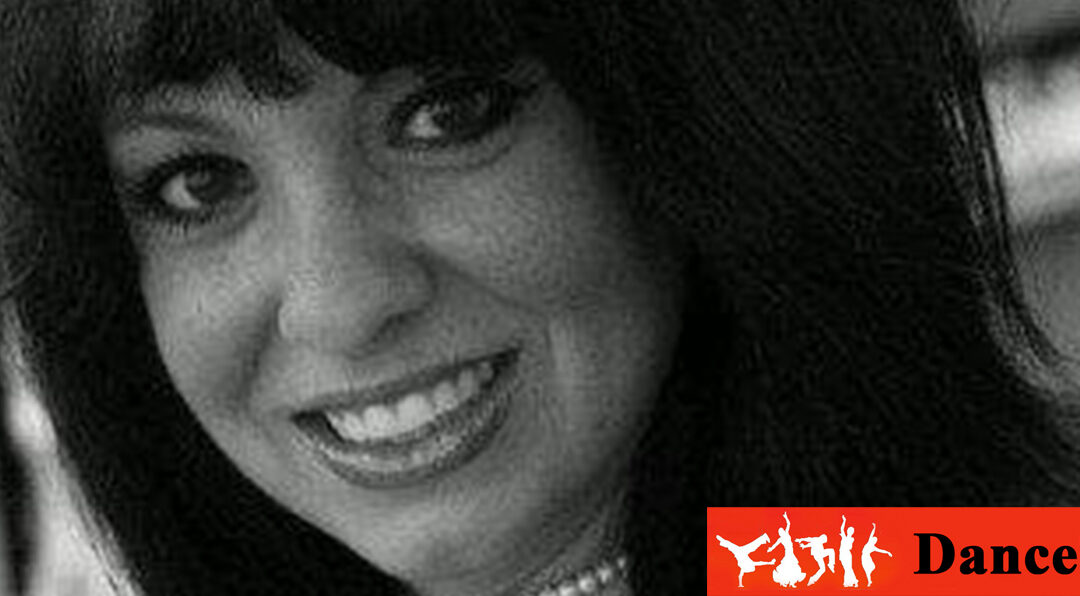
Catherine Edwards shares her teaching methods and advice for couples preparing a dance for their wedding, drawing on five years of experience as a choreographer for Wedding Dance Houston. Follow her at https://www.weddingdancehouston.com, https://www.facebook.com/weddingdancehouston, and https://www.instagram.com/weddingdancehou/.
DanceTalks with Catherine Edwards: Full Transcript
Hosted by Andrea Cody, Director of Dance Houston. Originally released October 12, 2020. This transcript was generated automatically and may contain small errors.
Episode summary (SEO)
On this episode of DanceTalks from Dance Houston, host Andrea Cody talks with Catherine Edwards, a DVIDA-certified ballroom dance instructor and choreographer with Wedding Dance Houston, a program of Dance Houston. Catherine grew up in tumbling, tap and show choir, found ballroom dancing at a studio in Florida, earned her DVIDA certification, and competed with her students before returning to Houston and teaching wedding dances. She describes the rigor of ballroom certification, the early mornings, gowns and glitter of the competition circuit, and her favorite wedding moments, from a traditional Indian wedding in downtown Houston to a choreographed first dance (and a piano performance) on a windy Greek island. Catherine explains how she builds each couple’s dance around their song, their dress, their floor space and their personalities; why private lessons at home help nervous beginners; how she smooths out leading and following without playing favorites; and how she adapted to teaching during the pandemic. Her parting advice: it’s your day, so show off what you’ve worked on together and have fun. Recorded October 6, 2020.
Key takeaways
- Every dance should be tailor-made. Catherine never repeats a whole routine; she builds each dance around the couple’s song, lyrics, venue, guest count and style, like a suit fitted just for them.
- Ask about the dress and the floor first. A fitted gown, a long train or a 10-by-10 dance floor can change everything, so those questions come before any choreography.
- Play your song until you know it by heart. Practicing to your own music teaches you the cues, the counts and where the big moments land, and couples never really get sick of it.
- Coach both partners equally. When leading and following break down, Catherine works with each partner separately, balances her corrections, and lets them feel the connection by dancing with her.
- It’s your day, not a competition. Nobody is holding up scorecards. If you miss a turn, laugh, keep going, and enjoy showing off what you learned together.
Transcript
This transcript has been lightly edited for readability: filler words and repeats were removed, and a few short passages that could not be heard clearly were left out.
[0:00] Introduction and early training
Andrea: Hello and welcome to DanceTalks. I’m your host, Andrea Cody. Today is October 6, 2020, and my guest is Catherine Edwards. Catherine is a certified ballroom dance instructor and choreographer. Her company is Wedding Dance Houston, which is a program of Dance Houston. Catherine, welcome to DanceTalks.
Catherine Edwards: Thank you for having me.
Andrea: Thanks for talking with me today. Let’s catch everybody up on your story: how did you get started dancing?
Catherine Edwards: I started dancing when I was little, with tumbling class and then some ballet and tap. I enjoyed tap, and I enjoyed jazz. Ballet was difficult. I was very tall and very lanky, and everybody else was very small and petite, so I enjoyed the movements, but it wasn’t working for me. Tap was a lot of fun. Then I joined show choir, and that gave me an insight into choreography. We had to choreograph different dance pieces to try out with a dance partner, and we did a lot of partner dancing with lifts and all sorts of things. I enjoyed that much more than ballet, so I put a lot of focus into it. We did a couple of Broadway productions and other shows, and I did that through high school.
After that there was a long break, and I didn’t really dance again until after college. When I was in Florida, I found a studio that offered training in ballroom dancing. I started around 2008 or 2009 and stayed with it all the way through. That’s where I got certified, did competitive ballroom dancing, and had students who competed, up until about 2013. Then I took a break until 2015, and that’s when I started working with Wedding Dance Houston.
[2:02] DVIDA certification
Andrea: And your certification was in DVIDA?
Catherine Edwards: DVIDA.
Andrea: What’s that training like?
Catherine Edwards: It’s very rigorous. You had to learn what the woman did and what the man did, and you had to know exactly how far the foot was turning: “My right foot steps 45 degrees to the right, left foot comes to right foot and closes.” While you danced each step, you had to announce out loud to the judges what your feet and your body were doing at the same time: “My right side is leading, and my right side is turning as my right foot turns out 45 degrees.” We did that for several dances, and at the end it’s about an eight-hour test. If you complete it and do well, you pass and get a certification that’s recognized nationally and worldwide.
Andrea: Is the training all about the movement and the connection, or do you go into the history or other aspects of the dances?
Catherine Edwards: We did a little history, but not a whole lot. It’s mostly about the lead and the follow, and knowing exactly what the footwork and the body are doing, so that you really know how to teach a step, not just dance it. There’s a difference between being able to dance it and knowing exactly what the body is doing to make that movement happen.
[3:08] How ballroom became a sport
Andrea: Ballroom dancing is so different from the roots of each dance, where they come from. How do you think it developed and took on its characteristics? Do you think it was through competition and performance that the dances became so canonized, with everybody doing them the same way, almost turning them into a sport with rules where there can be a winner?
Catherine Edwards: I’m several years removed from my training, but I know tango comes from Spain and Argentina, and a lot of the specific moves in tango were added over time, some by particular people. The Viennese waltz, of course, has been danced for a long time in Vienna and that part of Europe. I think around Fred Astaire’s time, things started to get named and codified, and everybody wanted to learn. It was very popular to go out and do that kind of formal dancing. Some of it came from what people used to do, remembering moves (“my grandma taught me this move”) and finally writing them down. Other moves were made up to fit the timing and could be taught in succession: you learn this basic in Viennese waltz, then this turn, then that one, so you had steps one through ten that could be taught across the board and used in competition. Then when people went out to compete, there was a judging system to go on.
[5:50] Life on the competition circuit
Andrea: What was competing like for you?
Catherine Edwards: It’s a whole different world. Super early mornings, and not a lot of sleep.
Andrea: Which is perfect for me, because I love mornings. (Not.)
Catherine Edwards: One time I had to be up at 4:30 or 5 to start on my hair, because breakfast was at about 6:30. Between 7:30 and 8:30 you were on the floor practicing, and by 8 or 8:30 you were competing. So you’d better have your coffee and your Red Bull in by 8 a.m., and you had to come down to breakfast fully dressed, with hair and makeup done, maybe with a jacket on so you didn’t get breakfast on your outfit. We’d all be sitting around a table, dying over our coffee and cereal because everybody was so tired. You dance from about 8 until noon, take an hour for lunch, and then dance from noon until about 5.
Some competitions are one day, from about 8 to 6, but most are two or three days long, so you do that every day. And in the evenings there are always big fancy parties. After you dance, you go upstairs, get the hairspray out of your hair (or keep it), change into formal attire for a five-course meal at nice banquet tables, and then there’s open dancing. Or you go to the bar until midnight, get up at 5 the next morning, and do it again.
Andrea: It’s like a dance marathon.
Catherine Edwards: It was a dance marathon.
Andrea: Did you go as a competitor, or pro-am with your students?
Catherine Edwards: Mostly with students. I had a few who did local competitions, where we didn’t travel outside the city, and one competitive student who went to a few other places in Florida. He and I did a lot. We’d do anywhere from 200 to 300 entries at a competition, which is a lot of dancing. You have to keep track of when you’re supposed to go up, too. You have a book with all the heats, and you go through and highlight yours, because if you miss one, there’s no going back. Nobody announces, “Catherine’s on the floor.” You have to know, “I’m on for the next four songs,” stay on the floor, and know when to come off. So you’re not getting much sleep, you’re overcaffeinated, you’re managing your own schedule, and you’re switching styles: you might start with a salsa, then it’s a mambo, and the timing is different, so you adjust. But it was a lot of fun.
[9:45] Gowns, glitter and spray tans
Andrea: Well, congratulations on your retirement from the competition circuit.
Catherine Edwards: It’s also very expensive.
Andrea: How much do people spend?
Catherine Edwards: I have a couple of dresses: one was $800 and one was about $2,000. A lot of other ballroom dancers were very nice to me and gave me their outfits, so I got some very high-end pieces. Some people would go to thrift stores and buy old prom dresses. On average, a nice ballroom gown for waltz that fits the criteria (no strapless, tattoos covered, and so on) ran anywhere from $800 to $5,000. You might want a different one each day. Then you need a Latin and swing outfit, which is a whole different style, with skin-colored tights or fishnets, because you can’t have bare legs, and a skirt of an appropriate length. You can’t walk out there in a bikini and a little hula skirt. It almost looks like a figure skating outfit with a slightly longer skirt.
And you want something eye-catching, because you want the judges to notice you: lots of sparkles, glitter on the face. I can’t tell you how many times I got glitter in my eyes from sweat. Everybody gets spray tanned. Girls with short hair get extensions so they can pull it up and have hair that moves. Latin and ballroom each have their own hairstyles, so you’d have your hair one way one day and change it into an updo for ballroom later. There are always hair and makeup stylists at competitions, and they cost a lot. I was fortunate to have learned how to do my own hair and makeup for shows through all my years of choir and dance, so a lot of people asked me to do theirs to save the extra $200 or $300. Just getting the look together can cost $500 to $800, plus nails. If you win, you win money, but most of the time you break even with what you spent, if you don’t lose money. You do it because you love it, not because you expect to walk away with a million dollars.
[13:30] Coming home to Houston, and St. Augustine
Andrea: What brought you back to Houston?
Catherine Edwards: I was in Florida about four or five years. I was married at the time, and we came back to Houston, where his family was. There had been a recession around 2008 and 2009, and Florida got hit hard. It was hard to find and keep work, and the pay wasn’t great, so it was a good time to come back to Houston, to my family and friends. I still miss Florida and the beaches, though, and I have a trip coming up.
Andrea: Where are you going?
Catherine Edwards: Back to Florida, to St. Augustine.
Andrea: I looked it up. Tell us a little about it, just for fun.
Catherine Edwards: St. Augustine is the oldest city in the United States, founded by the Spanish. I can’t remember the year, but it was very early. They established a fort there back when Spain ruled a lot of the South, and the city has kept that same feel. They kept the downtown area with its old buildings and Spanish roofs. It’s very quaint and cute, and a lot of fun, especially if you enjoy history, with lots of historic tours and walks. It’s very different from colonial America; it’s Spanish history, so it’s interesting to see what was going on in Florida while everybody else was colonizing up north. The beaches are spectacular. I tell everybody, if you’re going to Florida and you’re not doing Disney, stay there. The food is fantastic, the people are great, and there’s lots of music and things to do without it being super expensive.
Andrea: It looks really cute. And you told me they have the Fountain of Youth.
Catherine Edwards: They do! It’s just a tiny trickle of water coming out of the ground, so it’s not as spectacular as you’d imagine, but that’s where they believe it was, based on the Spanish descriptions. They have a whole exhibit, so they can charge people to look at a trickle of water and drink from it. It’s worth it if you’ve never been. If you’ve been, don’t do it again.
Andrea: You only need one drink.
Catherine Edwards: You only need one, and I took one. Ask me in 20 years if I’m still looking good.
Andrea: It’s working. Catherine’s actually 65, so it’s pretty impressive. Just kidding.
Catherine Edwards: I’m a miracle.
Andrea: I hope you have an awesome trip.
Catherine Edwards: Thank you. I’m excited. I haven’t gotten away all year.
[17:20] Falling into wedding dance
Andrea: Give us an overview of your second career, focusing on wedding dance.
Catherine Edwards: Teaching in a ballroom studio was a lot of fun and a great learning experience. But back in high school I did a lot of choreography, learning it, teaching it and creating my own dances, and I really enjoy that creative side. I did some of that at the studio, but studios have regulations about how things are taught. You can’t just throw something together that isn’t really ballroom, because it reflects on the studio. If someone from another studio sees one of your students dancing and asks where they take lessons, they’ll say, “That’s not really ballroom.” So I understood why it didn’t work there.
When I came back to Houston, I was working in restaurants, and that’s not my forte at all. So I started googling dance studios and came across Wedding Dance Houston. I had never heard of anything specifically for wedding dance, but teaching engaged couples had always been one of my favorite things at the ballroom studio, because they’re so excited. They’re just starting out in life together; they haven’t hit that ten-year mark where they’re like, “Get away from me.” They’re still in love and happy, and getting to create their big first step out as husband and wife, a big “look what we can do,” was really fun. So finding a company that worked just in that area was right up my alley, and that’s when you and I started working together.
It’s been so much fun. Maybe two or three couples have been really difficult, but mostly you get to meet new people. If I go to their home, I see new homes and different areas of Houston. I learn what they do for a living and make connections; you never know who knows who. Sometimes I get invited to weddings and become part of their life. Couples have told me, “You were our favorite vendor,” or “You were the best part of getting married.” Even though you’re a vendor selling a service, it’s a fun service. It’s much more personal than picking out a cake or trying on wedding shoes. They learn something they can do with their spouse for the rest of their lives, anytime, anywhere they go.
[21:00] A traditional Indian wedding
Andrea: We’ll get to the trouble clients. Tell me about the highlights. What was your best experience?
Catherine Edwards: I’ve had a few really great experiences. One of the first couples I ever taught through Wedding Dance Houston, maybe my first or second, was fabulous, and we still keep in touch. They took several lessons and loved them so much that they invited me to the wedding. It was a traditional Indian wedding, but the groom was American, so they mixed both cultures. They had a string orchestra playing Guns N’ Roses, and the whole ceremony was traditional Indian. The food was fantastic, it was at an old library downtown, and they had all these dancers. I was seated at a table with their friends, and everybody learned who I was and what I did. When the dance came on, it was so fun to look around the room and see everybody ecstatic about the moves I had worked so hard to put together. At the end, everybody turned around and said, “Wow, you put that together? That’s amazing.” The couple loved it and said it fit their wedding so well.
It was really rewarding, because I had no idea how my dances looked. I’d done one or two lessons here and there, but never a real choreographed piece over several lessons. It was neat to realize, “Okay, I can do this.”
Andrea: It’s not just in your head.
Catherine Edwards: Right. In my head it always looks great; I don’t always know how it comes out.
[23:15] Choreographing (and playing piano) at a wedding in Greece
Catherine Edwards: My other favorite was a couple who started with me in the fall, the year before last. They were getting married in Greece and wanted something really choreographed. Neither had dance experience, which is common. A lot of people ask, “We don’t have dance experience. Can we still do this?” And I say yes; this isn’t choreography for experienced dancers, it’s for everybody. They had a really cool song, and I asked if they were open to whatever I put together. They said, “Yeah, we don’t care.” Listening to the song and knowing the ambiance of such an amazing country, I wanted to put together something spectacular and breathtaking.
While we were working through the lessons, it came up that I also play piano, and they had been searching for a pianist for their wedding. So they brought up the idea of me coming to Greece with them as the piano player. Of course I said yes; it would be silly to say no. It also helped them with one of their biggest fears, which was where to position themselves at the venue. It was outdoors on one of the Greek islands, and there’s a lot of wind and no trees to break it. They worried, “What if we get there and can’t do some of the lifts because the wind is too strong? If you’re there, you can help us change it and make sure it looks okay.” So it was a win-win: I’d be there if something went catastrophically wrong during practice, and I got to play piano, which fit the wedding and the setting beautifully.
I stayed a week and a half, which was a blast. They made me part of their friend group, and walking around the island I’d run into people from the wedding party who’d say, “There’s the piano player! There’s the dance choreographer!” And getting to experience a whole different part of the world was super cool.
Andrea: Tell us about that dance. I’ve seen it, and it’s over-the-top sensational. How did you put it together?
Catherine Edwards: Usually I plan out dances by trying the moves with the music at home. For this one, I’d play the song in the car on the way to lessons and see it in my head. Once I’ve had a first lesson and seen how the couple moves together, I feel confident that what I see in my head can be put on the floor for them. So I let my imagination go. I’d listen on the way to lessons, hit replay, watch it all the way through in my head, and think, “I think that works.” A couple of times at the studio I ran it in the corner to make sure before showing them. We had four or five different lifts and a plunging death drop at a spot where the music drops, because the song had a bit of an electronic dance feel. It was very fitting.
Then you put it in the setting of Greece. I still go back and watch the video, because of course I made sure to record it, with the wind blowing; it fit so well. Nobody knew they were going to do anything choreographed, so from the very first move all their friends (several cocktails in, of course) were super into it. It was really fun.
Andrea: Congrats. It was amazing. I’ll try to put a link to it in the show notes so people can check it out.
Catherine Edwards: I still use it a lot as an example because of all the lifts. When somebody asks, “What lifts do you know?” I say, “Here’s one video with five; pick the one you want.” It also shows a lot of styles in one dance: a little waltz, a rumba box, choreographed turns. It gives people an idea of how I can make a dance slow or speed it up, and add turns that fit the musicality of the song, the lyrics and the words.
[29:30] Choreographing to the music and the lyrics
Andrea: So you really draw on your musical experience. Is that your main source of inspiration when you choreograph?
Catherine Edwards: A lot of times, yes. If somebody brings a Frank Sinatra song, that usually falls into the ballroom style, so you want something with more structure, maybe with a few choreographed turns to make it a little more modern. I tell couples that kind of music with that kind of dance is timeless. People don’t do it much anymore, so knowing how to dance a real waltz or foxtrot is in and of itself really cool and admirable. If they’re set on that style, that’s the way we go, and I don’t get as creative, because flips and dips in the middle of “Fly Me to the Moon” don’t fit as well.
But if they come with a really unique piece of music, I want to let my mind go to work and give them something unique. I listen to the words a lot to see what the song is trying to portray, because that tells me a lot about the couple too. One couple chose an EDM song, very electronic, and asked, “Can you do this, or should we change to something more traditional?” I said, “No, no, we’ll make this work.” We actually put a waltz to it. The bride had been a ballet dancer, and she said, “I don’t hear the waltz, but I trust you.” It fit so well, and we added a couple of really cool choreographed moves and some ballet. We also made sure that where the lyrics say “I want to hold you,” there’s a move where the husband is holding his wife. The audience may not be listening for that, but if they watch the video later, they’ll see it and think, “That’s cool; they did that move right when the song said ‘I’m going to hold you.'” So my ear for music plays a big part. I’m not just teaching moves to a beat; I’m teaching to the tempo, the feel, the mood and the words of the song.
Andrea: And drawing on your show choir experience as well as your ballroom experience lets you approach a song with an open mind, like a blank slate, rather than paint by numbers: “I have these moves, and I have to put them in order to this song.” Because you’ve done so much creative work, you can take the song and sprinkle in classic moves without being stuck with them.
[33:30] What couples hear at chain studios
Andrea: Sometimes couples come to us after working at chain or franchise studios, the ones in every major city, which are usually more constrained to a syllabus. What do you hear from clients who come from there?
Catherine Edwards: There are two or three things I hear most. The first is that they don’t feel like they get to dance together very much. That’s very common at studios, and I disagree with it unless you’re going into competition. If you’re a couple who wants to learn to dance together and you only dance with a professional, then when you get back with your partner, it’s “You’re not doing it like the teacher did,” because professionals know how to lead and follow. For a wedding dance, you don’t need to know how to dance with me. I’m not dancing at your wedding, unless you take me to Greece!
The second thing I hear is price. Dancing is not a cheap hobby, as a professional or as a student. Like any sport, whether you’re training for the Olympics or triathlons (those bikes aren’t cheap), you spend money because you want to push yourself all the way to the top. But when you’re learning for a wedding, you’re not there to work through a whole syllabus as a competitive student. You want some steps. You want to know how to lead and follow, how to get on and off the floor, how to start the dance, when to take your first step if you don’t know music, how to turn, and how she knows which direction to go. Couples want a specific, guided amount of time: in this many lessons, you’ll have this. So we start with basics and work through the song until we get to the end. Ballroom studios don’t quite work that way. Because they have strict syllabus rules, there isn’t much room for flexible choreography, or choreography is an extra expense. I haven’t seen many people walk out of those lessons with what they wanted, because it’s structured ballroom rather than listening to your song and creating something for you as a couple: how you look, how you want your wedding to be, the venue, the vibe, how many guests are coming, whether it’s a fancy dinner or a brunch. The same dance isn’t going to look great on every couple.
[37:35] Privacy, house calls and dancing in the cul-de-sac
Catherine Edwards: The third thing I hear is about getting to hear their own song, and privacy. Many people who come in have never danced, and they don’t want to be on the floor with five other people, two of them competitive dancers waltzing circles around them. It can be intimidating. I felt that a lot when I worked in a studio: you have a brand-new couple learning baby steps in the middle of the floor while a gold-level competitive student who’s been dancing for 20 years whirls around them, and they think, “We’ll never be able to do that.” When you start something new, you always feel judged by people who have been doing it a long time, even if they aren’t judging you.
So having private options helps a lot, whether it’s a rented studio space or their home. They can joke, laugh and make mistakes; nobody cares, and we all laugh about it together. I tell couples that learning at home is a great way to do it. Just push the coffee table to the side. You’re going to practice at home anyway, so why not learn to dance in your own space, already set up, knowing which way to face to start, the way you’ll face at your venue? I’ve taught in driveways and out on the street in front of a couple’s house. We’ve gone around a cul-de-sac before, and the neighbors loved it; they’d all come outside to watch because they thought it was so cool. People enjoy it because they’re comfortable. They don’t have to dress up or buy ballroom shoes. They can have a glass of wine, wear their PJs, learn to dance and feel really confident. I think that’s part of the success: there’s no outside pressure to look and act a certain way.
So those are the three things I hear from people who have been to mainstream ballroom studios, versus when they come to us and get that personal touch. I want to know about the wedding. I might forget the date, if everybody’s getting married in the same two-week stretch, but I’ll know the venue and the look and feel, and see a picture of the wedding dress. I get personal and involved, rather than “You’re getting married? You have this song? Okay,” and then showing them the same thing I showed the couple before them.
[40:45] No two dances alike
Catherine Edwards: I try not to rinse and repeat. I might borrow a move if people say they like it in a video, but I won’t recreate a whole dance, because I want everything to be personal to that couple. Also, I don’t know who knows who. I would never want to be the teacher who showed the same dance to five couples in Houston who turn out to be best friends, all dancing the same dance at their weddings. I’ve had couples referred to me by past clients, so whatever dance they saw, theirs might share some steps, but not the same turns or the same arrangement. Everybody is different and needs something tailor-made, like a suit fitted for them: their style, their look, and what they want from a dance.
Andrea: Do you play their song over and over?
Catherine Edwards: The whole time, because that’s really important. You have to get comfortable with it, and that’s their homework: go home and listen to the song until you hate it. The more you hear it, even while driving, and the more you walk through it in your head and actually practice, the better you get. At studios, that’s not a thing. With other people dancing in the room, you share one sound system, and it can be frustrating to learn a choreographed dance, where you need to hear the big point in the song where the lift happens, while an Argentine tango plays in the background. “Just pretend it’s your song.” But you’re hearing Frank Sinatra, and that’s not your song. Especially for people who don’t naturally hear rhythm, I give them counts: count to eight before your first step. They need to listen to their song and hear, “One, two, three, four, five, six, seven, okay, there it is.” If I’m playing other music, they won’t learn to hear that in their own song.
Andrea: I think that’s so important for both partners, but especially for the lead. You have to know what you’re going to do before you do it, and if you don’t know the song and you’re looking for a cue, maybe a lyric, the start of a chorus or where the beat drops out, you’re lost. For the follow, I think it comes down to styling and poise, feeling connected to the music so she’s a vessel for it, and it flows through her and she can float on that song. They both need to know it. It’s especially challenging when one partner picked the song and the other doesn’t know it yet. It’s like, “This is your song now. Love it, hate it, get to know it.” But nobody ever ultimately says they’re sick of it. At the start they say, “We’re going to get so sick of this song.” Spoiler alert: you’re going to grow to appreciate it more deeply than you ever imagined. No one has ever said, “Let’s do it again, but don’t play the song.” It’s always, “Can you put the song on?”
Catherine Edwards: Absolutely. They want it.
[44:55] Encouraging couples through lifts and dips
Andrea: How do you handle challenging a couple? You’re talking about very little dance experience and a big dream for a big day. How do you push them without them giving up?
Catherine Edwards: It’s all about encouragement. People try a deep dip or a more challenging lift the first three times, and it’s kind of there but not really, and they say, “We can’t do this; this isn’t going to work.” I say, “No, it’s going to work. Try this, change this hand.” I keep telling them, “I’m showing you how to do it, but you have to go home and practice. It’s not going to happen overnight, where you wake up tomorrow and say, ‘Look at me, I can dip now.'” They have to keep practicing and find their own niche as a couple. I may show a handhold that doesn’t work for them, and then at home, playing around with it without me telling them what to do, they’ll come back and say, “We switched the handhold, and now it works.” So I encourage them and let them feel like they have a part in their dance too. They don’t have to stick to one hold; they have options to take home and find what works for them, because not everybody is the same.
I’ll never just say, “Here’s what it’s supposed to look like; go home and figure it out,” without them trying it in front of me, so I can spot them or say, “No, we’re not doing that one anymore. That’s terrifying; please don’t try that again.” But I think anybody can do lifts and dips you wouldn’t think you could do. They’re not as hard as people think. A lot of it is momentum and holding your core, more than doing something extreme with your body. Everybody refers to Dirty Dancing: “I don’t want to jump off the stage into his arms in front of all my guests.” Okay, that’s extreme; we’re not doing that. I’ll joke, “Now you’re going to jump into his arms, and he’s going to catch you with one hand and spin you around like a pizza.” The brides always say, “No, he’s not.” And I say, “Just kidding. He’s going to have both hands.” “Okay, I think we can do that.”
Andrea: Keep it within range.
[48:00] Collaborating with couples
Andrea: How do you collaborate with your couples when they have ideas?
Catherine Edwards: On every lesson where we’re learning something new (some lessons are just reviewing and smoothing out), I tell them, “Try it. If you don’t like it, let me know, and we can change it. You’re not stuck doing it this way.” Or I show them options: “We can do it slower like this, or faster like this. Which do you like better?” Sometimes when the music changes and gets fast and fun, I’ll send them home and say, “Here’s a great place to freestyle.” One couple came back with a whole section where he did the fishing pole across the room and reeled her in, and then they did the sprinkler. It was a cute, fun dance, and it fit the music. Instead of me choreographing that part, they threw together something silly and goofy that they enjoyed and that showed who they are.
People like that I’m not coming in as a Russian dictator: “You will dance this this way, because this is my dance.” I give them a lot of say, because I’m not the one performing it. If they feel something is too choreographed or too goofy, and they worry what their friends will think, I don’t want that looming over their heads the whole wedding: “And then we have to do that part she made us dance, and I hate it.” That’s going to show. If they have the freedom to tell me, “I don’t like that part,” or “We practiced this, and we like this move better. Can we do it instead?” or “We found this move on YouTube. Can you show us how to do it so we can put it in the dance?” then of course, sure. They like having a say and some control over their dance, as opposed to “This is how it is, no questions, no options.” I think it helps them relax.
Andrea: I would love to watch you teach with that Russian accent. That would be such a treat.
[51:50] Lessons learned: the dress and the floor space
Andrea: Let’s explore the darker side of things. What are the big obstacles your clients have to overcome?
Catherine Edwards: One lesson I’ve learned is to talk about the dress and the floor space right at the start. A couple of times I got lax: “When are you getting married? You’re going to be in Bali? What a fun place to get married.” I didn’t ask about the floor space, the temperature, whether it’s inside or outside, whether she’s changing dresses, wearing the wedding dress or getting it bustled. I started teaching moves and spins, only to find out the dress was completely fitted all the way down to the ankles. If your feet can only step apart this far, all those turns have to change, in the middle of the lessons.
I’ve also had brides decide not to bustle their dress. Of course the groom can’t know what the dress looks like, and I have a horrible poker face. The bride would come up to me and say, “I’m not getting the dress bustled. This is what it looks like,” and it has a huge train, maybe not ten feet, which would be excessive, but huge. Meanwhile I’ve planned moves where she’s thrown out to the side or rolled out, and the groom is looking at me like, “Is that good or bad?” and I’m thinking, “Poker face. I can do this.” So I have to ask about the dress. Ninety-five percent of the time it’s fine, but I make sure to cover it.
The other one is floor space. Early in my teaching, I had several couples in one day and my brain wasn’t on point, so I didn’t ask. We were a few lessons in, and I was showing them a waltz that travels around the floor, when I found out their dance floor was about 10 by 10. Not a whole ballroom, just a few squares on the floor that would be pulled up after their dance. We had to change the entire dance halfway through. So I make sure to ask that question before I let my creativity go. If I don’t ask, it’s not their fault for not telling me; they may just assume I know how to make this huge dance fit in a little space. Those are the things that, if they’re not handled right, can turn things south very quickly, so I always go over them.
Andrea: You live and learn, and you’ve learned.
[55:30] When the lead and follow don’t connect
Andrea: How do you handle the connection when it’s not working, when the lead just doesn’t lead or the follow wants to lead? I see a lot of difficulty with that for couples who haven’t danced together.
Catherine Edwards: It feels like marriage counseling. There’s always “He’s not doing this,” “She’s not doing that,” “I can’t feel this,” “She’s trying to back-lead me, and she’s not letting me work on my part,” back and forth. So when it gets to that point, I separate them. That’s one place where working in a ballroom studio helped, because you work with a lot of couples and you do pull them apart. When you hear the bickering start, you say, “All right, we’re going to practice this on our own.” You take one partner across the room, show them how to do it better, put them back together, and see if the facial expressions change and the bickering slows down. If not, you separate them again, work on it, and bring them back together.
At a wedding lesson I don’t have a partner with me, but I’ll still separate them. Say the groom’s name is Bob: “Bob, I’m going to go over your footwork with you.” I’m side by side with him: “Here’s how your foot goes. Keep your arms like this, shoulders rolled back. If your arm starts to fall, she won’t feel you.” And I make a joke of it: “If you want to have control of your woman for three minutes, this is your control center over here.” Of course the guys say, “Yeah, I’ll take three minutes!” and they get excited about that part. Then I take the bride aside and show her different ways to position her body so he can connect with her better.
I keep going back and forth, because I don’t want one person to feel picked on. If you keep telling the groom, “Fix this, fix this, fix this,” all he hears is “I’m not doing it right,” and he won’t want to do it anymore. So it’s “Hey, Bob, fix this. Okay, Julie, fix this. Bob, now work on this. Julie, lean back a little more and you’ll feel him better.” When I start to see a slight improvement, I give a lot of verbal encouragement: “That was it, right there! I saw it. Stay like that and keep going.” They’ll often stop, like, “Okay, we did it, so we’re done,” and I say, “No, keep going. Let the song play out.” Then I tell them, “Now you know what it’s supposed to feel like, so when you practice at home, keep that in mind. If his arm falls and you start to slump, stop, take a little break, and go back to it.” That way they don’t dance slumped over for 15 minutes and create a bad habit.
Andrea: So you’re really validating both of them. They both have something to work on, and it’s a growing experience. You just have to be there to cheer them through the confusing part, where they’re asking, “Why isn’t this working?”
Catherine Edwards: I also like to play devil’s advocate. I’ll dance the follow with the bride leading me, and I’ll do what she was doing: start walking forward with no connection. She starts hesitating, and I ask, “Why don’t you just walk forward?” “Because I’ll run into you.” “Right. So let me snuggle in here.” Then I’ll lead the groom, first with my hand on his waist. You can lead somebody from the waist, but it’s nothing like the shoulder blade, which connects to the whole skeletal structure: the spine, the hips, the legs. So I’ll say, “Feel this,” and then I grab his shoulder blade, “Now feel this,” and he says, “Oh, okay.” It’s a little role reversal for them. With their experience level, they couldn’t do that with each other. “Sally, why don’t you try to lead Bob?” That doesn’t make sense; she doesn’t know how to lead either. But I can get in there and let them feel why it isn’t happening. I have fun doing that.
Andrea: I think there’s something about this connection that’s been developed for centuries between men and women in a very organic way, and it has to be transferred physically, like a secret handshake. This is what it feels like, not just what it looks like.
[62:00] Teaching through the pandemic
Andrea: I’m assuming you’ve been doing some virtual teaching without that physical connection. We’re in about month seven of COVID-19. How has it been going?
Catherine Edwards: It’s not as busy as it was, but I’ve been able to work with a lot of people who had lessons before and, once they got comfortable, wanted to come back and finish them. I’ve been doing a lot of at-home lessons, and that’s been a lot of fun. Some couples who used to come to the studio switched to at-home lessons, and they felt like it was a fun date night: “Our dance teacher is coming over to the house tonight.” It sounds elegant and personal, like having a private dance teacher who comes to your house. They get to hang out in their own space with their dogs and make it a party for themselves: they just finished dinner, and then I come over. It’s worked out very nicely, and that’s what I tell people who are interested in getting started.
I’ve only done one virtual lesson, and it’s tricky for partner dancing. For something like hip-hop or Bollywood, where you don’t need somebody to hold you or guide you, it works. You can go through ballroom or salsa steps by yourself, but spinning by yourself feels different from having a partner turn you. We made it happen, and they learned the steps, but it was really difficult because you can’t reach through the camera. You see it and you’re saying, “Move your hand up. No, further up. No, further down. To the side. The other side. No, your other left. Sorry, go the other way.” And the video is mirrored, so I had to flip myself around. It made me go back in my mind and remember all my steps and how to describe them, whereas in person I can just walk up, take a hand and say, “Here,” and they say, “Oh, okay.” Over video it was “No, turn 45 degrees, not 80. A smaller angle.” It really made me sit and think. And I had to learn Zoom. I’m not technologically savvy: “How do you even find Zoom? Is it on Google? How does the camera work? Can y’all see me?” So it was something to learn from. I like making little instruction videos, because then you don’t have to explain partner dancing through a screen.
But I’m happy that people got comfortable enough to have three people in a room. I always try to keep my distance, knowing they have weddings coming up and won’t want me in their face. That worked well; they enjoyed it, and it’s been very successful.
Andrea: We’ll see where it goes. Part of the reason there wasn’t a big uptick in virtual lessons is that events weren’t happening either. A virtual cooking class makes sense when you’re home with nothing but groceries. But as weddings get booked and people plan smaller gatherings for the upcoming seasons, I can still see people wanting virtual lessons, because now everybody is comfortable with the platform. Maybe they’re not in a major city, or they don’t want to go to a studio with all those people, so they can still try it virtually. I can see that on our horizon.
Catherine Edwards: I think virtual is great as an introduction, to see how it feels to move together and try a simple step. But if you want to progress over several sessions and learn more than a few basics, I’d do it in person. I also have people use video when they go to their venue somewhere I can’t travel to. They’ll video me in while they do a run-through at the venue, and I can watch and tell them if anything needs to change, without having to fly there.
Andrea: Perfect. That’s a great way to use it.
Catherine Edwards: Getting with the newfangled times. I can’t unjam a printer, so I’m getting with it in some ways and not in others.
[68:30] Hopes for the coming season
Andrea: What are your hopes for the upcoming season? What are you looking for in a client, and what would be the next step for you?
Catherine Edwards: Someone getting married in Italy who needs their instructor to travel with them! That’s one of the other countries I’d like to see. Please go get married there, and I’ll come with you. I’ll even pay for my own ticket.
Really, I’ve enjoyed everyone I’ve had this year. It’s been a really good year. Everybody’s been positive, fun and enjoyable to work with. So I just want people who can laugh and have fun with the dance, not take it so seriously if they’re not getting it right, and enjoy something they can do together that isn’t just watching TV or going out to dinner or ordering in. Now they have five or ten minutes, three days a week, to practice their dance together, laugh, have fun and grow closer. I’d just love to have more people coming in.
As I go through school and do other things in my life, I know waiting tables is not my forte; anybody who has worked with me in a restaurant knows that. Even though it’s a people business, dancing is different. People don’t come to a restaurant because of the server; they come for the food. But people come for dance lessons because of the instructor. It makes me feel wanted and needed. And getting the awards we get makes me feel good that all my years of learning, maybe not being number one in a studio, have led to a place where I get to be number one, and people say, “Oh, she’s with Wedding Dance Houston? They’re really good. They’ve been around a long time.” That’s super fun.
Andrea: And you won the Hall of Fame from The Knot last year. Congratulations.
Catherine Edwards: Yes, that was really fun. I have the award over there, where I can see it all the time. It’s like my Emmy.
What I’m going into for my other career has absolutely nothing to do with dance, but I’ve always told myself I’m not going to stop teaching, because it’s so flexible. I basically work for myself. I don’t have to be at a dance studio from 8 to midnight four days a week; I’m only there for the lesson, or they come to me, or I go to them. It’s something I want to stay with regardless of what else I do, because it’s part of me. I’m not going to say, “Dance was for that season of my life, and now I’m doing this.” Why can’t you do both? And I love keeping in touch with the people I’ve met and seeing them after they’re married, having kids and moving. They’ll still message me on Facebook on their anniversaries and share their wedding video, because they’re proud of it, and it’s fun to know I was a part of that.
Andrea: I just heard back from one of my first clients, whose child is getting ready for a sweet 16. They asked, “Do you remember us?” And I remembered their names, their song and their dance, and they remembered it too. Now they’re preparing for the next generation, and it’s awesome. I think you’ve hit the nail on the head: being in this field is our dream come true too. Your goal for the coming year is just to get to do it again. I was half expecting you to want to dance on the moon or something.
Catherine Edwards: Is that an option? Are we going to open that up next?
Andrea: Moon wedding dance. One day that will actually be a thing.
Catherine Edwards: It’ll take a week or two to get there. Somebody has probably gotten married in space already.
Andrea: Anti-gravity dancing! That would be so much fun, learning to dance while you’re rotating.
Catherine Edwards: That would mean I’d have to do the anti-gravity training at NASA.
Andrea: Or we could try one at iFLY.
Catherine Edwards: As long as it’s not actually skydiving, I’ll be a part of that. Otherwise, you might want to recruit some other people for skydiving dancing. I like my feet just where they are.
Andrea: Aerial dancing?
Catherine Edwards: I would do that, as long as there’s something holding me. More than a string.
[75:25] Words of wisdom and closing
Andrea: Let’s close with some words of wisdom from your experience. If we were one of your couples, and it was time for the big day, what would be your parting wishes?
Catherine Edwards: It’s all about you. You’re not there to impress everybody else. You’re there to show them something you’ve worked hard on together as a couple: “Here’s what we learned together. We didn’t know this before, and we’re really proud of ourselves,” whether it was one or two lessons or twenty. You want to show off your hard work and dedication and express your relationship and what you can do together.
Bottom line, you’re not competing. Nobody is holding up a sign with a 9 or an 8.5, so nobody cares what your feet look like at the end of the day. Nobody cares if you miss a turn. Just don’t make a face or get angry with each other on the dance floor, because that’s what people will see, and they’ll wonder what happened. But if you laugh and giggle and get back to what you were doing, nobody will know the difference. Even if you just made up a move that wasn’t anything I put in there, nobody else will know. They’ll think, “Oh, that’s cool.” So play it off and have fun with it.
The most important thing is that you’re there to show them what you can do as a couple. It’s your day. Your guests are there to be a part of it, but it’s not their day, so they don’t get a say in how the dance looks or how long or short it is. It’s what you want. So show off what you can do, and don’t worry about what anybody else says. Those are my parting words.
Andrea: My guest today is Catherine Edwards. Catherine, thank you for being a part of DanceTalks.
Catherine Edwards: Thank you. That was fun.
Andrea: Thanks for listening. Please subscribe and share our podcast, and reach out to us on social media if you’d like to talk. To support DanceTalks, donate to Dance Houston. Talk to you on Monday.