
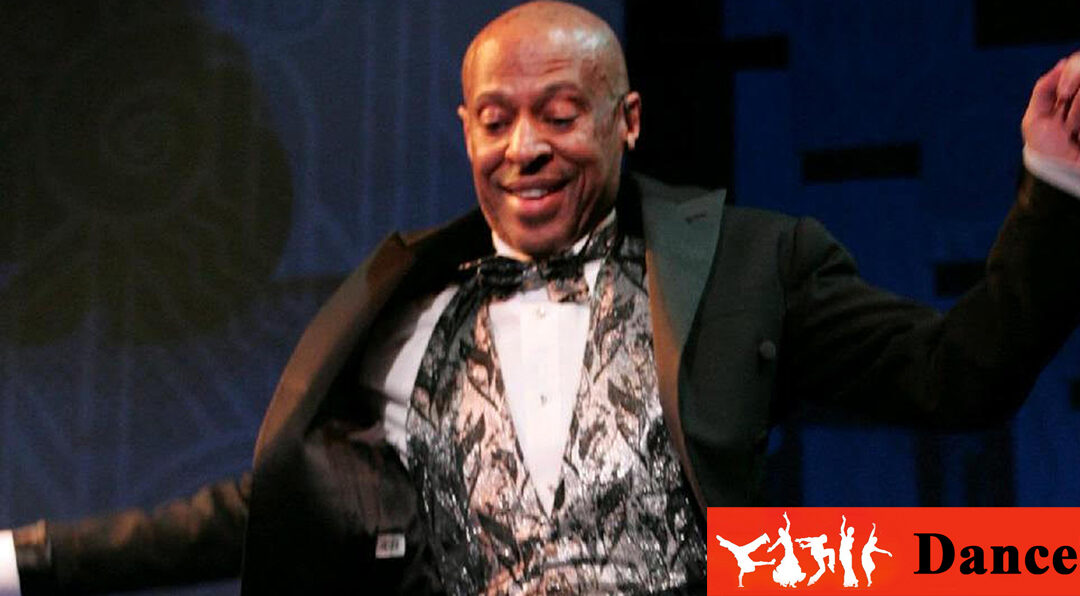
Alde Lewis shares how he made his dreams come true by applying himself and one simple piece of advice. Follow him at https://www.facebook.com/aldelewis/, https://www.instagram.com/aldelewis/, http://bingenow.com/video?vidid=2024, https://www.alefficacymovement.org/.
DanceTalks with Alde Lewis: Full Transcript
Hosted by Andrea Cody, Director of Dance Houston. Originally released June 1, 2020. This transcript was generated automatically and may contain small errors.
Episode summary (SEO)
On this episode of DanceTalks from Dance Houston, host Andrea Cody talks with Alde Lewis, Broadway tap dancer and founder and director of A.L. Efficacy Movement. Growing up in Flint, Michigan, Alde started ballet and basic tap only to partner his sister in a recital, danced with the Flint Ballet Theatre, and later chose wrestling over dance classes, all while winning every dance contest in town. At Michigan State University, a $250 gig and an invitation from Alvin Ailey turned him from pre-med and engineering toward New York, where Thelma Hill at the Clark Center sent him to the Ailey studio on scholarship and he danced with Dianne McIntyre’s Sounds in Motion and in solos for choreographer Talley Beatty. On a dare he won Amateur Night at the Apollo, where Charles “Honi” Coles took him under his wing and told him to teach himself to tap. Alde shares how that led to Broadway in My One and Only alongside Coles and in Bob Fosse’s Big Deal, dancing in Francis Ford Coppola’s The Cotton Club, his autobiographical play We Two about raising his daughter as a single father, his tap influences Honi Coles, Jimmy Slyde and Bunny Briggs, and his motto: stay focused. Recorded May 7, 2020.
Key takeaways
- Don’t be a cookie-cutter dancer. Honi Coles told Alde not to take tap classes but to teach himself, so his dancing would come from him and not be a copy of anyone else.
- Discipline multiplies talent. Three intense months on scholarship at the Ailey studio gave Alde what felt like four or five years of training.
- Think in motion, not steps. Alde taps by feeling how his legs move and letting the sound follow, and only years later learned the names of the steps he was doing.
- Know your worth. He charged $250 for his first paid show, then learned the producer would have paid $2,000.
- Stay focused, with purpose. Alde’s motto is to stay focused and know that when you have a purpose, God is part of all you do.
Transcript
This transcript has been lightly edited for readability: filler words and repeats were removed, and several passages that could not be heard clearly in the recording were left out.
[0:00] Introduction and Uncle Bilbo
Andrea: Hello and welcome to DanceTalks. Today is May 7, 2020, and my guest is Alde Lewis. Alde is the founder and director of A.L. Efficacy Movement. Alde, welcome to DanceTalks. How are you doing?
Alde Lewis: Great, thank you. How are you?
Andrea: I’m doing good. Well, I want you to share your amazing life story with us. Can you give it to us from the top?
Alde Lewis: I guess I could. When you say from the top, I assume you mean the very beginning, even as a kid.
Andrea: Yes.
Alde Lewis: Okay. Let’s start with dancing in my family. Not professionally, but just in general, dancing was a normal thing in my family, and we even had competitions within the family over who was the best dancer. We always had this uncle we called Bilbo, whose name was Charles Collins, who was always considered the best dancer in the family. But that was from his particular era. I was a little kid when I first started hearing about his exploits as a dancer, and if I think on it, his era would have been the Lindy.
Andrea: The 1920s, ’30s, ’40s?
Alde Lewis: Well, he was born in the ’20s, I think around 1924, so that lets you know what his era would have been. I would just hear of his exploits; I never actually saw him dance. And it wouldn’t be just fast dancing, or up-to-date dancing. They said even in slow dancing, there would be flips. What kind of dance would that be?
Andrea: It’s like a slow drag.
Alde Lewis: A slow drag, but at the same time the style Fred Astaire would do. I would say it was like a ballroom and slow drag combination; that’s what it sounded like from the descriptions I heard. Anyway, I always knew about that my whole life. And my family didn’t know about my up-to-date dancing, how people were seeing me dance in high school. My family had never really seen me dance until my senior year in high school, and then that’s when they started comparing: oh, you’re better than Bilbo, and all that kind of stuff.
[3:31] Partnering his sister
Alde Lewis: But outside of that, when it comes to dance technique, it all really started when I was in the fourth or fifth grade; it was probably fifth grade. My sister had a teacher named Dolly Johnson, and she overheard one of the kids mention dance classes at a studio. She was interested, so she came home and asked my mother if she could take dance classes. My mother agreed and took her to the studio where the kids were taking classes, and in this case it was primarily ballet and tap. I just went along to watch and be part of it.
Andrea: In the classroom? In the studio?
Alde Lewis: Yes, to watch, because at the time parents could come sit in the studio and watch their child dance.
Andrea: Oh, okay. Not wait in the lobby.
Alde Lewis: Right. The space didn’t have that kind of waiting room.
Andrea: And this was in Flint, Michigan, around what year?
Alde Lewis: This was in the ’60s. So my sister was taking class, and it was her and maybe one other African American, and everybody else was white. It was still a time when parents were uncomfortable with their children touching anyone who was of color. So toward the end of the year, when my sister needed a partner for ballet, that’s when I was asked if I would be willing to take class to partner her for the recital. It wasn’t like I had an interest in dance; it was really to help my sister participate in the recital that I actually got involved in dance.
[6:08] Basic tap and the Flint Ballet Theatre
Alde Lewis: From that point on I started taking tap, and when I say tap, I’m speaking of the bare basics: you know what the shuffle is, the ball change, a couple of riffs, things like that. It wasn’t advanced of any type. That’s how I actually got started in dance. After a couple of years, I was asked to participate in what they called the Flint Ballet Theatre; I was the first African American they accepted into it. That happened because my teacher, Dolly, was one of the teachers who was part of the organization, and I assumed the only way to be part of the Flint Ballet Theatre was to be a student of one of the teachers in that association. Kids from elsewhere couldn’t be involved. But at that time, I didn’t know; I just knew that the request was made, and with my mother agreeing, that’s how I became a member of the Flint Ballet Theatre. And again, it wasn’t that I was so interested in dance. It’s just that I knew how to dance.
[8:11] Choosing wrestling
Alde Lewis: Then in the 10th grade I became very, very interested in wrestling. I was told that in order to wrestle, I had to come in the evenings and stay late, which meant I would have to eliminate my dance classes, and I was fine with that. But to be a part of the Flint Ballet Theatre, the requirement was that you had to be taking classes from your regular teacher. Well, I had made my decision that I was going to wrestle, and that was it. At first they said, okay, then you can’t be in the ballet theatre, and I said, okay, good, and went about my business. But at some point they wanted me to continue, so they said, okay, you don’t have to take class, but we still want you to be part of the company.
Andrea: And what did you do with them? The Nutcracker every year, or what was the season like?
Alde Lewis: No, no. There was Hansel and Gretel and Peter Pan, and a couple of pieces of choreography by guest artists they would bring in from around the country to choreograph for the Flint Ballet Theatre. So that was my experience with the Flint Ballet Theatre. Afterward I went to college; I had stopped taking classes around the ninth or 10th grade.
[10:15] The best dancer in the family
Andrea: Well, before you go on to college: when you grew up with your family having these competitions, did you not participate? Was it in the kitchen, or what was that like? When did you hop in?
Alde Lewis: I only knew of the competition in the minds of my family. Everybody always simply spoke about who was the best dancer, and I was never part of that conversation, because no one in the family had ever actually seen me dance. The only people who saw me dance were kids from school.
Andrea: So it was more like a legacy that everybody in the family knew.
Alde Lewis: Right. And even then I was winning all the dance contests that the kids of my generation would have, and I became known around the city as the best dancer in the city, but my family didn’t really know. The first time they saw me dance was, I think, just prior to graduation. I went to a club, and some of my family members were there, and one of my cousins was playing in a band at that club. When people got up to dance, there was kind of a little dance contest going on, and I got up and participated, and the whole place went wild. That’s when the members of my family who were there saw me dance and kick butt. And all of a sudden they started saying, well, you’re better than Bilbo. That’s how my name started carrying its weight with the family.
Andrea: Got it. Through word of mouth, even with the others who hadn’t seen you.
[12:25] Michigan State and the planted seed
Alde Lewis: But anyway, when I went to school, which was Michigan State University, I first studied pre-veterinary medicine, then changed to pre-med, and by the time I had been there four years, I had changed to engineering. Anything to do with math and science. So interest in theater, dance or anything like that didn’t occur until the middle of my sophomore year, and only because someone approached me. Again, there were dance contests on campus, and I was winning all of them. I was a sophomore, and this freshman came up to me and asked why I was in college. Of course I said, well, I’m studying to become a doctor at some point. And that person said, my understanding is that when you come to school, you come to obtain some kind of trade or career in some type of profession. But you’re so gifted at what you do when you dance; I don’t understand why that’s not something you would pursue. Because if you become, let’s say, a cardiologist, what are you going to do, jump up and start tap dancing on their heart to make them feel better? Now, mind you, I wasn’t really tapping at that time, because I only had the very basics of tap, but that analogy was kind of funny, right? That was probably the first time the seed was planted in my mind.
[14:57] Sororities and the Ohio Players
Alde Lewis: Not long after that, sororities were approaching me to do a fundraiser. Part of that fundraiser would be that they’d rent out a room and have people pay 25 cents apiece to come in and just watch me dance. I said, no, I’m not doing that; I thought it was crazy. But at some point my mother called me. A radio personality she knew was putting on a talent contest, not a dance competition, and she knew how the kids would respond to me dancing. She said, why don’t you come home and participate in this talent contest? So I said, okay, what am I going to do? She said, just do what you do. So I came home. The competition was being run by the radio station, and whoever won was going to have an opportunity: the Ohio Players, the big soul group at that time, were coming to the city, and that person would open for the Ohio Players. Now remember, this competition was mostly vocalists, or a comedian of some sort. I was the only person who walked up in there and started dancing, and I freaked them out so much that I ended up winning the competition.
[16:57] $250, or $2,000
Alde Lewis: Somebody saw me at that performance, a local producer, and came up and asked if I would perform at another event; he would pay me. How much would I charge? Now, no one had ever asked me how much I would charge to dance. I was like, I don’t know. He said, well, go ask your parents. My mother was there, so I asked her, and we didn’t know what to ask for, so she just said $250. He said, cool. So I went on and did the performance, and afterward he told me, you know, I would have paid you $2,000 if you had asked for it.
Andrea: Good to know.
Alde Lewis: Right. I said, well, I’m glad you’re telling me now. And that’s when it wasn’t the dance that was intriguing. It was the amount of time I performed, which was less than five minutes, to possibly receive $2,000 in the future. I started putting that together in my mind, thinking about the money my parents were making and how many hours they had to work, the regular nine-to-five and so on. I said, man, this is something I need to think on. That’s how it really got started in my mind, changing what I would probably pursue once I got back to school.
[18:49] Alvin Ailey comes to campus
Alde Lewis: I continued doing the math and science, but my mind started going toward dance. And the icing on the cake: in the ninth grade, I had seen Alvin Ailey’s company when it came to town, when they were first becoming nationally known. For the first time, I saw African American men and women as a dance group dancing on stage. Even then I may have said to myself, man, I love what I just saw, but it didn’t occur to me that that’s what I would do in the future. Then Alvin Ailey’s company came to our campus when I was a sophomore or junior, and I said, I’m going to go see this, because I remembered from the ninth grade how they had affected me. Before the performance, they held a workshop. The people attending would mostly be in the dance department, but there weren’t very many African Americans in the theater or dance department, so they were asking African Americans on campus who had ever had dance in their lives to come participate in this workshop. I said, oh, yes, I’ll be there.
So I went and took the class and realized that all the technique I had gotten, which was primarily ballet, had never gone away. Most people in the dance department were doing modern and jazz; they took ballet, but they weren’t ballet dancers. So when I showed up and participated, everybody was looking at me like, why aren’t you in the dance department? And Alvin Ailey came up to me, and what came out of his mouth was, if you ever come to New York, look me up, because I will put you on a scholarship. In my mind, Ailey is Ailey, the company I had seen in the ninth grade, and I was so excited when he said that. That’s when I knew I had to take it really seriously.
[22:11] Heading to New York
Alde Lewis: From that point, it was a matter of staying at Michigan State for the next couple of years. I had changed my major to engineering because of the math and science, and it was going to take another two years or so, but I had already decided that after my fourth year I was heading to New York. The movie Fame and the television version of Fame had come out, and I saw that kids 14, 15 and 16 were turning professional, which meant their decision was made a long time ago. So in my mind I said, okay, I’m going to do my four years, and when it’s four years, even though I may not finish, I’m out of here, because I can’t wait any longer. And that’s how I ended up going to New York.
[23:11] A raw dancer with technique
Andrea: At that point, what was your personal style like? You said you did a little tap and ballet. What did you look like when you performed?
Alde Lewis: In my mind, I was still a raw dancer. But when I went to New York, people saw that I had technique. I didn’t think of it as technique. I never knew that my body had already taken it on in the muscle structure and the muscle flow, and that it was part of what made me the dancer I was in those up-to-date dance competitions, able to do what the others weren’t able to do. I didn’t have that type of analysis going on in my mind, because I didn’t know it. So when I got to New York, in my mind I was doing locking, the Soul Train locking, the robot, but at the same time I could do any form of dance. When I would take a class, let’s say an authentic jazz class, it was automatic, because that movement was natural in my body; my family moves that way naturally. They would think I had been doing authentic jazz my whole life, and I hadn’t had it at all. My body would just go right into it. So I didn’t see it as anything special, other than that I could do this and do well in class.
When I was asked what style I was doing, I would say it was pretty much locking along with steps, because I had very quick feet, kind of like James Brown. Any form of dance considered authentic jazz was very easy for me, because it was already in my body. And with the technique on top of that, it only made it even better for the people who were seeing me for the first time as I went to classes and auditions.
[25:44] Thelma Hill and the Ailey scholarship
Alde Lewis: Then, the first time I took a class with Thelma Hill, who taught authentic jazz, I did something in her class that was out of the ordinary, and she just fell on the floor laughing, and immediately ran into the other room and told the other teachers, y’all have got to come see this. Afterward, she made a phone call. She had told me during the class, I don’t know who you are. All I know is this: you’re one of the best dancers I have seen in 20 years of teaching. But there’s one thing you need: discipline. Now, I didn’t know what she meant. When you say discipline to a child, is it my attitude, or what? But she said, I’m going to do this for you. She went into the other room and made a phone call, and she said, this is what I want you to do tomorrow: head over to the Alvin Ailey dance studio. So I went over there, and that’s when I found out I was on a scholarship. I didn’t have to go through the audition process; it was just a phone call from Thelma Hill.
I was there for three months, during the summer, and it was really extensive. In those three months, I danced more than at probably any other time in my life, taking classes and getting, literally, the technique I needed, with the discipline. And then from there I continued. Any other questions?
Andrea: Well, it sounds like you got to New York and signed up for an authentic jazz class, knowing that Alvin Ailey had already asked you to call him when you got to town. And that teacher, I don’t know, maybe you’d already passed her class, or she just wanted you to have that. It’s interesting to me that you went that route. How did that discipline benefit you?
[29:03] Clark Center and Sounds in Motion
Alde Lewis: Oh, it took me to a whole other level. Before I took that class at the Clark Center, I didn’t have any money, so a lot of times I would go to the Clark Center and just watch class. A lot of the kids there didn’t know me as a dancer; they just knew me as a person who always showed up at the Clark Center and watched class. They knew I wanted to dance, and they figured out why I wasn’t taking class, because everybody was lacking money then. But before that, I was already on scholarship at Sounds in Motion, which is Dianne McIntyre’s company; to this day I consider her one of my mentors. So I was taking classes there for free.
Oh, that brings me back; I forgot to mention Dorian Williams. She had come to Flint to teach a class, because she was already living in New York and was home for the summer. I heard about the class and went, and only two people showed up, myself and one other person. She went on to teach the class anyway, and she was another person who fed into my mind. She said, you need to go to New York. They need male dancers like you. And that’s the reason I said I would go to New York, because she said, if you come to New York, I’m going to hook you up with Sounds in Motion; just give me a call. So that was the initial reason I went: I was already going to be on scholarship somewhere, so I didn’t have to pay for class. Then, while there, people would mention the Clark Center, and that’s when I started going down to the Clark Center just to visit this place the other dancers kept mentioning. That’s how I ended up there.
[31:34] How he survived
Andrea: Got it. How did you survive?
Alde Lewis: I had a cousin who knew I wanted to go to New York. He was working in what we called the shop, which is the automobile factory, and he said he would pay for me to go to New York, and he was going to call his father, who he had just met, to see if I could stay there. So when I got to New York, I had a place to stay and I had food. I just didn’t have money to do anything. At one point I got a job at Burger King. At first, that was the only nine-to-five job I had for years, and I only did it for a short period of time, but that’s what gave me transportation money to go back and forth to classes.
Andrea: Yes. All right, I think we’re caught up. Keep going.
[32:50] From Sounds in Motion to theater
Alde Lewis: Okay. So from there, I was simply taking classes, but Dianne McIntyre also allowed her students to participate in certain performances with the company, so I would get a little bit of performance experience that way. When I went to Ailey and spent all my time there, that meant I wasn’t spending any time at Sounds in Motion. But when I came out after those three months, it was as if I had been dancing or studying for, let’s say, four or five years. That’s because I already had the technique in my body; I just didn’t know it, and I didn’t have the discipline to go over and over it with my body and my muscles to obtain what I was able to obtain. So when I left there and started going back to Sounds in Motion, that’s when everything started to move, because I was immediately put into her company. Then I started touring and all this other stuff, and people started hearing about me.
From there, somebody who was involved in a theater project was looking for someone who could do mime, and I was the person who could do it, because of the robot and all the other stuff I had taught myself. That started the theater portion of my life. And while I was in that theater piece, someone else asked me to come to an audition for Vinnette Carroll, for a project she was doing. She had directed a couple of Broadway shows. I got that audition, and that’s when I met Talley Beatty, who was the choreographer.
[35:28] Talley Beatty
Alde Lewis: From everybody I spoke to when I first got to New York, they would speak of Alvin Ailey, the company, but they would always say it was Talley Beatty’s choreography that the Alvin Ailey company got its reputation from. There was, of course, Alvin Ailey’s Revelations and a couple of other pieces that became masterpieces, but up until Ailey came up with those, and throughout the years, a lot of the choreography for his company was Talley Beatty’s. So Talley saw me in this audition, I got the part, and from that point on, any time Talley was choreographing for other dance companies and there was a solo segment, he would invite me to come to the rehearsals of these companies, who didn’t know who I was. He would choreograph the piece, and when he got to the part where he would create the solo space, that’s when he’d bring me in to meet these companies. I would walk in the room, and he would say, okay, Alde, I want you to come right here and do this, this and this. And these dancers are seeing me for the first time, and the solo in the piece isn’t going to them. That kind of created some issues down the line.
Andrea: Wow.
[37:03] The dare: Amateur Night at the Apollo
Alde Lewis: And this was strictly modern and modern jazz dancing; it had nothing to do with tap. But one day he dared me. He said, you say you can dance. We don’t know the kind of dance you’re doing, but you say you can dance. If you can dance like you say you can, why don’t you go to the Apollo and participate in their competition? Amateur Night at the Apollo, Wednesday night. So we made a bet. I told him I would win, because I already had the experience of how people respond to me, and he didn’t believe it. So I said, okay, I’m going. I didn’t even audition. I went to the stage door, and the guy at the stage door told me you’re supposed to send in a postcard to request an audition, and once they choose you, you’ve got two weeks to come in and audition, blah, blah, blah. But anyway, he’s standing there at the stage door, and he says, so what do you do? I said, I dance. He said, you dance? I said, yes, because usually the competition was vocalists and comedians. He said, what kind of dance do you do? I said, well, I do different types. And as I started to walk away, he said, hold on, hold on. Create something and come back here and be here at 6 o’clock next Wednesday. I’m going to try to get you on. I said, okay.
So I did, and sure enough, he got me on stage. I got on stage and I won Amateur Night at the Apollo, and the audience went crazy. You know, they would boo folks off, but when I got on stage, they were running up to the front like it was Michael Jackson or James Brown. When it was over, the guy who was the host gave me this great big hug and said, man, a dancer hasn’t won at the Apollo in over 25 years. If you could tap to go along with what you have naturally, there would be nothing in the world that could stop you. That was Charles “Honi” Coles, who was the host of Amateur Night at that time.
[40:55] Who is Honi Coles?
Alde Lewis: And I didn’t know who Charles “Honi” Coles was. I didn’t know anything about tap or tap dancers. All I knew, I looked at him as somebody up in age who was saying something to me about something I wasn’t really interested in. I just did it as a dare. So when he said all that to me, I just brushed it off. I was feeling good that he felt good about it, but it was nothing I was that impressed with, until I went down to the Clark Center dance studio, and people would be talking in the hallways. At some point I said, you know, I won Amateur Night at the Apollo. And they said, you did? And I said, yes, and this guy, I think his name was Honi Coles… And they said, what? Honi Coles? You mean Charles “Honi” Coles? I said, yes, this guy named Honi Coles. And they said, no, no, no, no. Charles “Honi” Coles. I heard that enough times, and I said, you know what? I think I need to go to the library. So I went to the library to look up who this guy was that everybody was freaking out about when I mentioned his name.
When I went to the library and read all this stuff, I was so happy he had given me his phone number. He had said, when you ever decide this is something you might consider, I want you to call me. So I went from the library, and at that time there were no cell phones or anything like that, so I got to a phone and called him, and he set up a time and a space at a studio to work out. And that’s how I started tapping.
[43:22] Tap lessons with Honi
Andrea: How old were you?
Alde Lewis: I was about 21 or 22 by the time I ended up meeting him, because remember, I’d spent four years in college. All that happened pretty fast in New York. I was still on scholarship at Sounds in Motion. I kind of had to backtrack to get to tap as I’m talking with you, because I knew at some point we had to get to me dealing with tap, and everything I’d spoken about up to that point was my modern and jazz, which I had become known for first.
Anyway, I’m in the studio with Honi, and he says, I’m going to show you a couple of things here, and I’m going to show them to you because it will give you a way to practice. But at the same time, I’m giving you something that is mine, so that down the road you’ll be able to tell folks you got this step from Honi Coles. But, he said, I don’t want you to be a cookie-cutter tap dancer, so I do not want you to go and start taking classes. I want you to teach yourself to tap, and I’m giving you a foundation here to work on. We’re not going to see each other a lot, but when I do see you, I want you to show me what you’ve come up with. And that was our relationship.
[45:24] Teaching himself to tap
Alde Lewis: At one point we hadn’t seen each other in some time, and then I heard he was doing Bubbling Brown Sugar on Broadway. When I first met him, he was in semi-retirement, and somehow they had pulled him out of retirement to do Bubbling Brown Sugar. When I found out about that, I went backstage to see him and showed him what I had come up with since the last time we’d seen each other, about a year. What he didn’t know was that I had moved from my cousin’s relative’s place to a space with no one underneath me, which meant I could tap for hours at a time. From there, I moved into a hotel that had become a residential space for artists, which allowed you to make as much noise as you wanted all day long, until 10 o’clock at night. So it gave me all this time to work on whatever tap I wanted and whatever I was coming up with, to the point where I had probably tapped more in that six- to nine-month period than tap dancers who had been taking classes for years. I would start tapping at, let’s say, 9 o’clock in the morning, and I’d think I had tapped for 45 minutes to an hour, but six hours would have passed. And this was happening on a daily basis.
Andrea: Wow. So it was really concentrated. And were you listening to music in there, or just you?
Alde Lewis: Just me. No music, just me and the taps. I was teaching myself to go from one thing to the other. I wasn’t teaching myself tap combinations. I was teaching myself to hear what I was doing, and how I could go from that sound and that rhythm and flow smoothly into another sound and another rhythm. So for a long time, I never knew what I was doing; I just knew how to do it. It wasn’t the tap steps I was keeping in mind. It was the feeling of my legs, and the way my legs moved, that created the sound that came from my feet. For a long time, I didn’t know the names of the tap steps I was doing. I just knew how to flow right into them.
[48:38] “His eyes bugged”
Alde Lewis: So, as I said, I went to see Honi when he was in Bubbling Brown Sugar, and while I was there, I showed him what I could do. His eyes bugged, because for all intents and purposes, this cat had just started, and he was already at a level where he could be considered one of the best young tap dancers out there, from what Honi had seen of the young cats who were tapping.
Andrea: So you got caught up in under a year?
Alde Lewis: Say it again?
Andrea: You got caught up in under a year.
Alde Lewis: Oh, yes, absolutely.
Andrea: With sheer determination and self-discipline, and tapping into your own creativity.
Alde Lewis: Right. And not long after that, I remembered that one of the comments in the documentary I had seen at the library was that Honi had done the same thing. He was known for whatever he was doing in Philadelphia, but then his partner left. He was part of a group, and somehow they disbanded. What he did was go into a room and not come out for almost a year, and when he came out of that room, he was this whole other tap dancer. He just blew people away. Even though I had seen that, it didn’t dawn on me that what I did actually paralleled what he had done.
Andrea: And he taught you to do that. Like you said, he mentored you to follow his footsteps, not step for step, but through his creative process.
[51:49] Not a cookie-cutter dancer
Alde Lewis: Exactly. That’s why his main thing was, I do not want you to become a cookie-cutter dancer. Usually, if you take class and you’re simply a classroom tap dancer, you can become really good technically, but it won’t come from you. It’ll come from what’s put into you, not from out of you, and so people won’t feel what they need to feel, which comes from in you.
Andrea: Wow. He wanted to see you, not him. He didn’t want to see his reflection.
Alde Lewis: Exactly. Though in my mind, I wanted to be a tap dancer like him, because when I saw him, I saw how fluid he was compared to the other tap dancers I was seeing. He made it look so smooth and so easy, partly because of his height and his slim stature. He would do things, and it would look like he was just floating. So when I talk about my legs, I would try to imitate the look of his legs when he was tapping. And that’s how I realized I wasn’t creating steps; I was creating movement that created the sounds of the steps I was doing. That’s why I said it took me years to break down for myself what it was I was doing. Then I’d say, oh, okay, so this is what they call a paddle and roll, and so on, the different concepts and names of the steps being done.
[54:03] My One and Only, with Honi
Alde Lewis: And then, not long after that, when I would go to auditions for Broadway shows, my tapping was like nobody could even compare. The shows I ended up getting were My One and Only and Big Deal. I didn’t have to audition for Big Deal, which was Bob Fosse’s, because his office called me for that production. But when I auditioned for My One and Only, it was due to the tap for sure. And it was after I got the show, on our first day of rehearsal, that Honi Coles and I realized we were doing the same show. He was one of the principals in the show, and he eventually won the Tony Award, and I was in the chorus. So it was such a wonderful thing that my mentor was in a Broadway production that he had nothing to do with me getting. We found out on the first day of rehearsal that we were both doing the show, so you can imagine how we felt at that reunion, so to speak.
Andrea: That is awesome. Can you tell us what it was like to dance on Broadway?
[55:56] Broadway
Alde Lewis: When someone asks that particular question, I’m trying to figure out what they’re really asking. Other than it was exciting, it was a goal, it was a dream that had come true, and performing in that moment was good. Everything was positive. Just in general, there are always things that occur, but when it comes to Broadway, I feel really good and positive about the fact that Charles “Honi” Coles was part of my first experience of actually doing Broadway. Up until then, I had done a couple of shows that were on their way to Broadway, but they never made it, so this particular one was perfect for that.
And then the other Broadway show I did was Big Deal. In that case, I really didn’t have to audition. I got a call from Bob Fosse’s office letting me know he was very interested in me doing a particular character they were creating for this original piece. The story itself came from an old movie, I think from 1959, and only in this case it was going to be an all-Black production in terms of actors and actresses, called Big Deal. Now that I think about it, the name of the film was Big Deal on Madonna Street. The story was about these thugs, not necessarily young, but poor, maybe Italian, and big money to them was breaking into a pawn shop and taking the money that’s there, and they were supposed to live the life of Riley if they ever got to that money. A lot of things happen, it goes awry, and it never really comes to fruition, which is the same thing that happened in our storyline. But the show itself was wonderful, because he ended up winning the Tony Award for choreography, with a piece from the song “Beat Me Daddy, Eight to the Bar,” from, I guess, the ’30s. That was one of the songs that was used.
But again, I really enjoyed doing Broadway, because it’s the pinnacle of what one seeks to achieve as a person in theater, in dance in theater, but specifically theater. Anything past that, whether television or film, is icing on the cake. With television and film you’ll make the real money, but the prestige of doing Broadway will always be there, because not everybody gets a chance to do Broadway or has the talent to do Broadway, and you can get away with things when it comes to television and film. That’s why back then you would see a lot of the film stars say on talk shows that if they ever had a chance, they would love to do a Broadway show, though they never really got the chance.
[60:02] We Two: where it started
Andrea: Let’s flash forward to today. You are working on a show called We Two that is a retrospective on your life. Can you tell us where that starts and how you’ve created it?
Alde Lewis: Actually, I already knew what I would bring to the table if I ever decided to be the author of a project. One day, while I was living in Michigan, I was asked to participate in a storytelling event, kind of like a Moth-type event, where you stand with a pin light on you and a microphone. You don’t use the stage; you just stand in one spot and tell your story, usually anywhere from four minutes to 10 or 11 minutes at the most. But this person created an opportunity for people to give a Moth-like presentation where we could go over the 10-minute mark. She knew I had been to New York and all this stuff, and she also knew I had raised a child as a single parent. So she asked whether I had any stories I could bring to the table to make it exciting for what she was curating. I said, okay, let me think on it, and I’ll get back with you.
And then I put something together and did the event. I told my story, and it dealt with raising my child, my daughter, as a single parent: the trials and tribulations that come with raising a child, teaching and passing your knowledge on to your child, hoping they receive it enough that when they’re not around you, their thinking capacity will allow them to reach back to things they may not know what to do or how to do, and they’ll hear your voice in the background. That’s what I did with her. So I wrote the story to tell it there, and it was just about her and myself until she went to college.
[62:41] From Flint to Houston, and One Man Dance
Alde Lewis: After that, I think around 2013, I moved down to Houston because of the water issue in Flint, Michigan. My daughter had come here for school and was staying here, and she wanted me to come down and start my life again in Houston, to get away from the poison in the water in Flint. While here, at some point I went to New York to meet up with someone about another opportunity, and it just happened that this guy had just purchased a studio space, and he wanted people involved in theater to know that this rehearsal and performance space existed. He knew of me from my past, so he figured that if he could get me to come do a piece there, I might bring some people down who would be interested in seeing his space and how I used it. So he asked me if there was a project I could bring to life theatrically in a studio. I said, I have a story, but I haven’t written it in a theatrical way. But that opportunity gave me the reason to go back, take my story, expand it and make it a one-man show, and so I did. When it was in New York, it was called One Man Dance.
[64:58] A grant at the Ensemble Theatre
Alde Lewis: Then, after I got back to Houston, I was doing something at the Ensemble Theatre for a corporate performance; I’m usually asked to participate when it comes to the Ensemble Theatre here in Houston. After that performance, I was told there was a grant available for new works, or works someone had worked on that could benefit from being put on their feet in the black box at the theater. I told them, yes, I do have one, since I had performed this other project. With this grant, the Ensemble was going to be able to choose someone to direct it, and if I needed a choreographer, a musician, a musical director or costumes, they were going to take care of all of that. I was really excited, because I was like, oh man, this can really be put on its feet.
One of the people who looked at the script got excited about it and said he would like to direct it, and they wanted to know if that was all right. I said, sure, I’ll be fine with that. So we got together, and he told me that after reading the script, he no longer saw it as a one-person show. He saw a lot of lines in my script where I speak about these other characters. So he said, let’s get someone else who has the ability to present the different characters in your piece, while you continue to be the narrator. Instead of just telling the audience what they said, have this other person act out the scenes. And of course there would be times when I would be acting with that character, going back and forth, because of the story. So it became a two-person play, and I changed the title to We Two. I loved what that director brought to the table.
[68:11] Taking it on tour
Alde Lewis: With that vision, I see myself taking it elsewhere and it becoming a tour. My goal is to take it on tour around the state and around the country, and if need be, to take it to where it could actually be an off-Broadway show. The reason I say off-Broadway as opposed to Broadway is that I feel this is the type of show that should be in a more intimate setting. It will be easier to create the feel in that type of atmosphere than in a large theater.
Andrea: It’s really about a father and daughter.
Alde Lewis: Yes.
Andrea: And yet the audience can access those words of wisdom you raised your daughter on.
Alde Lewis: Exactly. Exactly.
Andrea: Beautiful. And does it have dance in it?
Alde Lewis: Oh, yes, it does.
Andrea: That’s good.
[69:21] The Cotton Club
Alde Lewis: Because of my reputation in the tap community over the years, one of the things that was guaranteed, even in the one-man show I did in New York, was that I wanted to create a situation where I would not only tell the story of myself and my daughter but expand it, adding on a beginning, so that the story I had told at the storytelling event would actually be the second act. So I had to create a first act, and I decided that as part of the story I could dwell more on my history as a performer. I decided to begin the story on the day my daughter was born. It just so happened that on the day my daughter was born, I was in rehearsal on the soundstage for the film The Cotton Club, which is now out as The Cotton Club Encore on Blu-ray and DVD as of this past December, 35 years later. So anyone who wants to see that can see me in the movie, directed by Francis Ford Coppola.
So my story of We Two begins on the set, with me doing the number that was to be featured in the film. There are two numbers I end up doing: one to give the flair of what I’ve always done in terms of Broadway, and then of course the number I call the one-man dance, which is kind of the hit of the show; it actually stops the show as I’m performing it. Then it flows into the history of me performing on Broadway and the things that occurred once I left My One and Only and got the film, The Cotton Club. So yes, there’s definitely tap in it.
Andrea: And you show how you chose to walk out of the limelight to be there for your daughter.
Alde Lewis: Yes, that’s part of the story. And I just want to leave it there, because I want people to come see the show to get the story. I don’t want to give too much away.
[72:37] Next stop: the DeLuxe Theater
Andrea: I’ve seen some of the development of it. Phenomenal. I can’t wait to see what you do with it and how it comes to be the way you’re dreaming about it. Where are you in terms of stages of development? What do you have left to do?
Alde Lewis: Well, once I finished the workshop, and the set was created, the opportunity past that was that I’m able to use the set that was built specifically for that production. And there’s, what’s the name of the theater? I can’t think of it.
Andrea: Oh, the DeLuxe.
Alde Lewis: Yes, the DeLuxe, thank you. The DeLuxe Theater, which is newly renovated, is allowing me to bring the production there, so it can actually be done on stage instead of in a black box. Because of the size of the theater and the seating capacity, it actually reminds me of what an off-Broadway theater would look like. So I’m very excited that I’m being asked to perform there. Initially, May 15, 16 and 17, I think, were the dates we were supposed to perform. But because of the shutdown of everything because of the virus, we don’t know exactly when that opportunity is going to present itself.
When it does, there’s also another theater, MECA at TBH, that I’m speaking with, so that once I perform it at the DeLuxe, I’ll be able to move it to that theater, provided their dates are open. And because of this virus, I’m quite sure a lot of dates are going to be open now, because no one knows when and how they’re going to revamp to get their projects up and running for audiences to want to come out and see. That’s the other thing I’ve got to take into consideration. I really don’t know how soon I’m going to be willing to actually put it up, because it’s not going to make sense if people are still afraid to come out and be close together and feel that they might catch the virus. So that’s where I am right now, not knowing. But in my heart, I’m still excited, because I know I have a project that’s ready to go. It’s just a matter of when it’s going to take place.
[75:49] A book on revelation
Alde Lewis: In the meantime, I’m working on a script, more of a book, on the experience I had before I came to Houston, in terms of my spiritual life and things that came to me as revelations. I’m working on that during this time, because I don’t have anything but time. I’ve been wanting to do this since 2003, and this is giving me the opportunity to sit down and write chronologically the things that occurred during that particular time, which I think is going to be exciting. It’s another project I can put my mind and effort into during this time of solitude.
Andrea: Would you like to share one of your experiences with revelation?
Alde Lewis: Yes, I can. One experience came when I was in kind of a meditative state. I had never thought on these things before, but it simply came to mind, and it had to do with the Lord. One of the things that came out of the revelations was that I got to know who He was, because of who He told me He was, in the understanding that occurred in my mind. It was so new to me that it became an immediate paradigm shift in what I was receiving and understanding when I read the Bible. It was totally different, as if I was reading a totally different book.
One of the things that came to me was the knowledge of the Word, and the understanding of the knowledge of the Word, and what all that entails in terms of one Spirit. That in itself told me that the knowledge of the Word was the Son, which is why it’s called the Word: it’s the Word that came out of the mouth of Jesus, not the physical man Jesus being the Son, but the Son of God actually being the Word, and the Spirit of that Word that came out of His mouth. The understanding of that Word, which only He can give, comes through the Holy Spirit, and that ends up being truth. And truth, when verbalized, is wisdom. So the only way to get to truth, which is the Father, is that you first have to have the knowledge. Therefore, when the Word says, I am the… what is it? I’m very bad with the recitation.
Andrea: The way, the truth and the life.
Alde Lewis: Thank you. The way, the truth and the life; no one comes to the Father except through me. And that made sense to me when all this came to me, because in order to get to truth, you first have to get the knowledge and the understanding, and that understanding is actually the life and the light, which brings you to who He is. It doesn’t make you Him; it makes you understand who He is and how He operates out of you. Truth, when verbalized, is called wisdom, and that’s why the whole book of Proverbs is the Lord Himself operating in terms of wisdom. If you obtain that wisdom and receive it in your heart, then you’ll operate out of that wisdom and not out of the world, meaning that which is not of truth or wisdom, just operating out of what you think is right and wrong. I don’t know if that was clear the way I expressed it, but that’s the best way I can do it at this time.
Andrea: Thank you.
[81:14] His style: Honi Coles, Jimmy Slyde and Bunny Briggs
Andrea: Wonderful. Give people an idea of how special you are as an artist by saying in your own words what your style is, what you’ve innovated, who you are when you perform, and what you think makes you unique.
Alde Lewis: Okay. First, I have to say that when it comes to different styles, I feel there’s never a new movement that comes into play, ever. It just becomes new for a generation that hasn’t experienced or seen that movement, and so people say they created their own. What I will say is that because of those who came before me, and the things I’ve seen of them, even if I hadn’t seen them, I may do a movement the same way, but I didn’t necessarily create it. At the same time, those who are seeing it on me are seeing it for the first time, so to them it’s a new creation. With that in mind, if you think of the style in which I dance in terms of tap dancers, it would have to be a combination of Honi Coles, Jimmy Slyde and Bunny Briggs. If you watched me for the first time and you knew Bunny Briggs, you would think it was strictly Bunny Briggs. But my flow is different, because my approach is that of Honi. And because of my ability to do different things and move a certain way and do slides, you could say, okay, Jimmy Slyde was known for his slides, so I have that influence as well. So you have to think of it as a combination, an accumulation of the three, and try to visualize what that is, and then you could say that in the oneness that I am, that would be me. But in order to do that, you have to know the visuals of the other three.
[83:59] Where to find him
Andrea: Where can people find you and connect with you online and see you?
Alde Lewis: Well, I have my own channel people can go to, but I also have a website that will take you to my channel. So let me give you the website, so people can see me.
Andrea: I’ll put it in the notes, too.
Alde Lewis: Yes, you can put it in the notes. The website is alefficacymovement.org: A-L, which represents Alde Lewis, then efficacy, E-F-F-I-C-A-C-Y, then movement, dot org. That will take you to the website, where you can see my résumé, bio and other things I’ve done. Just browse through it. And on practically every page of the website, there’s a link that will take you to my channel.
Andrea: Okay, great. And in terms of digging a little deeper into the history…
Alde Lewis: To see Honi Coles, Jimmy Slyde and Bunny Briggs, all you have to do is go on YouTube and type in their names, and you’ll be able to see what their styles are like.
Andrea: Okay, great. We’ve got some research to do. Thank you.
Alde Lewis: Oh, by the way, did I actually answer all the questions you asked, or is there something I’m missing?
[86:12] Ten Tiny Dances and dancing at home
Andrea: We’re up to date. I just wanted to ask you: have you been dancing since day one? I mean, we’re on week eight, day two of the shutdown, as you described it. So have you been dancing?
Alde Lewis: Well, not specifically live. I was asked to participate in an event that was supposed to be live, and they decided to make it virtual. I was supposed to create something here in my apartment, but I don’t have the materials to do that; it’s all carpet, and I don’t have a wooden floor. So they said, well, since we have in our archives a performance you did for us… This was called Ten Tiny Dances. They asked if they could use the performance in their archives as part of that series of dances, which was going to take place within a week and a half or two weeks, and I said, sure. So instead of me performing live, it was a video they had filmed when I performed for them a couple of years ago, and that was brought to the masses as a new piece. It was as good as if I were performing live, because they had an audience, whereas the other dancers in Ten Tiny Dances, except for one, created their own pieces without an audience.
Andrea: So you’re really not dancing at home?
Alde Lewis: Well, my thing is this: I’ve always tapped throughout the day, whether it’s on carpet or anything else. I don’t have to have my tap shoes on, because it’s the motion. When I’m listening to music, usually there’s a tune called “Caravan” that I like to listen to, and when I’m playing that, I’ll start doing tap movements, because again, I’m not worried about the sound I’m creating with my feet, but the motion of my legs. I already know I’m achieving whatever sound I need just by moving my legs. So yes, I’m dancing every day in that sense. But when I do that, I never think of it as working out. I just do it, because I just do it.
Andrea: Great. It’s like breathing. Wonderful. What’s your motto?
Alde Lewis: My motto would be: stay focused, and know that when you have a purpose, all that you do will be for Him, meaning God being a part of this.
Andrea: Great.