
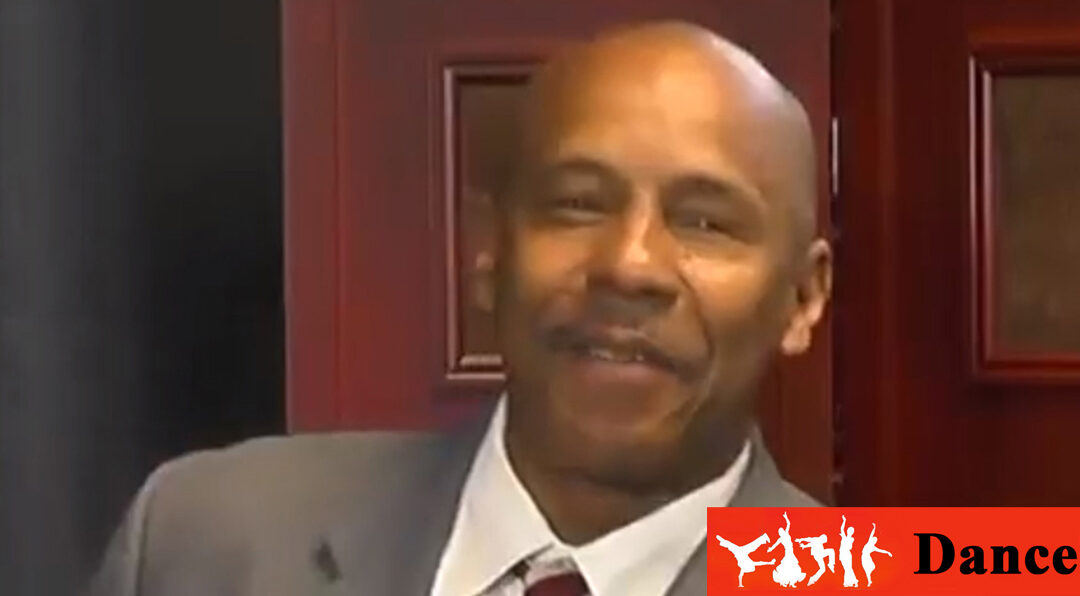
Four decades dancing for Broadway and Hollywood, Dwight Baxter’s career involved constant preparation and teamwork. See him at https://youtu.be/xre5z9IPfI8 and follow him at https://www.facebook.com/dwight.baxter.
DanceTalks with Dwight Baxter: Full Transcript
Hosted by Andrea Cody, Director of Dance Houston. Originally released June 15, 2020. This transcript was generated automatically and may contain small errors.
Episode summary (SEO)
On this episode of DanceTalks from Dance Houston, host Andrea Cody talks with Dwight Baxter, the Houston-born dancer, producer and director who spent more than four decades dancing on Broadway and in film and television. Dwight trained at Houston’s High School for the Performing and Visual Arts and with Patsy Swayze, met Arthur Mitchell at the Southwest Regional Ballet Festival in 1973, and moved to New York to study at Dance Theatre of Harlem. He made his Broadway debut in 1975 in Scott Joplin’s Treemonisha, which began at Houston Grand Opera, and went on to work with Bob Fosse, Lester Wilson, Michael Peters, Louis Johnson and George Faison, dance in The Wiz with Michael Jackson, and appear in Beat Street and One Life to Live. He tells the story of the dancers’ strike on The Wiz that moved film dancers onto a Screen Actors Guild contract, explains why there are no shortcuts in dance training, and shares his work as artistic director of the People’s Family Workshop and on the stage play Soul Purpose. Recorded May 16, 2020.
Key takeaways
- There are no shortcuts. Dwight believes every dancer needs a foundation in class, especially classical ballet, to compete at any audition anywhere in the world.
- Spirit sets you apart. When 500 dancers who look and move like you show up to an audition, wanting it badly and going a step further is what makes a director choose you.
- Partnering is about the other person. A male dancer’s job in a pas de deux is to make the ballerina look beautiful.
- Dancers have to stick together. The 1978 dancers’ strike on The Wiz won film dancers a Screen Actors Guild contract, and dancers still benefit from it today.
- Keep going to auditions. If you don’t get one job, go to the next; sooner or later the work comes, and it proves you can really do this.
Transcript
This transcript has been lightly edited for readability: filler words and repeats were removed, and several passages that could not be heard clearly in the recording were left out.
[0:00] Introduction and the basics
Andrea: Welcome to DanceTalks. Today is May 16, 2020, and my guest is Dwight Baxter. Dwight is the artistic director of the People’s Family Workshop. Dwight, welcome to DanceTalks.
Dwight Baxter: Well, thank you, Andrea. Thank you very much for having me.
Andrea: Dwight, you have an amazing story. Would you please take it from the top and tell us about your life?
Dwight Baxter: Okay. Well, I’m old-fashioned. I believe in learning the basics first, so that you can compete on an international level and apply them at any audition or concert or event, whatever you’re trying to do in the world of performing arts. In my life, I started off at the High School for the Performing and Visual Arts and got an interest in the arts when it first started, back in 1970, I’m going to say ’72.
And that’s it in a nutshell with me: having the basics and the understanding. You’ve got to have a foundation, and that foundation starts, of course, with what? Class. And class gives you an opportunity to learn. What I’m speaking of, for me particularly, is the world of dance. I think every dancer should have the opportunity to learn how to dance because of the formality. Yes, you can dance, you have the talent to dance, but you can improve that talent and enhance it and make it better by having the fundamentals of class, working with other dancers, learning from other dancers, learning from the instructors and the artistic directors, because there’s more than just the dance. You can dance, you can do the step, or you can sing, but what makes you better than the other person? What makes you better is that you decide to take it a step further, with that spiritual feeling that says, I really want to do this.
[2:08] What makes a director pick you
Dwight Baxter: Dance is a very interesting thing. You’ve got to really want to do it, because it’s a lot of work: a lot of stretching, point your feet, flex your feet. All that takes a good ten years, almost like going to medical school, so that you’re able to go to an audition and get that job, because you want that job. What makes an artistic director, a ballet master or a company pick you out of 500 people? I make that example very strongly because, working on Broadway since 1974, I’ve had to go up against people who look like me and dance like me. So what do I have that’s going to make the director or the choreographer say, okay, I want that person? It’s the spirit that God gives you that says, I just want to dance like this. Somebody can naturally sing, but they take a step further by taking singing and vocal classes, and that makes them more and more appealing.
[3:08] Treemonisha and Broadway
Dwight Baxter: Just to talk about my career a little bit: I started in 1974 with a show called Treemonisha, which was launched by Houston Grand Opera under the leadership of David Gockley. It was an opera about Scott Joplin’s music, and Frank Corsaro was the director, with Gunther Schuller. We got an opportunity to be in the show, and from there we went to Broadway, under the leadership of James Nederlander and the Broadway producers. We ran for a good while in New York, first at the Uris Theatre, which is now the Gershwin Theatre, and then we moved to the Palace Theatre. And as you know, the Palace is back up again. That’s where Judy Garland had her great fame.
Long story short, from there I went from show to show. Then I decided to take ballet classes at Dance Theatre of Harlem, with the late Mr. Arthur Mitchell, and there I learned how to apply my technique a lot better. That gave me a little advantage over the other person in an audition. There are no shortcuts, but there is a way of learning how to develop so that you can expand, and the spirit is what takes you the long way and lets you stand strong in any audition. Like I said, I went from show to show, as a gypsy, as Shirley MacLaine called it.
[5:16] Dance Theatre of Harlem and Purchase College
Dwight Baxter: Dance Theatre of Harlem, the classical ballet company, formed in 1968, and I was with them starting in 1975. While I was doing the Broadway show, I was also going to class and working with the company, as well as going to college at Purchase College up in Westchester, a performing arts college supported by the Rockefellers. It was second only to Juilliard. So I consider myself fortunate that I had an opportunity to learn the genuine basics of what it’s all about, working with Royes Fernandez, who was a principal dancer with American Ballet Theatre, William Glassman and Rosanna Seravalli. I really enjoyed those times, because it was better to learn from the actual people of American Ballet Theatre.
Andrea: We’ve had some great Houston people too, like James Clouser and Eugene Collins.
Dwight Baxter: Yes, and they were part of the same values, the basics.
[6:24] Forty-five years in the business
Dwight Baxter: So I went up and down until I said, okay, this is what I really want to do, because I found out you can make a lot of money in a Broadway show, more than in a dance company. And of course I joined AGMA and Actors’ Equity. I’ve been doing this a long time. Looking at my career, I said, God, I’ve been doing this for 45 years. That’s a long time, and you don’t really realize it, because you always compare yourself to your own age group.
I’m 65 now, so I understand what it really takes to become someone who has the knowledge, and what it takes to be a dancer. Now, I love the dancers of today. Some of them like a lot of shortcuts, but to me there are no shortcuts. You’ve got to learn, and you’ve got to learn with the foundation, which is classical ballet.
I did a soap opera called One Life to Live for a long time, and I did quite a few movies. I worked with Lester Wilson and with Michael Peters, who did the Michael Jackson choreography for “Beat It” and “Thriller.” Lester did Saturday Night Fever. And Louis Johnson, Lester Wilson, Michael Peters, they’ve all passed on. One of the few left is Mr. George Faison. And of course Bob Fosse; I worked with Mr. Fosse a lot.
[8:30] Learning to direct and produce
Dwight Baxter: So I’ve had a pretty strong career in the world of dance, and I’ve taken it a step further, because working with them, you learn how to be a director and a producer, how to put a show together. Within that time, I have really learned. I’ve seen the ups and I’ve seen the downs. I’ve seen the producer walk out and say, we’re closed. What do you do? The show is closed, and we’re in Washington, D.C.
But I love to dance, because when that energy comes together, especially in an audition, oh man, it’s powerful. Even going through a scene or a musical number, when the energy comes together, it’s magic, and there’s no other way to explain it. The audience is blown away by it, because you gave it your all, you gave it your best.
[9:31] Patsy Swayze and Arthur Mitchell
Dwight Baxter: That’s what I loved about a teacher I had back in Houston named Patsy Swayze. I’ll never forget, we were at the Southwest Regional Ballet Festival, and it was the first time I had seen Black dancers in ballet. I didn’t think that existed. And I met Arthur Mitchell, and he said, why don’t you guys come up to New York? It was myself, Dwayne Phelps, Odyssey Pope, Vicky Odom; we were all together working with Patsy Swayze, and we were kids then. This was back in 1973.
So we had an opportunity to see that this could work. Maybe I could get a degree out of this, because Sammy Davis Jr. was my idol. I loved Sammy Davis Jr. I told my dad, I want to be like that. I was so mad about dance that I used to catch the bus in my tights, because I wanted to be a dancer so bad. All the kids were like, why aren’t you playing basketball? What’s wrong with you? I wanted to dance, I wanted to be in theater, I wanted it so bad, and I did it. And I’m still doing it today, and I enjoy it. That’s why I can look at a production and tell what’s needed and what’s not needed, and I can talk to the dancer, because I’ve been there.
[11:31] Breakdancers, Beat Street and the male dancer’s job
Dwight Baxter: That’s why I say I’m old-fashioned. I love the breakdancers. We did a movie called Beat Street with Lester Wilson, with breakdancing, and in New York City I met all those guys, the New York City Breakers, Crazy Legs. But you can take it a step further. You need to move people from their own level so they understand: even though my muscles are pretty strong, I can be even more. My chest could be higher. And to learn that, guess what? You go to class. That’s what it’s about for me, Dwight Baxter, in the world of performing arts. I love theater. I’m an advocate for the performing arts. I love opera, I love paintings. I’m just an advocate for the arts.
I lived in New York for almost 40 years, and when you have that kind of energy inside, you want to bring it out to the young dancer who may be 17, 22, 23, and say, this is what you’ve got to do. With a lot of the male dancers coming up today, I see the men trying to upstage the women. So my thing is, hey, fellas, you’re supposed to make her look beautiful. That’s why it’s called a pas de deux. Think of the balcony scene. That’s your job as a male dancer: to make the woman look good, because she’s the prima ballerina.
[13:39] The People’s Family Workshop
Dwight Baxter: I’m working on a couple of productions right now. The coronavirus situation has put things on a kind of slow spin, but I still move forward. I work as a producer and as a director on other projects now, and I just love it. That’s why being artistic director of the People’s Family Workshop gives me that opportunity, with Dr. Harris, who’s the founder. People like Beyoncé came from there, and Yolanda Adams came from the People’s Family Workshop. It was hosted by Ben Vereen for years. That was something for me in the city of Houston, to explore that talent, because some of these kids would never get that opportunity otherwise. I see these young girls and young guys go to class, and I say, just keep it up. You’re going to win. You never know until you get to that audition, and if you don’t get it, you go to the next one, because sooner or later you will get the job. And that will give you the drive to say, I can really do this. I’m just that good. I hope I didn’t go too far.
Andrea: No, that was a great overview. I think you really caught everybody up, so I appreciate the backstory. I wanted to go back to the beginning. Did you really start dancing at the High School for the Performing and Visual Arts, or were you already in class when you were younger?
[15:42] Before HSPVA
Dwight Baxter: I was going to HSPVA, yes. But prior to that, let me take you back a little bit. There was a place called Bowie Studio, and Sally Daniels was teaching ballet and dance there, and she wanted some guys to come in. So we did a little piece where I just jumped up and down like I was playing basketball. That was recital days. But it wasn’t until I went to HSPVA that it really took hold. There was a TV show called Room 222, and I used to think we were Room 222. The founder of HSPVA, Ruth Denney, instilled it in all of us. She was an inspiration for theater in the city of Houston, all over Texas and all over the world, because she inspired Tommy Tune and so many great people. She was a theater teacher at Lamar High School, and then she started the high school. So I started with the basics at HSPVA. First I was in theater, and then I thought, okay, let me try dance.
Andrea: When you say that you worked on “Thriller” and “Beat It,” what was your role?
Dwight Baxter: I was a dancer. Those were the MTV days.
[17:45] Music videos and Michael Jackson
Dwight Baxter: I did a lot of music videos, because they found that dance was a key factor that the artists needed to make a video more appealing than just someone singing a song. So you’d put in a little dance section; it could be a minute, it could be less. That’s what happened for me, even with The Wiz movie, working with Michael.
Andrea: What was that like?
Dwight Baxter: It was heart-filling, because here you’re working with an icon of pop music. He was playing the Scarecrow. I also had another opportunity to work with him on Motown 25 with Lester Wilson, where the Jacksons performed and Michael did his thing, the big new move. Working with Michael Jackson is just something else. I have a lot of friends who worked even closer to him than I did. He’s just a phenomenal guy, another talented kid who takes it to the next level. Michael was the kind of performer who just wanted to perform, and that’s spirit: I want to give it to the audience, because this is what they paid for.
Andrea: Did he make a big impact on you, or were you already established?
Dwight Baxter: Oh, yeah. Our birthdays are close. He made a great impact. And to this day, there’s one step he would do that came from a rehearsal. We always did this step, step, step, step within the beat, the syncopation he put in a lot of his videos, and we just kind of made it up at rehearsal, and Michael picked up on it.
[19:51] The dancers’ strike on The Wiz
Dwight Baxter: Those were the days when Louis Johnson sat in the crowd with Quincy Jones and Sidney Lumet. For anybody from that era, I think the greatest moment for dancers was The Wiz movie, because there were so many of us. That was the time when the dancers came off the Screen Extras Guild contract and onto the SAG contract. The Screen Actors Guild is a great union for all dancers to be in when they’re in a film, because we were getting low pay. One day the models were there, and we were doing the Emerald City number in rehearsal, and we found out how much they were making. We were in rehearsal eight hours a day, they came in for two hours, and we were only getting this. So we said, okay, we’ve got to go on strike. And we went on strike. We actually went on strike.
We had meetings in my apartment, 736 Weston Avenue, apartment 12C. Kiki Shepard was there; she was in that film. Kiki Shepard and myself and a bunch of us, Smokey Stevens, a lot of great dancers, and Valarie Pettiford, who’s on TV today. We were all there because we were dancers. We were the Fosse dancers, the Lester Wilson dancers, the Joe Layton dancers. We came from a strong classical ballet background, whether with Harkness Ballet, the Joffrey Ballet, Dance Theatre of Harlem, New York City Ballet or Ballet Theatre. We trained for that, and we felt we deserved it. A lot of us had a nice college background, but we wanted to dance. We wanted to show the world we could do this. A lot of young European dancers came to New York too, so it was a great meeting of the minds of dancers from every part of the world, right there in New York City.
Andrea: And what happened with the strike?
Dwight Baxter: Oh, the strike? What else would happen? We won. We pulled the dancers onto a SAG contract. That’s why today you’ll see, for three to five dancers, you get this pay; for six to ten dancers, you get this pay. You’ll see the scale. You can go look at it today. That’s why we get residual checks today. And it was so important, because one of the early ballerinas with Arthur Mitchell said, you kids are going to appreciate this. They had to fight for the same thing on the film with James Earl Jones when he played the boxer, and on Purlie, with Cleavon Little, Melba Moore and Sherman Hemsley. Louis Johnson fought for that as well. But we won, and we made it happen, and every dancer working in the background today can thank us for that. That was back in 1978, a long time ago. We got it done. We stuck together. Dancers and people in the arts, you’ve got to stick together to make it happen. You can’t be an individual. That’s what I’m saying: on stage, I’m trying to make her look pretty. You can’t just think about yourself.
[23:58] Personal style
Andrea: For our listeners who haven’t seen you yet, how would you describe your personal style?
Dwight Baxter: My personal style is starting from the beginning, the basics, and then adding my own flair to the choreography. If you’re supposed to dance together, you dance together as a concept. But as a style, I just want to entertain the audience. That’s my job. Like the song says, let me entertain you, let me make you smile. So that’s my style: do what the choreographer said, and add a little flash to it, because that’s why the choreographer asked me to do the job. He knows I can take his choreography to another level, and the only way to do that is to be disciplined and know your craft.
Andrea: And how can people see you?
Dwight Baxter: There’s a YouTube video about my career from when I was with Dance Theatre of Harlem, and I did a big article in Dance Magazine. The YouTube video is about Dwight Baxter with Dance Theatre of Harlem and 40 Years of Firsts. 40 Years of Firsts is an exhibit about Dance Theatre of Harlem, from when it first started, and how Arthur Mitchell overcame. A lot of people said we couldn’t do this. He did it. He proved that African Americans can be classical ballet dancers.
[25:01] Soul Purpose
Andrea: I’ll put a link to that in the notes. So what’s on your horizon?
Dwight Baxter: Right now I’m working on a production out of Dallas, Texas, a gospel stage production about five women who all have a purpose. Everyone has their own purpose in life. I’m the consultant to the director; they hired me to help with the production, because they took the walk of life of women and brought it into millennial times, with a gospel, spiritual overtone, where there’s no cursing, nothing like that, just beautiful singing. Right now we’re recasting and lining up names for the production. We would love to have Ms. Yolanda Adams; we’re working in that direction, to bring some star-studded marquee talent to the show. The show has already been done here in Houston at the Wortham Theater Center, and in Dallas at the Black Academy of Arts and Letters. So we’re working on a tour, depending on this virus, that we can start in November.
There are a lot of things going on. We’re in a pre-production stage: the set design, revisiting the book so that it’s even better, because it’s a wonderful show, and it travels like a sitcom. It’s actually funny, with some good gospel comedians in the show. So that’s what I’m doing right now.
Andrea: And what’s the show in Dallas called again?
Dwight Baxter: Soul Purpose.
Andrea: Soul Purpose.
Dwight Baxter: Yes. It was done at the Wortham Center recently and sold out. It’s not your typical gospel stage play. It’s real life that they’re portraying on stage: these women, African American women, and there’s a mixed cast. It’s just phenomenal, so that every soul has a purpose. You have a purpose; you have a podcast, so that’s one of your soul purposes. It’s about what women go through. There are men in the show, but they take a back seat, like in for colored girls who have considered suicide / when the rainbow is enuf, which ran on Broadway. This modern-day show reminds me of that and of Waiting to Exhale, with music and a spiritual overtone. It has that flavor, and the set is just wonderful. It’s a remarkable production, something to look out for in 2021.
[28:58] Personal motto
Andrea: Awesome. Well, we appreciate your time, Dwight. Will you tell us your personal motto?
Dwight Baxter: My personal motto? Stay faithful.
Andrea: Thank you. My guest today is Dwight Baxter. Dwight, thank you for being a part of DanceTalks.
Dwight Baxter: Thank you.